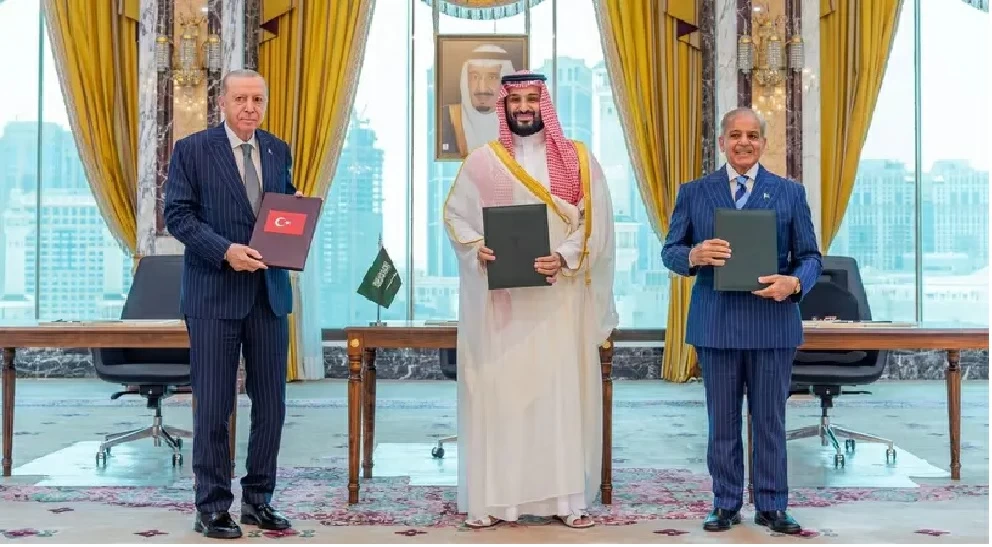
تعقد اللجنة الدفاعية والإستراتيجية المنبثقة عن اتفاقية مكة للدفاع المشترك، أول اجتماع لها، غدا الإثنين، في تركيا.وأفادت وكالة «رويترز»بأن الاجتماع يبحث 3 قضايا رئيسية هي: الأمن الدولي، تعزيز القدرات الدفاعية، وتوطيد التعاون الدفاعي بما يشمل الإنتاج والتطوير المشترك.
من جهته، توقع مصدر في الخارجية التركية حضور وزراء خارجية السعودية وباكستان وتركيا اجتماع اللجنة الأول.
تعزيز التعاون الدفاعي
وكانت مكة المكرمة، شهدت في السابع من أغسطس الجاري، توقيع «اتفاقية مكة للدفاع المشترك» بين السعودية وتركيا وباكستان، في خطوة تستهدف تعزيز التعاون الدفاعي وترسيخ منظومة الردع الجماعي، بما يدعم الأمن والاستقرار على المستويين الإقليمي والدولي.
وقعت الاتفاقية خلال قمة مكة المكرمة للدفاع المشترك، التي جمعت ولي العهد رئيس مجلس الوزراء الأمير محمد بن سلمان، الرئيس التركي رجب طيب أردوغان، ورئيس وزراء باكستان محمد شهباز شريف، حيث استعرض القادة العلاقات المميزة بين الدول الثلاث، وبحثوا عدداً من القضايا الإقليمية والدولية ذات الاهتمام المشترك.
وأكدت الاتفاقية التي تستند إلى الروابط التاريخية والأخوية التي تجمع الدول الثلاث، والمصالح الإستراتيجية المشتركة، والتعاون الدفاعي القائم بينها، حرص السعودية وتركيا وباكستان على تعزيز أمنها الجماعي، والإسهام في ترسيخ الأمن والسلام والاستقرار في المنطقة والعالم.
الرد الجماعي على أي اعتداء
ونصت اتفاقية مكة للدفاع المشترك على أن أي هجوم مسلح يستهدف إحدى الدول الثلاث يعد هجوماً على جميع الدول الأطراف، بما يعزز مبدأ الردع الجماعي، ويؤكد التزامها المشترك بمواجهة أي تهديدات تستهدف أمنها وسيادتها.
وتهدف الاتفاقية إلى تطوير مختلف أوجه التعاون الدفاعي والعسكري، وتعزيز التنسيق بين الدول الثلاث، بما يرفع مستوى الجاهزية ويعزز قدرتها على مواجهة التحديات الأمنية المشتركة.
وتأتي الاتفاقية في إطار مساعي السعودية وتركيا وباكستان لتعميق شراكتها الإستراتيجية، وتعزيز التنسيق السياسي والدفاعي، بما يخدم المصالح المشتركة، ويدعم الأمن الإقليمي والدولي في ظل المتغيرات المتسارعة.
عمق العلاقات الأخوية والإستراتيجية
وكان وزير الخارجية الأمير فيصل بن فرحان، أكد أن توقيع اتفاقية مكة للدفاع المشترك يجسد عمق العلاقات الأخوية والإستراتيجية بين الدول الثلاث، ويمثل محطة مهمة في مسيرة التعاون الدفاعي المشترك.
وأوضح أن الاتفاقية تُعد تتويجاً للرغبة المشتركة في توحيد الجهود لمواجهة التحديات والتهديدات التي تمس أمن المنطقة واستقرارها، مؤكداً أنها تعكس الإرادة السياسية للدول الثلاث نحو حماية الأمن والاستقرار، ودعم بيئة إقليمية أكثر أمناً، بما يخدم شعوبها ويسهم في ترسيخ فرص التنمية والازدهار.
لا تستهدف أي دولة
فيما أكد وكيل وزارة الخارجية السعودية السفير الدكتور رائد قرملي، أن اتفاقية مكة للدفاع المشترك ليست تصعيداً للتوتر مع أي دولة، ولا تستهدف بناء أي محور سياسي أو عسكري، وإنما تهدف إلى تعزيز الأمن الجماعي والردع الاستراتيجي بين المملكة العربية السعودية وتركيا وباكستان.
وأشار إلى أن الاتفاقية جاءت بعد مفاوضات تفصيلية استمرت لسنوات، وتعكس حرص الدول الثلاث على تطوير تعاونها الدفاعي في إطار يحفظ الأمن والاستقرار الإقليمي.
لا تلغي الاتفاقيات القائمة
وأفاد قرملي بأن الاتفاقية لا تلغي أو تحل محل أي اتفاقيات ثنائية أو متعددة الأطراف ترتبط بها الدول الثلاث، كما أنها لا تأتي على حساب علاقات المملكة الخليجية أو العربية أو الدولية، بل تنسجم مع نهجها القائم على تعزيز الشراكات الإستراتيجية ودعم الأمن والاستقرار.
وأضاف أن الاتفاقية تنص على أن أي اعتداء مسلح على إحدى الدول الثلاث يُعد اعتداءً على جميعها، بما يعزز منظومة الردع المشترك، ويفتح المجال أمام تطوير القدرات الدفاعية، وتكامل الإمكانات العسكرية، وتعزيز التعاون في مختلف المجالات الدفاعية.
لا علاقة لها بسباق التسلح
وشدد وكيل وزارة الخارجية على أن الاتفاقية ليست مرتبطة بأي مساعٍ نووية أو سباق للتسلح، كما أنها لا تمثل توجهًا لتشكيل محور أو تكتل طائفي، وإنما تستند إلى مبادئ التعاون الدفاعي المشروع، بما يسهم في تعزيز الأمن والسلام والاستقرار في المنطقة.
The Defense and Strategic Committee stemming from the Mecca Agreement for Joint Defense holds its first meeting today, Monday, in Turkey. The Reuters agency reported that the meeting will discuss three main issues: international security, enhancing defensive capabilities, and solidifying defense cooperation, including joint production and development.
For its part, a source in the Turkish Foreign Ministry expected the foreign ministers of Saudi Arabia, Pakistan, and Turkey to attend the committee's inaugural meeting.
Enhancing Defense Cooperation
Mecca witnessed the signing of the "Mecca Agreement for Joint Defense" between Saudi Arabia, Turkey, and Pakistan on August 7, in a move aimed at enhancing defense cooperation and establishing a collective deterrence system that supports security and stability at both regional and international levels.
The agreement was signed during the Mecca Summit for Joint Defense, which brought together Crown Prince and Prime Minister Mohammed bin Salman, Turkish President Recep Tayyip Erdoğan, and Pakistani Prime Minister Muhammad Shehbaz Sharif. The leaders reviewed the distinguished relations between the three countries and discussed a number of regional and international issues of mutual interest.
The agreement, which is based on the historical and fraternal ties that unite the three countries, their shared strategic interests, and existing defense cooperation, emphasizes Saudi Arabia, Turkey, and Pakistan's commitment to enhancing their collective security and contributing to establishing peace, security, and stability in the region and the world.
Collective Response to Any Aggression
The Mecca Agreement for Joint Defense stipulates that any armed attack targeting one of the three countries is considered an attack on all the parties, thereby reinforcing the principle of collective deterrence and affirming their joint commitment to confronting any threats to their security and sovereignty.
The agreement aims to develop various aspects of defense and military cooperation and enhance coordination among the three countries, thereby raising the level of readiness and strengthening their ability to face common security challenges.
The agreement comes within the framework of Saudi Arabia, Turkey, and Pakistan's efforts to deepen their strategic partnership and enhance political and defense coordination, serving their common interests and supporting regional and international security amid rapid changes.
The Depth of Fraternal and Strategic Relations
Foreign Minister Prince Faisal bin Farhan confirmed that the signing of the Mecca Agreement for Joint Defense embodies the depth of fraternal and strategic relations between the three countries and represents an important milestone in the journey of joint defense cooperation.
He explained that the agreement is a culmination of the shared desire to unify efforts to confront the challenges and threats affecting the security and stability of the region, affirming that it reflects the political will of the three countries to protect security and stability and support a more secure regional environment, benefiting their peoples and contributing to establishing opportunities for development and prosperity.
Does Not Target Any Country
Meanwhile, Saudi Deputy Foreign Minister Ambassador Dr. Raed Qarmali emphasized that the Mecca Agreement for Joint Defense is not an escalation of tension with any country and does not aim to establish any political or military axis; rather, it aims to enhance collective security and strategic deterrence among Saudi Arabia, Turkey, and Pakistan.
He pointed out that the agreement came after detailed negotiations that lasted for years and reflects the three countries' commitment to developing their defense cooperation within a framework that preserves regional security and stability.
Does Not Abolish Existing Agreements
Qarmali stated that the agreement does not abolish or replace any bilateral or multilateral agreements related to the three countries, nor does it come at the expense of Saudi Arabia's Gulf, Arab, or international relations; rather, it aligns with its approach of enhancing strategic partnerships and supporting security and stability.
He added that the agreement stipulates that any armed aggression against one of the three countries is considered aggression against all of them, thereby enhancing the joint deterrence system and opening the door for the development of defensive capabilities, integration of military potentials, and strengthening cooperation in various defense fields.
Not Related to an Arms Race
The Deputy Foreign Minister emphasized that the agreement is not linked to any nuclear ambitions or arms race, nor does it represent a trend to form a sectarian axis or bloc; rather, it is based on principles of legitimate defense cooperation that contribute to enhancing security, peace, and stability in the region.