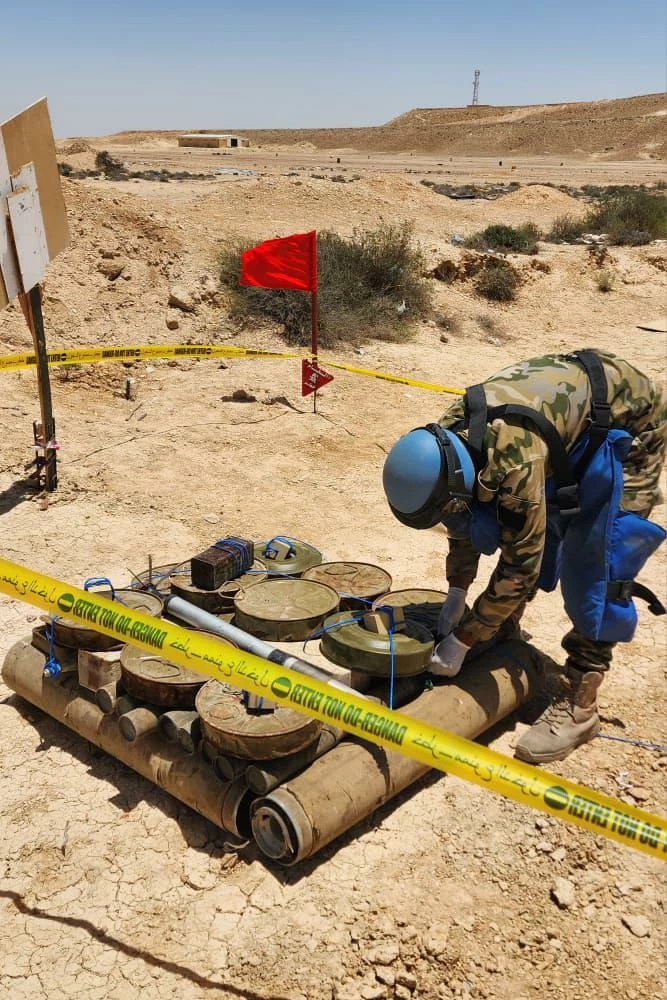
في إطار الجهود السعودية المستمرة لحماية الشعب اليمني وتأمين مصالحهم، أتلف مشروع «مسام» لنزع الألغام - في اليمن اليوم (الأربعاء) 1,696 قطعة من الألغام والمخلفات الحربية.
تفاصيل عملية الإتلاف
نفّذت فرق الطوارئ التابعة لـمشروع «مسام» بالتعاون مع المركز التنفيذي للتعامل مع الألغام في المكلا عملية الإتلاف، وبحسب المركز الإعلامي للمشروع فإن المواد التي تم إتلافها شملت 1,320 طلقة عيار (12/7)، 220 قذيفة هاون منوعة، 11 قذيفة آر بي جي، 56 فيوز ألغام مضادة للأفراد، 1 صاروخ، 2 عبوة ناسفة، 86 قذيفة عيار (23).
ألغام يجري إعدادها لتفجيرها.
وأكد المركز أن عملية الاتلاف، التي تمت اليوم تعد السابعة من نوعها في محافظة حضرموت منذ منتصف شهر يناير الماضي، موضحاً أن «مسام» يواصل عمله على مدار الساعة في نزع الألغام والعبوات الناسفة والذخائر غير المنفجرة بوتيرة واحدة؛ لضمان سلامة المدنيين في اليمن من هذه المواد التي تشكل خطراً على حياتهم وتعيق حركتهم.
نجاحات مسام
وأشار المركز إلى أن عمليات الإتلاف الموثقة بالصوت والصورة تأتي ضمن استراتيجية المشروع القائمة على التخلص من المواد في أماكن آمنة بعيدة عن السكان.
وارتفعت كمية الألغام والمتفجرات التي جرى إتلافها في محافظة حضرموت منذ 17 يناير الماضي وحتى اليوم إلى 14,109 قطعة من الألغام والعبوات الناسفة والذخائر غير المنفجرة.
إشادة محلية ودولية
وتلقى جهود مشروع مسام السعودي في اليمن ترحيباً يمنياً كبيراً وإشادة من منظمات محلية ودولية في ظل تطهيره مساحة واسعة من الأرضي اليمنية.
وأشادت منظمة ميون لحقوق الإنسان بالجهود التي يبذلها مشروع مسام لنزع الألغام من اليمن، مؤكدة أن المشروع تمكن منذ بدء عمله من نزع مئات الآلاف من الألغام والذخائر غير المنفجرة، مع حرصه على تنفيذ عمليات إتلاف دورية لما يتم نزعه، وهو ما اعتبرته المنظمة جهداً إنسانياً محل تقدير.
وقالت المنظمة في بيان صادر بمناسبة اليوم العالمي للتوعية بمخاطر الألغام، إن الألغام لا تزال تمثل أحد أخطر التهديدات المباشرة لحياة المدنيين في اليمن، في ظل استمرار سقوط الضحايا بشكل شبه يومي، خصوصاً في أوساط النساء والأطفال والرعاة والمزارعين والنازحين والمسافرين.
As part of Saudi Arabia's ongoing efforts to protect the Yemeni people and secure their interests, the "Masam" project for demining destroyed 1,696 pieces of landmines and war remnants in Yemen today (Wednesday).
Details of the Destruction Operation
The emergency teams of the "Masam" project, in cooperation with the Executive Center for Mine Action in Mukalla, carried out the destruction operation. According to the project's media center, the destroyed materials included 1,320 rounds of 12.7 mm caliber, 220 assorted mortar shells, 11 RPG shells, 56 anti-personnel mine fuses, 1 missile, 2 explosive devices, and 86 rounds of 23 mm caliber.
ألغام يجري إعدادها لتفجيرها.
The center confirmed that today's destruction operation is the seventh of its kind in Hadhramaut Governorate since mid-January, explaining that "Masam" continues its work around the clock in removing landmines, explosive devices, and unexploded ordnance at a steady pace to ensure the safety of civilians in Yemen from these materials that pose a threat to their lives and hinder their movement.
Masam's Successes
The center indicated that the destruction operations, documented with audio and video, are part of the project's strategy to dispose of materials in safe locations away from populated areas.
The quantity of landmines and explosives that have been destroyed in Hadhramaut Governorate since January 17 until today has risen to 14,109 pieces of landmines, explosive devices, and unexploded ordnance.
Local and International Praise
The efforts of the Saudi "Masam" project in Yemen have received significant Yemeni welcome and praise from local and international organizations amid its clearing of a wide area of Yemeni land.
The Mayon Organization for Human Rights praised the efforts made by the Masam project to remove landmines from Yemen, confirming that the project has managed to remove hundreds of thousands of landmines and unexploded ordnance since it began its work, while ensuring regular destruction operations for what is removed, which the organization considers a commendable humanitarian effort.
In a statement issued on the occasion of the International Day for Mine Awareness, the organization stated that landmines still represent one of the most dangerous direct threats to the lives of civilians in Yemen, with casualties continuing to occur almost daily, especially among women, children, shepherds, farmers, displaced persons, and travelers.