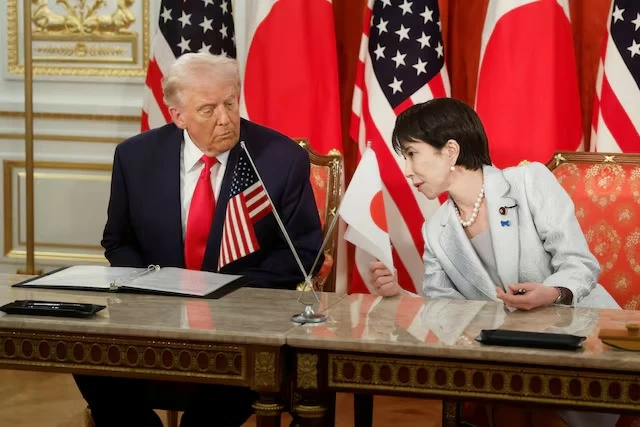
يستعد الرئيس الأمريكي دونالد ترمب لاستقبال رئيسة الوزراء اليابانية ساناي تاكايتشي في البيت الأبيض، اليوم (الخميس) وسط توقعات بأن يستغل اللقاء للضغط على طوكيو من أجل تقديم دعم أكبر في الحرب الجارية ضد إيران، وهو ما يضع القيادة اليابانية في موقف سياسي ودستوري معقد.
ورغم انتقادات ترمب السابقة لحلفاء بلاده بسبب ما وصفه بـ«الدعم الفاتر» للحملة العسكرية الأمريكية-الإسرائيلية، وتأكيده أن واشنطن لا تحتاج إلى مساعدة، فإنه لا يزال يسعى للحصول على دعم عملي، خصوصا في ما يتعلق بإرسال سفن للمساعدة في إزالة الألغام وتأمين مرور ناقلات النفط عبر مضيق هرمز، الذي أغلقت إيران أجزاء كبيرة منه خلال النزاع.
الزيارة، التي كانت مقررة منذ فترة، تهدف أساسًا إلى تعزيز الشراكة الأمنية والاقتصادية الممتدة منذ عقود بين الولايات المتحدة واليابان، إلا أن تطورات الحرب في الشرق الأوسط فرضت نفسها بقوة على جدول الأعمال.
وتواجه تاكايتشي ضغوطًا داخلية، إذ لا يحظى الانخراط في الحرب على إيران بتأييد شعبي في اليابان، كما أن الدستور السلمي الذي فُرض بعد الحرب العالمية الثانية يقيّد قدرة طوكيو على المشاركة في عمليات عسكرية خارجية، ورغم سعيها سابقًا لتخفيف هذه القيود، فإنها لم تُبدِ حتى الآن استعدادًا للمشاركة في تأمين مضيق هرمز.
وفي السياق ذاته، استبعدت دول أوروبية مثل ألمانيا وإيطاليا وإسبانيا المشاركة في أي مهمة عسكرية في الخليج، ما أثار استياء ترمب.
وكانت تاكايتشي قد أوضحت أمام البرلمان الياباني أن بلادها لم تتلقَّ طلبًا رسميًا من الولايات المتحدة، لكنها تدرس نطاق التحرك الممكن ضمن القيود الدستورية.
ويرى محللون أن الزيارة تحولت من فرصة لتعزيز العلاقات الثنائية إلى اختبار دبلوماسي صعب، حيث كانت طوكيو تأمل في التأثير على سياسة واشنطن تجاه الصين، لكنها وجدت نفسها في موقع أول حليف يُطلب منه دعم مباشر في صراع الشرق الأوسط.
ومن المتوقع أن يطرح ترمب خلال اللقاء مطالب إضافية، من بينها دعم إنتاج أو تطوير مشترك لصواريخ لتعويض النقص في مخزون الأسلحة الأمريكية نتيجة الحرب في إيران والحرب الروسية في أوكرانيا، وهو طلب لا تزال طوكيو تدرسه بحذر.
في المقابل، تسعى اليابان إلى تذكير واشنطن بالتحديات الأمنية في شرق آسيا، خصوصا ما يتعلق بالصين وتايوان، وهو ما قد تحاول تاكايتشي إدراجه ضمن أولويات النقاش.
كما يُرجح أن تعلن اليابان انضمامها إلى مبادرة «القبة الذهبية» للدفاع الصاروخي، والتي تهدف إلى رصد وتعقب التهديدات من الفضاء والتصدي لها.
وعلى الصعيد الدبلوماسي، تتمتع طوكيو بعلاقات مع طهران، ما قد يمنحها دورًا محتملًا في الوساطة، رغم أن محاولات سابقة في هذا الاتجاه لم تحقق نجاحًا يُذكر.
ومن المنتظر أيضًا أن تبحث المحادثات قضايا أخرى، من بينها تنفيذ اتفاق تجاري بين البلدين، وتعزيز التعاون في مجالات الطاقة وسلاسل الإمداد والتكنولوجيا والدفاع، إلى جانب إعلان استثمارات يابانية جديدة في مشاريع داخل الولايات المتحدة.
U.S. President Donald Trump is preparing to welcome Japanese Prime Minister Sanae Takayichi to the White House today (Thursday), amid expectations that he will use the meeting to pressure Tokyo for greater support in the ongoing war against Iran, which places the Japanese leadership in a complex political and constitutional position.
Despite Trump's previous criticisms of his allies for what he described as "lukewarm support" for the U.S.-Israeli military campaign, and his assertion that Washington does not need help, he is still seeking practical support, particularly regarding sending ships to assist in mine removal and securing the passage of oil tankers through the Strait of Hormuz, which Iran has closed off significantly during the conflict.
The visit, which has been planned for some time, primarily aims to strengthen the long-standing security and economic partnership between the United States and Japan, but developments in the war in the Middle East have strongly imposed themselves on the agenda.
Takayichi is facing internal pressure, as public support for involvement in the war against Iran is lacking in Japan, and the pacifist constitution imposed after World War II restricts Tokyo's ability to participate in foreign military operations. Although it has previously sought to ease these restrictions, it has not yet shown a willingness to participate in securing the Strait of Hormuz.
In this context, European countries such as Germany, Italy, and Spain have ruled out participation in any military mission in the Gulf, which has displeased Trump.
Takayichi had clarified before the Japanese parliament that her country had not received an official request from the United States, but it is considering the scope of possible action within constitutional constraints.
Analysts believe that the visit has shifted from an opportunity to strengthen bilateral relations to a difficult diplomatic test, as Tokyo hoped to influence Washington's policy toward China, but found itself in the position of being the first ally asked for direct support in the Middle Eastern conflict.
During the meeting, Trump is expected to raise additional demands, including support for the production or joint development of missiles to compensate for the depletion of U.S. weapon stockpiles due to the war in Iran and the Russian war in Ukraine, a request that Tokyo is still studying cautiously.
In contrast, Japan seeks to remind Washington of the security challenges in East Asia, particularly concerning China and Taiwan, which Takayichi may try to include among the discussion priorities.
It is also likely that Japan will announce its joining of the "Golden Dome" missile defense initiative, which aims to detect and track threats from space and counter them.
On the diplomatic front, Tokyo has relations with Tehran, which may give it a potential role in mediation, although previous attempts in this direction have not achieved significant success.
The talks are also expected to address other issues, including the implementation of a trade agreement between the two countries, enhancing cooperation in energy, supply chains, technology, and defense, along with announcing new Japanese investments in projects within the United States.