


من المرتقب أن تسلّم حركة فتح الفلسطينية اليوم (الجمعة)، في مخيم البص بمدينة صور شحنة جديدة من السلاح إلى الجيش اللبناني، على غرار ما جرى، أمس (الخميس)، في مخيم برج البراجنة.
وتأتي هذه الخطوة ضمن مسار تنظيمي داخلي داخل المخيمات، لكنها أعادت بقوة إلى الواجهة ملف «سلاح المخيمات الفلسطينية»، وفتحت الباب واسعاً أمام تساؤلات عن إمكان ترجمة ما يجري إلى مسار أشمل، طال انتظاره منذ اتفاق بعبدا بين القيادتين اللبنانية والفلسطينية في مايو الماضي.
رمزية المشهد وكسر جدار المحرّم
العملية التي جرت في برج البراجنة لم تمر مرور الكرام، إذ بدا المشهد ذا دلالات رمزية وسياسية تتجاوز حدود ما تم تسليمه. للمرة الأولى يدخل الجيش اللبناني إلى أحد المخيمات ويحصل على أسلحة بطريقة أقرب إلى التسليم الطوعي، في مشهد اعتبره كثيرون كسراً لحرمة السلاح الفلسطيني في لبنان منذ عقود، وسقوطاً عملياً لما تبقى من مظلة اتفاق القاهرة. ورغم أن الكمية المسلّمة بدت محدودة، فإن رمزية الحدث تكفي لاعتبارها اختراقاً.
حساسية التوقيت وتقاطعات الداخل والخارج
التوقيت أضفى على الخطوة حساسية مضاعفة، إذ جاءت مباشرة بعد قرار حكومي بشأن سلاح حزب الله وغيره من التنظيمات، وعشية جلسة ثانية مرتقبة في ٢ سبتمبر القادم لإقرار خطة قيادة الجيش. وبالتالي، رُبط المشهد بما هو أبعد من المخيمات، ليصبح جزءاً من معادلة السلاح غير الشرعي في لبنان. لم يكن مستغرباً أن يسارع الموفد الأمريكي توم براك إلى الإشادة، فيما بدت الحكومة اللبنانية ولجنة الحوار الفلسطيني – اللبناني وكأنهما توظفان الحدث في سياق دعم خطتهما الأوسع.
تضارب فلسطيني.. فتح تقرّ والفصائل تنفي
في المقابل، أظهرت المواقف الفلسطينية انقساماً واضحاً. فحركة فتح أقرت بخطوة التسليم معتبرة أنها نتيجة جردة داخلية، فيما نفت الفصائل الأخرى أن تكون معنية، مؤكدة أن ما حصل شأن داخلي يخص فتح وحدها.
وذهب مسؤول الأمن الوطني الفلسطيني صبحي أبو عرب أبعد من ذلك، لافتا إلى أن السلاح المسلم ليس من ترسانة المخيمات بل أسلحة غير شرعية دخلت قبل 48 ساعة. وأضاف أن هذه الأسلحة تعود لمجموعات مرتبطة بالمسؤول السابق شادي الفار المفصول من الحركة والمطلوب قضائياً.
فيما أكدت مصادر أمنية لبنانية أن ما جرى أقرب إلى مصادرة أدوات عسكرية كان يسيطر عليها الفار، وأن الجيش اختار تمرير العملية عبر «فتح» انسجاماً مع واقع المخيمات.
من الفار إلى اتفاق بعبدا.. خلفيات سياسية متشابكة
البعد السياسي يبقى الأهم، فالاتفاق الذي وُقع في بعبدا خلال مايو الماضي نص على رفع الرئيس محمود عباس الغطاء عن السلاح الفلسطيني ودعم الدولة اللبنانية في مسعاها لحصر السلاح بيدها. لكن هذا الاتفاق تعثر في موعده المحدد منتصف يونيو الماضي، بحجة انشغال المنطقة بالحرب الإسرائيلية – الإيرانية، فيما السبب الفعلي يكمن في الفوضى داخل فتح نفسها، مقابل تعاظم نفوذ حماس والفصائل الإسلامية. ومع ذلك، يبدو أن ما حصل أمس واليوم يمثل تطبيقاً متأخراً لذلك الاتفاق ولو بشكل جزئي.
سلاح المخيمات.. فردي منتشر ومخازن صواريخ مخفية
طبيعة السلاح داخل المخيمات تزيد الصورة تعقيداً. فالغالبية الساحقة منه أسلحة فردية منتشرة بين مختلف التنظيمات، لكن هناك أيضاً مخازن لصواريخ محددة تعود بالدرجة الأولى إلى حماس والجهاد الإسلامي خُزنت في أوقات سابقة ضمن التنسيق مع حزب الله. وهنا يبرز التحدي الأكبر في مخيم عين الحلوة، الأكبر حجماً والأكثر تسليحاً، حيث سيصطدم أي مسار مماثل بعوائق تنظيمية وسياسية أكبر.
عين الحلوة... الاختبار الأصعب والأكثر تعقيداً
كل الأنظار تبقى متجهة إلى مخيم عين الحلوة الذي يمثل الامتحان الفعلي لأي خطة شاملة. فالمخيم، بما يحتويه من فصائل متباينة ومجموعات مسلحة خارجة عن السيطرة التقليدية، سيكون المحك الحقيقي لإمكان تعميم ما جرى في برج البراجنة وصور على بقية المخيمات.
اللافت أن الصمت الرسمي اللبناني بقي سيد الموقف. لا الجيش أصدر بياناً تفصيلياً، ولا مؤسسات الدولة أرادت تضخيم الحدث. هذا الصمت قد يكون مقصوداً لإبقاء الخطوة في إطارها المحدود ومنع استغلالها سياسياً، لكنه في المقابل يعكس حقيقة أن الطريق لا يزال طويلاً قبل الحديث عن تسوية شاملة.
بين الحوار الفلسطيني والشراكة مع الدولة
وعليه، تبقى الآمال معقودة على أن يشكل ما حصل مقدمة لتفاهم أمني جديد يعيد تنظيم أوضاع المخيمات، ويؤسس لشراكة فلسطينية – لبنانية تضمن السيادة وتؤمّن للفلسطينيين حقوقهم المدنية. غير أن نجاح هذا المسار سيبقى رهناً بحوار داخلي فلسطيني أولاً، ثم بترتيب العلاقة مع الدولة اللبنانية على أسس واضحة تضمن التنفيذ وتمنع التراجع أمام الضغوط والفوضى.
من برج البراجنة إلى صور
الفصائل الفلسطينية في لبنان تسلم سلاحها.. بداية مسار أم محطة عابرة؟
22 أغسطس 2025 - 13:22
|
آخر تحديث 22 أغسطس 2025 - 13:22
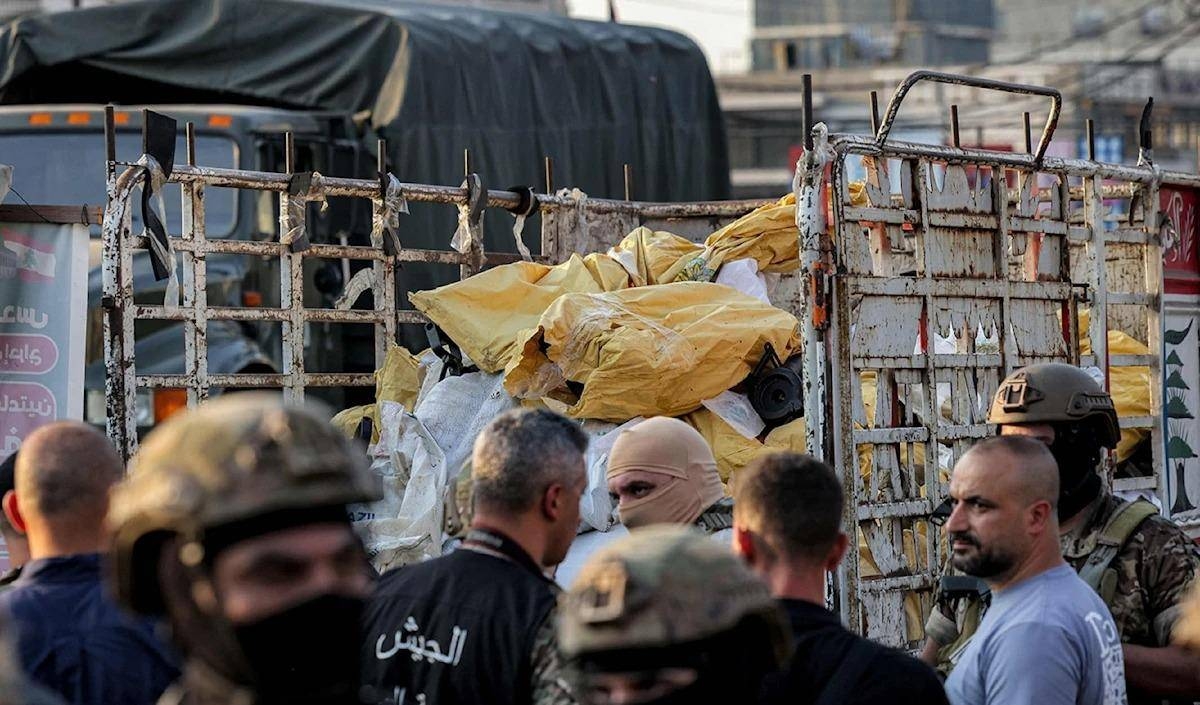
شاحنة محملة بالسلاح في برج البراجنة.


تابع قناة عكاظ على الواتساب
راوية حشمي (بيروت) @HechmiRawiya
The Palestinian Fatah movement is expected to deliver a new shipment of weapons to the Lebanese army today (Friday) in the al-Bass camp in the city of Tyre, similar to what occurred yesterday (Thursday) in the Burj al-Barajneh camp.
This step comes as part of an internal organizational process within the camps, but it has strongly brought back to the forefront the issue of "weapons in the Palestinian camps," raising questions about the possibility of translating what is happening into a broader path that has been long awaited since the Baabda Agreement between the Lebanese and Palestinian leaderships last May.
Symbolism of the Scene and Breaking the Taboo
The operation that took place in Burj al-Barajneh did not go unnoticed, as the scene appeared to have symbolic and political implications that go beyond what was delivered. For the first time, the Lebanese army entered one of the camps and received weapons in a manner closer to voluntary surrender, a scene that many considered a breaking of the sanctity of Palestinian weapons in Lebanon that has existed for decades, and a practical collapse of what remains of the Cairo Agreement umbrella. Although the quantity delivered seemed limited, the symbolism of the event is enough to consider it a breakthrough.
Sensitivity of Timing and Intersections of Internal and External Factors
The timing added a double sensitivity to the step, as it came immediately after a government decision regarding Hezbollah's weapons and other organizations, and on the eve of a second anticipated session on September 2 to approve the army leadership plan. Thus, the scene was linked to something beyond the camps, becoming part of the equation of illegal weapons in Lebanon. It was not surprising that U.S. envoy Tom Barak rushed to praise it, while the Lebanese government and the Palestinian-Lebanese dialogue committee seemed to be leveraging the event in support of their broader plan.
Palestinian Contradictions... Fatah Acknowledges While Other Factions Deny
In contrast, Palestinian positions showed a clear division. Fatah acknowledged the delivery step, considering it a result of an internal inventory, while other factions denied being involved, asserting that what happened is an internal matter concerning only Fatah.
Palestinian National Security official Sobhi Abu Arab went further, pointing out that the delivered weapons are not from the camps' arsenal but are illegal weapons that entered 48 hours prior. He added that these weapons belong to groups linked to the former official Shadi al-Far, who was expelled from the movement and is wanted by the judiciary.
Meanwhile, Lebanese security sources confirmed that what occurred is closer to the confiscation of military tools controlled by al-Far, and that the army chose to carry out the operation through "Fatah" in line with the reality of the camps.
From al-Far to the Baabda Agreement... Intertwined Political Backgrounds
The political dimension remains the most important, as the agreement signed in Baabda last May stipulated that President Mahmoud Abbas would lift the cover from Palestinian weapons and support the Lebanese state in its efforts to confine weapons to itself. However, this agreement faltered at its scheduled time in mid-June, under the pretext of the region being preoccupied with the Israeli-Iranian war, while the actual reason lies in the chaos within Fatah itself, alongside the growing influence of Hamas and Islamic factions. Nevertheless, it seems that what happened yesterday and today represents a delayed implementation of that agreement, albeit partially.
Weapons in the Camps... Widespread Individual Arms and Hidden Missile Stockpiles
The nature of the weapons within the camps complicates the picture further. The vast majority are individual weapons spread among various factions, but there are also stockpiles of specific missiles primarily belonging to Hamas and Islamic Jihad that were stored previously in coordination with Hezbollah. Here lies the greatest challenge in the Ain al-Hilweh camp, the largest and most heavily armed, where any similar path will face greater organizational and political obstacles.
Ain al-Hilweh... The Toughest and Most Complex Test
All eyes remain on Ain al-Hilweh camp, which represents the real test for any comprehensive plan. The camp, with its diverse factions and armed groups beyond traditional control, will be the true benchmark for the possibility of generalizing what occurred in Burj al-Barajneh and Tyre to the other camps.
Notably, the official Lebanese silence has remained the prevailing stance. Neither the army issued a detailed statement, nor did state institutions wish to amplify the event. This silence may be intentional to keep the step within its limited framework and prevent its political exploitation, but it also reflects the reality that the road remains long before discussing a comprehensive settlement.
Between Palestinian Dialogue and Partnership with the State
Accordingly, hopes remain pinned on what occurred being a precursor to a new security understanding that reorganizes the conditions of the camps and establishes a Palestinian-Lebanese partnership that guarantees sovereignty and secures the civil rights of Palestinians. However, the success of this path will remain contingent on an internal Palestinian dialogue first, and then on arranging the relationship with the Lebanese state on clear foundations that ensure implementation and prevent regression in the face of pressures and chaos.
This step comes as part of an internal organizational process within the camps, but it has strongly brought back to the forefront the issue of "weapons in the Palestinian camps," raising questions about the possibility of translating what is happening into a broader path that has been long awaited since the Baabda Agreement between the Lebanese and Palestinian leaderships last May.
Symbolism of the Scene and Breaking the Taboo
The operation that took place in Burj al-Barajneh did not go unnoticed, as the scene appeared to have symbolic and political implications that go beyond what was delivered. For the first time, the Lebanese army entered one of the camps and received weapons in a manner closer to voluntary surrender, a scene that many considered a breaking of the sanctity of Palestinian weapons in Lebanon that has existed for decades, and a practical collapse of what remains of the Cairo Agreement umbrella. Although the quantity delivered seemed limited, the symbolism of the event is enough to consider it a breakthrough.
Sensitivity of Timing and Intersections of Internal and External Factors
The timing added a double sensitivity to the step, as it came immediately after a government decision regarding Hezbollah's weapons and other organizations, and on the eve of a second anticipated session on September 2 to approve the army leadership plan. Thus, the scene was linked to something beyond the camps, becoming part of the equation of illegal weapons in Lebanon. It was not surprising that U.S. envoy Tom Barak rushed to praise it, while the Lebanese government and the Palestinian-Lebanese dialogue committee seemed to be leveraging the event in support of their broader plan.
Palestinian Contradictions... Fatah Acknowledges While Other Factions Deny
In contrast, Palestinian positions showed a clear division. Fatah acknowledged the delivery step, considering it a result of an internal inventory, while other factions denied being involved, asserting that what happened is an internal matter concerning only Fatah.
Palestinian National Security official Sobhi Abu Arab went further, pointing out that the delivered weapons are not from the camps' arsenal but are illegal weapons that entered 48 hours prior. He added that these weapons belong to groups linked to the former official Shadi al-Far, who was expelled from the movement and is wanted by the judiciary.
Meanwhile, Lebanese security sources confirmed that what occurred is closer to the confiscation of military tools controlled by al-Far, and that the army chose to carry out the operation through "Fatah" in line with the reality of the camps.
From al-Far to the Baabda Agreement... Intertwined Political Backgrounds
The political dimension remains the most important, as the agreement signed in Baabda last May stipulated that President Mahmoud Abbas would lift the cover from Palestinian weapons and support the Lebanese state in its efforts to confine weapons to itself. However, this agreement faltered at its scheduled time in mid-June, under the pretext of the region being preoccupied with the Israeli-Iranian war, while the actual reason lies in the chaos within Fatah itself, alongside the growing influence of Hamas and Islamic factions. Nevertheless, it seems that what happened yesterday and today represents a delayed implementation of that agreement, albeit partially.
Weapons in the Camps... Widespread Individual Arms and Hidden Missile Stockpiles
The nature of the weapons within the camps complicates the picture further. The vast majority are individual weapons spread among various factions, but there are also stockpiles of specific missiles primarily belonging to Hamas and Islamic Jihad that were stored previously in coordination with Hezbollah. Here lies the greatest challenge in the Ain al-Hilweh camp, the largest and most heavily armed, where any similar path will face greater organizational and political obstacles.
Ain al-Hilweh... The Toughest and Most Complex Test
All eyes remain on Ain al-Hilweh camp, which represents the real test for any comprehensive plan. The camp, with its diverse factions and armed groups beyond traditional control, will be the true benchmark for the possibility of generalizing what occurred in Burj al-Barajneh and Tyre to the other camps.
Notably, the official Lebanese silence has remained the prevailing stance. Neither the army issued a detailed statement, nor did state institutions wish to amplify the event. This silence may be intentional to keep the step within its limited framework and prevent its political exploitation, but it also reflects the reality that the road remains long before discussing a comprehensive settlement.
Between Palestinian Dialogue and Partnership with the State
Accordingly, hopes remain pinned on what occurred being a precursor to a new security understanding that reorganizes the conditions of the camps and establishes a Palestinian-Lebanese partnership that guarantees sovereignty and secures the civil rights of Palestinians. However, the success of this path will remain contingent on an internal Palestinian dialogue first, and then on arranging the relationship with the Lebanese state on clear foundations that ensure implementation and prevent regression in the face of pressures and chaos.


