


كشف الأمين العام لحلف شمال الأطلسي (الناتو) مارك روته، أن هناك مناقشات جارية بشأن منح ضمانات أمنية لأوكرانيا على غرار الضمانات التي يقدمها الحلف للدول الأعضاء.
وقال روته لقناة «فوكس نيوز» الأمريكية عقب اجتماع بين الرئيس الأمريكي دونالد ترمب ونظيره الأوكراني فولوديمير زيلينسكي وقادة أوروبيين، مساء أمس الإثنين: إن الولايات المتحدة أشارت إلى رغبتها في المشاركة في تصور للضمانات الأمنية فيما تجري مناقشة ضمانات وفقاً للمادة 5 من معاهدة الحلف الأطلسي.
وأعلن أن ما تتم مناقشته «ليس عضوية أوكرانيا في الناتو، بل ضمانات أمنية وفقاً للمادة 5». وشدد على أنه لم تتم في واشنطن مناقشة إرسال قوات برية إلى الأراضي الأوكرانية.
من جهته، أوضح زيلينسكي خلال مؤتمر صحفي أنه سيتم العمل على تحديد الضمانات الأمنية لبلاده في غضون 10 أيام على الأرجح.
وتسعى كييف إلى الحصول على حماية شبيهة بما تؤمنه المادة 5 من معاهدة حلف الناتو، التي تنص على أنه في حال مهاجمة دولة عضو في الحلف فإن جميع الأعضاء تتأهب للمشاركة في الدفاع عنها سواء عسكرياً أو دبلوماسياً وسياسياً.
فيما طرح رئيس الوزراء البريطاني كير ستارمر فكرة تشكيل قوة منبثقة من «تحالف الراغبين»، تتمركز في أوكرانيا بعد وقف إطلاق النار أو اتفاق السلام، لكن أحداً لم يُفصّل علناً شكل هذه القوة، فيما أكد مسؤولون عسكريون أن شكلها مهم.
ومن الأفكار المطروحة أيضا تشكيل «قوة حفظ سلام» متكاملة، يُفترض أنها مسلحة، تدعم وتكمل مهام الجيش الأوكراني لأغراض دفاعية فقط، لكن الفكرة هي ردع روسيا عبر دفع الكرملين للتفكير مليّاً قبل الدخول في صراع مع جنود من دول أعضاء في حلف الناتو.
إلا أن المشكلة تكمن في أن مثل هذا المقترح يتطلب عشرات الآلاف من الجنود ليكون رادعاً ذا مصداقية، وفق ما أوردت صحيفة «نيويورك تايمز». وتتمثل الفكرة الثالثة في تشكيل قوة «فخ»، أي قوة أصغر بكثير من حيث العدد.
لكنها لن تتمكن من تدعيم القوات الأوكرانية بقوة، ودعمها في تشكيل قوة ردع دفاعية مهمة. إلا أن الأوروبيين يعتقدون أن الروس سيترددون في المخاطرة بقتل جنود أوروبيين غير أوكرانيين في أي مواجهة مقبلة.
ويتطرق المقترح الرابع إلى إنشاء «قوة مراقبة» قد تكون صغيرة، بضع مئات من الجنود أو نحو ذلك، مهمتها الأساسية الإبلاغ عن أي عمل عسكري قادم. لكن يمكن إنجاز هذه المهمة عبر استخدام الأقمار الصناعية والكاميرات الأرضية، دون الحاجة إلى مراقبين أو قوات على الأرض، كما أن هذه القوة لن تكون كبيرة بما يكفي لشن أي نوع من الدفاع.
وكان الرئيس ترمب أعلن أن بلاده ستدعم تقديم ضمانات أمنية أوروبية إلى أوكرانيا للمساعدة في إنهاء الحرب مع روسيا، لكنه لم يصل إلى حد الالتزام بإرسال قوات أمريكية في إطار هذه الضمانات الأمنية، وقال إنه بدلاً من ذلك سيكون هناك وجود أمني «مماثل لحلف شمال الأطلسي (ناتو)»، لافتاً إلى أنه سيجري تسوية جميع هذه التفاصيل في اجتماع مع قادة الاتحاد الأوروبي.
ما الضمانات الأمنية المقترحة لأوكرانيا لإنهاء الحرب ؟
19 أغسطس 2025 - 13:45
|
آخر تحديث 19 أغسطس 2025 - 13:45
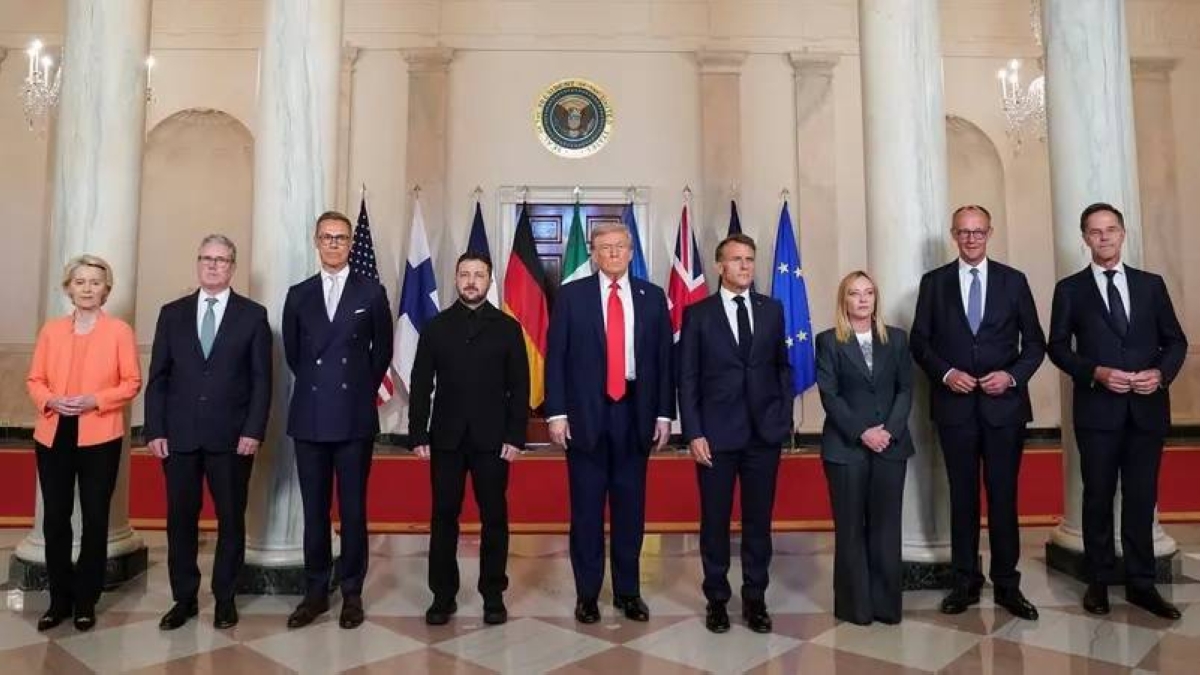
ترمب وقادة أوروبا.


تابع قناة عكاظ على الواتساب
«عكاظ» وكالات (واشنطن) okaz_online@
The Secretary General of NATO, Mark Rutte, revealed that discussions are ongoing regarding providing security guarantees to Ukraine similar to the guarantees offered by the alliance to member states.
Rutte stated to the American channel "Fox News" following a meeting between U.S. President Donald Trump, his Ukrainian counterpart Volodymyr Zelensky, and European leaders on Monday evening, that the United States has expressed its desire to participate in the conceptualization of security guarantees while discussions are taking place regarding guarantees in accordance with Article 5 of the NATO Treaty.
He announced that what is being discussed "is not Ukraine's membership in NATO, but security guarantees in accordance with Article 5." He emphasized that there has been no discussion in Washington about sending ground troops to Ukrainian territory.
For his part, Zelensky clarified during a press conference that efforts will be made to define security guarantees for his country within approximately 10 days.
Kyiv seeks to obtain protection similar to that provided by Article 5 of the NATO Treaty, which states that if a member state is attacked, all members are prepared to participate in defending it, whether militarily, diplomatically, or politically.
Meanwhile, British Prime Minister Keir Starmer proposed the idea of forming a force emerging from a "coalition of the willing," to be stationed in Ukraine after a ceasefire or peace agreement, but no one has publicly detailed the nature of this force, while military officials confirmed that its structure is important.
Other proposed ideas include forming an integrated "peacekeeping force," which is supposed to be armed, to support and complement the tasks of the Ukrainian army for defensive purposes only, but the idea is to deter Russia by making the Kremlin think carefully before entering into a conflict with soldiers from NATO member countries.
However, the problem lies in the fact that such a proposal requires tens of thousands of soldiers to be a credible deterrent, according to what was reported by the "New York Times." The third idea involves forming a "trap" force, which would be much smaller in number.
But it would not be able to significantly bolster Ukrainian forces or support them in forming an important defensive deterrent. However, Europeans believe that the Russians would hesitate to risk killing non-Ukrainian European soldiers in any upcoming confrontation.
The fourth proposal addresses the establishment of a "monitoring force" that could be small, consisting of a few hundred soldiers or so, with the primary mission of reporting any impending military action. However, this task could be accomplished using satellites and ground cameras, without the need for observers or troops on the ground, and this force would not be large enough to launch any type of defense.
President Trump announced that his country would support providing European security guarantees to Ukraine to help end the war with Russia, but he did not go so far as to commit to sending American troops as part of these security guarantees, stating that instead there would be a security presence "similar to NATO," noting that all these details would be settled in a meeting with EU leaders.
Rutte stated to the American channel "Fox News" following a meeting between U.S. President Donald Trump, his Ukrainian counterpart Volodymyr Zelensky, and European leaders on Monday evening, that the United States has expressed its desire to participate in the conceptualization of security guarantees while discussions are taking place regarding guarantees in accordance with Article 5 of the NATO Treaty.
He announced that what is being discussed "is not Ukraine's membership in NATO, but security guarantees in accordance with Article 5." He emphasized that there has been no discussion in Washington about sending ground troops to Ukrainian territory.
For his part, Zelensky clarified during a press conference that efforts will be made to define security guarantees for his country within approximately 10 days.
Kyiv seeks to obtain protection similar to that provided by Article 5 of the NATO Treaty, which states that if a member state is attacked, all members are prepared to participate in defending it, whether militarily, diplomatically, or politically.
Meanwhile, British Prime Minister Keir Starmer proposed the idea of forming a force emerging from a "coalition of the willing," to be stationed in Ukraine after a ceasefire or peace agreement, but no one has publicly detailed the nature of this force, while military officials confirmed that its structure is important.
Other proposed ideas include forming an integrated "peacekeeping force," which is supposed to be armed, to support and complement the tasks of the Ukrainian army for defensive purposes only, but the idea is to deter Russia by making the Kremlin think carefully before entering into a conflict with soldiers from NATO member countries.
However, the problem lies in the fact that such a proposal requires tens of thousands of soldiers to be a credible deterrent, according to what was reported by the "New York Times." The third idea involves forming a "trap" force, which would be much smaller in number.
But it would not be able to significantly bolster Ukrainian forces or support them in forming an important defensive deterrent. However, Europeans believe that the Russians would hesitate to risk killing non-Ukrainian European soldiers in any upcoming confrontation.
The fourth proposal addresses the establishment of a "monitoring force" that could be small, consisting of a few hundred soldiers or so, with the primary mission of reporting any impending military action. However, this task could be accomplished using satellites and ground cameras, without the need for observers or troops on the ground, and this force would not be large enough to launch any type of defense.
President Trump announced that his country would support providing European security guarantees to Ukraine to help end the war with Russia, but he did not go so far as to commit to sending American troops as part of these security guarantees, stating that instead there would be a security presence "similar to NATO," noting that all these details would be settled in a meeting with EU leaders.


