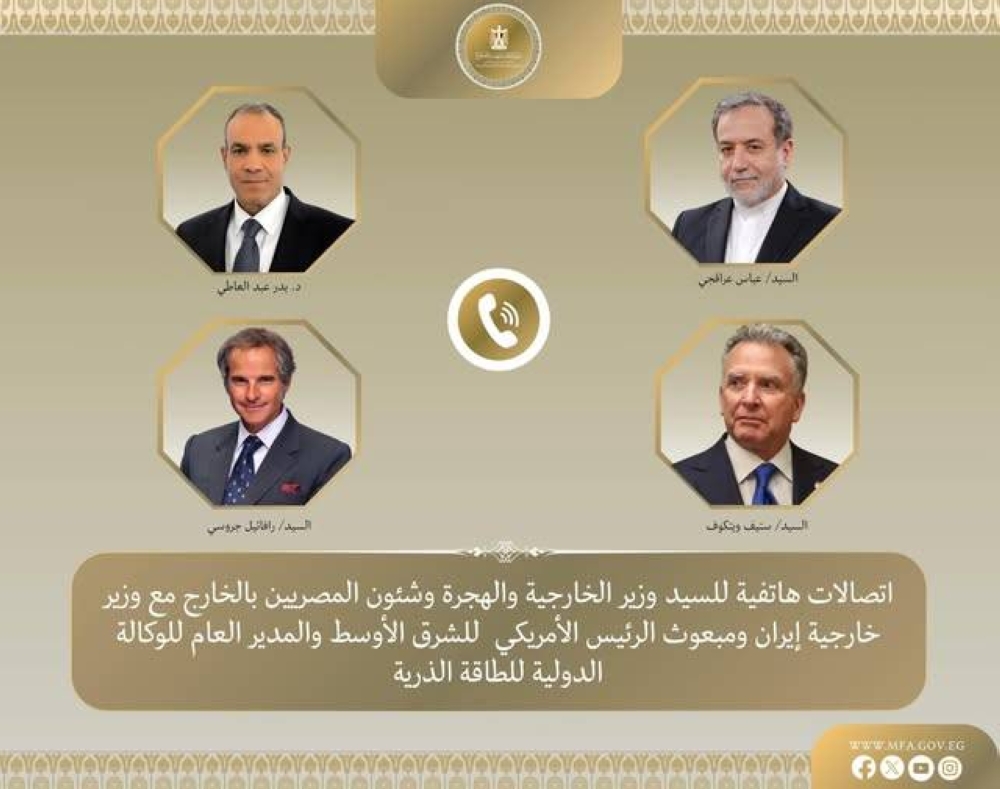
أجرى وزير الخارجية والهجرة المصري الدكتور بدر عبدالعاطي، اليوم (الأربعاء)، سلسلة من الاتصالات الهاتفية شملت كلًا من وزير الخارجية الإيراني عباس عراقجي، وستيف ويتكوف، مبعوث الرئيس الأمريكي الخاص للشرق الأوسط، ورافائيل غروسي، المدير العام للوكالة الدولية للطاقة الذرية.
تأتي هذه الاتصالات في إطار توجيهات الرئيس عبدالفتاح السيسي لتكثيف الجهود الدبلوماسية لخفض التصعيد وتقليل حدة التوتر في المنطقة.
ناقش الوزير المصري أهمية الدفع بالحلول السلمية واستئناف المفاوضات حول البرنامج النووي الإيراني، مؤكدًا القناعة بأن الحلول العسكرية غير مجدية لهذا الملف أو للأزمات الأخرى التي تشهدها المنطقة.
كما تبادل الأفكار مع نظرائه حول سبل تثبيت وقف إطلاق النار بين إيران وإسرائيل بشكل كامل، وضمان عدم تجدد الأعمال العدائية، مع تعزيز المسار السياسي والسلمي.
وفي اتصاله مع ستيف ويتكوف، تناول عبدالعاطي الجهود المكثفة للتوصل إلى وقف إطلاق النار في قطاع غزة واستدامته، بما يسمح بإطلاق سراح الرهائن والأسرى، وإدخال المساعدات الإنسانية دون عوائق وبكميات كافية، في ظل الأوضاع الإنسانية الكارثية بالقطاع.
وجدد الموقف المصري الرافض لأي طروحات تتعلق بإنشاء مدينة خيام في جنوب غزة أو إجراء تغييرات ديموغرافية في الأراضي الفلسطينية المحتلة.
كما قدّم عبدالعاطي رؤية مصر لعقد مؤتمر دولي في القاهرة يُعنى بالتعافي المبكر وإعادة إعمار قطاع غزة بعد التوصل إلى وقف إطلاق النار، وفقًا للخطة العربية الإسلامية التي تهدف إلى دعم استقرار القطاع وإعادة بنائه.
من جانبه، أشاد «ويتكوف» بالدور المصري في تعزيز الأمن والاستقرار الإقليميين، مؤكدًا أن مصر شريك استراتيجي رئيسي للولايات المتحدة في هذا المجال.
The Egyptian Minister of Foreign Affairs and Immigration, Dr. Badr Abdel Aty, conducted a series of phone calls today (Wednesday) that included Iranian Foreign Minister Abbas Araghchi, Steve Wietkoff, the U.S. President's Special Envoy for the Middle East, and Rafael Grossi, the Director General of the International Atomic Energy Agency.
These calls come within the framework of President Abdel Fattah El-Sisi's directives to intensify diplomatic efforts to de-escalate tensions in the region.
The Egyptian minister discussed the importance of promoting peaceful solutions and resuming negotiations regarding the Iranian nuclear program, emphasizing the belief that military solutions are ineffective for this issue or for other crises in the region.
He also exchanged ideas with his counterparts on ways to fully stabilize the ceasefire between Iran and Israel and ensure that hostilities do not resume, while enhancing the political and peaceful track.
In his call with Steve Wietkoff, Abdel Aty addressed the intensive efforts to achieve a ceasefire in the Gaza Strip and its sustainability, allowing for the release of hostages and prisoners, and the unhindered entry of humanitarian aid in sufficient quantities, given the catastrophic humanitarian conditions in the area.
The Egyptian stance rejecting any proposals related to establishing a tent city in southern Gaza or making demographic changes in the occupied Palestinian territories was reiterated.
Abdel Aty also presented Egypt's vision for holding an international conference in Cairo focused on early recovery and reconstruction of the Gaza Strip after reaching a ceasefire, in accordance with the Arab-Islamic plan aimed at supporting the stability and rebuilding of the area.
For his part, Wietkoff praised Egypt's role in enhancing regional security and stability, affirming that Egypt is a key strategic partner for the United States in this regard.