ماذا سيحدث لو لم يُمدَّد تفويض القوات الأممية (اليونيفيل) في الجنوب اللبناني؟ ماذا سيحل بالخط الأزرق؟ من الذي سيملأ الفراغ الأمني؟ هل هذه خطوة أمريكية إسرائيلية مدروسة أم مجرد مناورة سياسية ستتكشف تبعاتها لاحقاً؟ كيف سيتفاعل ويرد مجلس الأمن الدولي؟ وهل سيؤدي هذا الجدل في نهاية المطاف إلى إعادة رسم خريطة النفوذ الإقليمية في الجنوب؟.
هذه الأسئلة لم تأتِ من فراغ، فقد بدأت وسائل الإعلام الإسرائيلية والأمريكية تطلق تكهناتها؛ فعززت روايات تفيد بأن واشنطن تلقت دعماً من إسرائيل لإخراج (اليونيفيل) من الجنوب. ونقلت صحيفتا (Israel Hayom) و(Times of Israel) عن مصادرهما أن تقليص الدعم الأمريكي «مطلب حازم تم تنسيق خطواته مع الجيش الإسرائيلي، وأن وجود الجيش اللبناني مكّن من هذا النمط الجديد».
لا قرار نهائياً بعد
وفي هذا السياق، قال مسؤول في الخارجية الأمريكية إن التقارير «غير دقيقة»، وواشنطن لم تتخذ بعد قراراً نهائياً، كما لم يصدر بيان من مجلس الأمن أو من الأمم المتحدة ينفي أو يؤكد. أما في الجانب اللبناني، فأكد مصدر دبلوماسي في وزارة الخارجية لـ«عكاظ»، أن لبنان لم يتلق أي إشعار حول أي قرار متعلق بإنهاء مهمة (اليونيفيل)، لكن الخارجية كثّفت اتصالاتها بالأعضاء الدائمين في مجلس الأمن، وعبّرت بوضوح عن حاجة البلاد إلى استمرار عمل القوات الدولية في هذه المرحلة الدقيقة.
هذا الفراغ في الإعلام الرسمي يترك الشارع اللبناني في حالة ترقب، فهل سنرى قراراً حاسماً في الأسابيع القادمة؟.
قرار سريع لإنهاء حالة الصراع
وسط هذا الضباب السياسي والمعلوماتي، بقي الصوت الرسمي الوحيد الذي خرج عن صمته، هو تصريح الناطق باسم قوات اليونيفيل في لبنان، أندريا تينانتي الذي كشف لـ«عكاظ» أن أحد أبرز الشروط المبدئية لاستمرار دور (اليونيفيل) هو الانسحاب الإسرائيلي الكامل من المناطق التي ما زالت تحت السيطرة العسكرية.
وقال: «الرسالة واضحة، لا يمكن فصل وجود (اليونيفيل) عن التزامات الطرفين، وأي إخلال بهذا التوازن، خصوصاً من الجانب الإسرائيلي، يضع جدوى المهمة على المحك». هذه الإشارة رغم بساطتها تؤكد أن النقاش ليس فقط حول مستقبل (اليونيفيل) بل حول مدى استعداد المجتمع الدولي لفرض تطبيق فعلي للقرار 1701.
وبشأن ما يتم تداوله إعلامياً، علق أندريا بقوله: «إن مجلس الأمن لم يبدأ بعد المفاوضات المتعلقة بتجديد تفويض قوات اليونيفيل»، مضيفاً أن الدول الأعضاء ستتعامل مع هذه المباحثات بكل جدية، على أن يُتخذ القرار النهائي عبر الدول الخمس الدائمة العضوية. وإذا استمر الضغط، فسندخل في مفاوضات ضمن ما هو متاح. نحن بحاجة إلى قرار سريع لإنهاء حالة الصراع.
ولفت إلى أن بعض الجهات الفاعلة، رغم أنها ليست ضمن مجلس الأمن، تسعى إلى التأثير على المسار عبر طرح آراء خارج الإطار الرسمي، لكن القرار الحقيقي يُتخذ داخل المجلس. علينا أن ننتظر حتى نرى كيف ستُدار هذه المباحثات، وكيف ستُنفّذ المهمة في ضوء ما يُتفق عليه.
وأكد أن (اليونيفيل) ما زالت تحظى بدعم المجتمع الدولي لمساندة القوات المسلحة اللبنانية في تحقيق الانتشار الكامل في الجنوب، ما يجعل مهمتنا اليوم أكثر أهمية من أي وقت مضى. بعد خمسين شهراً من الصراع، تتحمّل (اليونيفيل) مسؤولية كبيرة في مراقبة الأوضاع ومتابعة التطورات، وتقديم التقارير للمجتمع الدولي.
وعن دعوات إسرائيل لإنهاء الوجود الدولي جنوب الحدود، أكد أن ضرورة وجود (اليونيفيل) في الجنوب واضحة، مشدداً على أن استعادة الأمن لا تتحقق من دون وجود دولي إلى جانب الوجود اللبناني، لأن التراجع يعود بنا إلى أيام التوتر.
واعتبر أن المطلوب اليوم ووجود مشترك بين (اليونيفيل) والجيش اللبناني، ليستعيد الناس حياتهم ويصير هناك استقرار، وهذا يصبّ في مصلحة اللبنانيين والإسرائيليين والمنطقة بأسرها.ماذا لو انتهت حقاً مهمة «اليونيفيل»؟
منذ سريان اتفاق وقف إطلاق النار في نوفمبر 2024، بات المشهد الأمني في الحدود الجنوبية أكثر هشاشة وتعقيداً. إسرائيل تنظر إلى (اليونيفيل) بريبة، وتعتقد أن وجودها لم يضمن لها الحماية الكافية حتى قبل اندلاع الحرب الأخيرة. في المقابل، حزب الله يراقب هذه القوات بحذر شديد، ويرى فيها أداة قد تُوظف لخدمة المصالح الإسرائيلية، لذلك يعمد إلى تحريك قواعده الشعبية لمعارضة واعتراض أي محاولات لتوسيع مهمات (اليونيفيل) أو تغيير طبيعة عملها.
انسحاب هذه القوات أو حتى تجميد عمل آليات الرقابة المشتركة سيترك فراغاً أمنياً مهماً، وقد يُفسح المجال لإسرائيل للسيطرة على المبادرة في الأراضي اللبنانية، وبالتالي نقل المخاطر إلى الجيش اللبناني وحده، وهو ما لم يطرح عملياً حتى اليوم.
هذا الوضع يهدد بإخلال التوازن الأمني، والتركيز السياسي حالياً يجب أن يكون: هل هناك خطة لتمويل الجيش اللبناني أو لتشكيل قوة بديلة؟ أم سنكون أمام يوم يُفاجأ فيه الجنوب بقرار من مجلس الأمن يضع الجيش اللبناني تحت الاختبار؟.
الفراغ المحتمل والمسؤولية المشتركة
مسؤولية الحفاظ على الاستقرار جنوب لبنان لا تقع على عاتق الأمم المتحدة وحدها، ولا على لبنان الرسمي فقط، بل هي مسؤولية مشتركة بين المجتمع الدولي، ومجلس الأمن، وكل الأطراف المؤثرة في القرار.
والخوف الحقيقي لا يكمن فقط في نقاش مستقبل التفويض، بل في ما قد ينجم عن «الفراغ المحتمل» إن تعثرت المفاوضات أو تقلّص دور (اليونيفيل) دون بديل واضح؛ فالمعادلة الأمنية في الجنوب ترتكز على توازن دقيق بين القوة الدولية والدور المحلي، وأي اختلال قد يفتح الباب أمام لاعبين محليين أو خارجيين لفرض معادلاتهم بقوة الأمر الواقع.
والسؤال الأخير: هل ما يجري هو مراجعة حقيقية لتطوير المهمة؟ أم تخلٍّ ناعم يُمهّد لانسحاب تدريجي؟ وهل تقبل العواصم الكبرى بترك الجنوب مكشوفاً لمعادلات السلاح والتأثير الإقليمي؟.
الجنوب ليس فقط ساحة حدودية، بل ورقة في موازين الإقليم، وما يُقرَّر اليوم في نيويورك قد يُترجَم غداً على الخط الأزرق.
«اليونيفيل» بين قلق بيروت.. وحسابات تل أبيب.. وصمت نيويورك
«الفراغ» يهدد جنوب لبنان
13 يونيو 2025 - 01:28
|
آخر تحديث 13 يونيو 2025 - 10:49
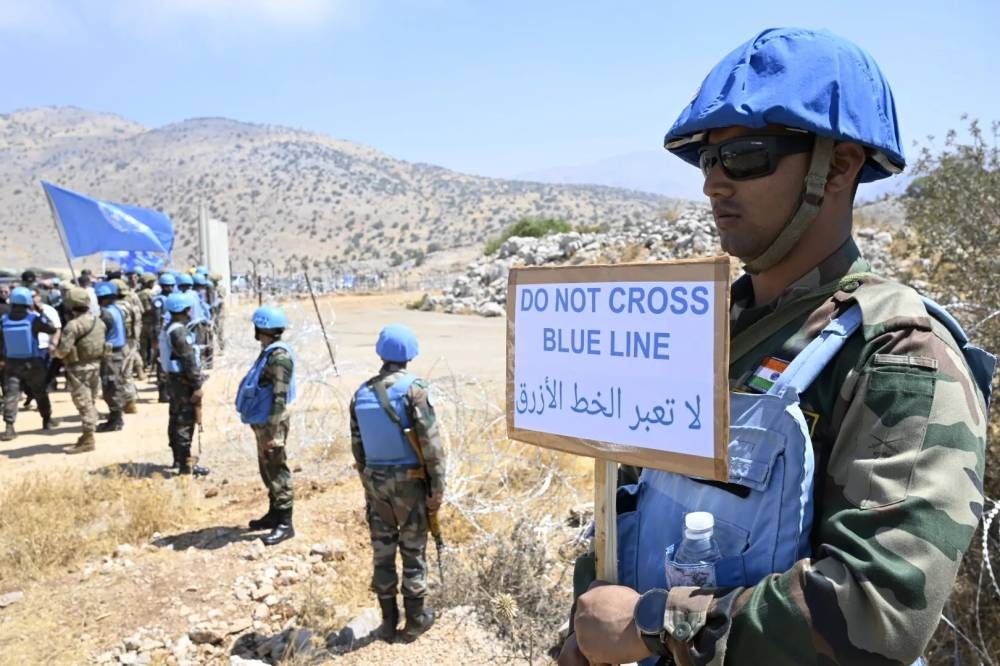
عناصر من قوات اليونيفيل في جنوب لبنان.


تابع قناة عكاظ على الواتساب
راوية حشمي (بيروت)HechmiRawiya@
What will happen if the mandate for the UN forces (UNIFIL) in southern Lebanon is not extended? What will happen to the Blue Line? Who will fill the security vacuum? Is this a calculated American-Israeli step or just a political maneuver whose repercussions will unfold later? How will the United Nations Security Council react and respond? Will this debate ultimately lead to a redrawing of the regional influence map in the south?
These questions did not arise out of nowhere; Israeli and American media have begun to launch their speculations, reinforcing narratives indicating that Washington received support from Israel to remove UNIFIL from the south. The newspapers (Israel Hayom) and (Times of Israel) reported from their sources that the reduction of American support is a "firm demand coordinated with the Israeli army, and that the presence of the Lebanese army has enabled this new pattern."
No final decision yet
In this context, a U.S. State Department official stated that the reports are "inaccurate," and Washington has not yet made a final decision, nor has a statement been issued by the Security Council or the United Nations to deny or confirm this. On the Lebanese side, a diplomatic source in the Foreign Ministry confirmed to "Okaz" that Lebanon has not received any notification regarding any decision related to ending UNIFIL's mission, but the Foreign Ministry has intensified its communications with the permanent members of the Security Council and clearly expressed the country's need for the continued operation of international forces at this critical stage.
This vacuum in official media leaves the Lebanese street in a state of anticipation. Will we see a decisive decision in the coming weeks?
Quick decision to end the state of conflict
Amid this political and informational fog, the only official voice that broke its silence was that of the spokesperson for UNIFIL in Lebanon, Andrea Tenenti, who revealed to "Okaz" that one of the main preliminary conditions for the continuation of UNIFIL's role is the complete Israeli withdrawal from the areas still under military control.
He said: "The message is clear; the presence of UNIFIL cannot be separated from the commitments of both parties, and any disruption of this balance, especially from the Israeli side, puts the mission's viability at stake." This simple indication confirms that the discussion is not only about the future of UNIFIL but also about the international community's readiness to enforce the actual implementation of Resolution 1701.
Regarding what is being circulated in the media, Andrea commented: "The Security Council has not yet begun negotiations regarding the renewal of UNIFIL's mandate," adding that member states will deal with these discussions seriously, with the final decision to be made by the five permanent members. If pressure continues, we will enter negotiations within what is available. We need a quick decision to end the state of conflict.
He pointed out that some actors, although not part of the Security Council, are trying to influence the course by presenting opinions outside the official framework, but the real decision is made within the council. We must wait to see how these discussions will be managed and how the mission will be implemented in light of what is agreed upon.
He confirmed that UNIFIL still enjoys the support of the international community to assist the Lebanese armed forces in achieving full deployment in the south, making our mission today more important than ever. After fifty months of conflict, UNIFIL bears a significant responsibility in monitoring the situation, following developments, and reporting to the international community.
Regarding Israel's calls to end the international presence south of the border, he affirmed that the necessity of UNIFIL's presence in the south is clear, emphasizing that restoring security cannot be achieved without an international presence alongside the Lebanese presence, as a retreat would take us back to days of tension.
He considered that what is needed today is a joint presence between UNIFIL and the Lebanese army, so that people can regain their lives and stability can be achieved, which serves the interests of both the Lebanese and Israelis and the entire region. What if UNIFIL's mission really ended?
Since the ceasefire agreement came into effect in November 2024, the security situation along the southern border has become more fragile and complex. Israel views UNIFIL with suspicion, believing that its presence has not provided sufficient protection even before the outbreak of the last war. In contrast, Hezbollah monitors these forces very cautiously, seeing them as a tool that could be used to serve Israeli interests, thus mobilizing its grassroots to oppose and obstruct any attempts to expand UNIFIL's missions or change the nature of its work.
The withdrawal of these forces or even the freezing of joint monitoring mechanisms would leave a significant security vacuum and could allow Israel to seize the initiative in Lebanese territory, thus shifting the risks solely onto the Lebanese army, which has not been practically proposed until today.
This situation threatens to disrupt the security balance, and the current political focus should be: Is there a plan to fund the Lebanese army or to form an alternative force? Or will we face a day when the south is surprised by a decision from the Security Council that puts the Lebanese army to the test?
The potential vacuum and shared responsibility
The responsibility for maintaining stability in southern Lebanon does not rest solely on the United Nations, nor solely on the Lebanese government, but is a shared responsibility among the international community, the Security Council, and all influential parties in the decision.
The real fear lies not only in the discussion of the future of the mandate but also in what may result from the "potential vacuum" if negotiations falter or UNIFIL's role diminishes without a clear alternative; the security equation in the south is based on a delicate balance between international force and local role, and any disruption could open the door for local or external players to impose their equations by force of reality.
And the final question: Is what is happening a genuine review to develop the mission? Or a soft abandonment paving the way for a gradual withdrawal? Will major capitals accept leaving the south exposed to the equations of arms and regional influence?
The south is not just a border area but a card in the regional balances, and what is decided today in New York may be translated tomorrow on the Blue Line.
These questions did not arise out of nowhere; Israeli and American media have begun to launch their speculations, reinforcing narratives indicating that Washington received support from Israel to remove UNIFIL from the south. The newspapers (Israel Hayom) and (Times of Israel) reported from their sources that the reduction of American support is a "firm demand coordinated with the Israeli army, and that the presence of the Lebanese army has enabled this new pattern."
No final decision yet
In this context, a U.S. State Department official stated that the reports are "inaccurate," and Washington has not yet made a final decision, nor has a statement been issued by the Security Council or the United Nations to deny or confirm this. On the Lebanese side, a diplomatic source in the Foreign Ministry confirmed to "Okaz" that Lebanon has not received any notification regarding any decision related to ending UNIFIL's mission, but the Foreign Ministry has intensified its communications with the permanent members of the Security Council and clearly expressed the country's need for the continued operation of international forces at this critical stage.
This vacuum in official media leaves the Lebanese street in a state of anticipation. Will we see a decisive decision in the coming weeks?
Quick decision to end the state of conflict
Amid this political and informational fog, the only official voice that broke its silence was that of the spokesperson for UNIFIL in Lebanon, Andrea Tenenti, who revealed to "Okaz" that one of the main preliminary conditions for the continuation of UNIFIL's role is the complete Israeli withdrawal from the areas still under military control.
He said: "The message is clear; the presence of UNIFIL cannot be separated from the commitments of both parties, and any disruption of this balance, especially from the Israeli side, puts the mission's viability at stake." This simple indication confirms that the discussion is not only about the future of UNIFIL but also about the international community's readiness to enforce the actual implementation of Resolution 1701.
Regarding what is being circulated in the media, Andrea commented: "The Security Council has not yet begun negotiations regarding the renewal of UNIFIL's mandate," adding that member states will deal with these discussions seriously, with the final decision to be made by the five permanent members. If pressure continues, we will enter negotiations within what is available. We need a quick decision to end the state of conflict.
He pointed out that some actors, although not part of the Security Council, are trying to influence the course by presenting opinions outside the official framework, but the real decision is made within the council. We must wait to see how these discussions will be managed and how the mission will be implemented in light of what is agreed upon.
He confirmed that UNIFIL still enjoys the support of the international community to assist the Lebanese armed forces in achieving full deployment in the south, making our mission today more important than ever. After fifty months of conflict, UNIFIL bears a significant responsibility in monitoring the situation, following developments, and reporting to the international community.
Regarding Israel's calls to end the international presence south of the border, he affirmed that the necessity of UNIFIL's presence in the south is clear, emphasizing that restoring security cannot be achieved without an international presence alongside the Lebanese presence, as a retreat would take us back to days of tension.
He considered that what is needed today is a joint presence between UNIFIL and the Lebanese army, so that people can regain their lives and stability can be achieved, which serves the interests of both the Lebanese and Israelis and the entire region. What if UNIFIL's mission really ended?
Since the ceasefire agreement came into effect in November 2024, the security situation along the southern border has become more fragile and complex. Israel views UNIFIL with suspicion, believing that its presence has not provided sufficient protection even before the outbreak of the last war. In contrast, Hezbollah monitors these forces very cautiously, seeing them as a tool that could be used to serve Israeli interests, thus mobilizing its grassroots to oppose and obstruct any attempts to expand UNIFIL's missions or change the nature of its work.
The withdrawal of these forces or even the freezing of joint monitoring mechanisms would leave a significant security vacuum and could allow Israel to seize the initiative in Lebanese territory, thus shifting the risks solely onto the Lebanese army, which has not been practically proposed until today.
This situation threatens to disrupt the security balance, and the current political focus should be: Is there a plan to fund the Lebanese army or to form an alternative force? Or will we face a day when the south is surprised by a decision from the Security Council that puts the Lebanese army to the test?
The potential vacuum and shared responsibility
The responsibility for maintaining stability in southern Lebanon does not rest solely on the United Nations, nor solely on the Lebanese government, but is a shared responsibility among the international community, the Security Council, and all influential parties in the decision.
The real fear lies not only in the discussion of the future of the mandate but also in what may result from the "potential vacuum" if negotiations falter or UNIFIL's role diminishes without a clear alternative; the security equation in the south is based on a delicate balance between international force and local role, and any disruption could open the door for local or external players to impose their equations by force of reality.
And the final question: Is what is happening a genuine review to develop the mission? Or a soft abandonment paving the way for a gradual withdrawal? Will major capitals accept leaving the south exposed to the equations of arms and regional influence?
The south is not just a border area but a card in the regional balances, and what is decided today in New York may be translated tomorrow on the Blue Line.