في الرياض، العاصمة التي باتت تصوغ توجهات المنطقة وتفرض إيقاعها على المعادلات الدولية، اكتسبت زيارة الرئيس الأمريكي دونالد ترمب بُعداً يتجاوز المألوف في لغة السياسة والدبلوماسية. لم تكن الزيارة عابرة، ولا اللقاء بروتوكولياً، بل لحظة مؤسسِّة لعصر جديد تُكتب فيه التحالفات بشروط مغايرة، وتُنسج فيه المصالح بخيوط النفوذ المتبادل والندية.
فالمشهد الذي تابعته العواصم العالمية بحذر، رُسم بعناية بين زعيمين لا ينتميان إلى مدرسة التردد أو التجميل السياسي؛ الأمير محمد بن سلمان، الذي يقود تحولاً غير مسبوق في بنية الدولة السعودية، اقتصاداً ومجتمعاً ونفوذاً، ودونالد ترمب، العائد إلى المسرح الدولي من بوابة الخليج، محملاً برسائل تؤكد أن العالم لم يعد يُدار من واشنطن وحدها.
إنهاء عُزلة دمشق واستعادة التوازن
النتائج لم تنتظر طويلاً لتتكشف؛ فقد أُبرمت صفقات استثمارية وعسكرية هائلة، أعادت إلى الأذهان زيارته الأولى عام 2017، لكنها هذه المرة بدت أكثر عمقاً وتحولاً، وترافقت مع تفاهمات تشمل الذكاء الاصطناعي، وتكنولوجيا الفضاء، وسلاسل الإمداد، والطاقة النظيفة، مما يعكس التقاء مصالح غير مسبوق في حجمه وسياقه بين الرياض وواشنطن.
الحدث الأكثر لفتاً للنظر تمثَّل في إعلان ترمب رفع العقوبات الأمريكية عن سورية، وهي خطوة لم تكن لتحدث لولا الحضور الحاسم للسعودية في خلفية المشهد. فالمقاربة التي قدمتها الرياض للملف السوري، ربطت بين إنهاء العزلة الإقليمية لدمشق واستعادة التوازن المشرقي، وقدمت طرحاً متماسكاً أقنع الإدارة الأمريكية بأن الانفراج الإقليمي يبدأ من سورية.
لم يكن التدخل السعودي تقنياً أو دبلوماسياً فحسب، بل جاء في لحظة ذكية، مدعومة بتحولات عربية أوسع تعبّر عنها الرياض، وبتفاهمات دولية ترى في القيادة السعودية اليوم ضامناً قوياً للاستقرار في الإقليم. القرار الأمريكي لم يكن مجرد استجابة لحسابات داخلية، بل تفاعل مع إعادة توزيع الأدوار التي تقودها المملكة، عبر رؤية تستثمر الأزمات وتحوّلها إلى فرص.
إعادة تعريف العلاقة مع الخليج
القراءة الغربية للزيارة لم تمر بخفة، بل رصدت تحولاً نوعيّاً في توازنات القوى ومراكز القرار. الإعلام الغربي لم يكتفِ بالتغطية الشكلية، بل وصف المشهد بأنه «إعادة تعريف للعلاقة مع الخليج»، وشراكة تتجاوز التحالف التقليدي نحو علاقات قائمة على الندية والمصالح المتقاطعة. وبرزت ملامح وعي غربي جديد مفاده أن السعودية لم تعد شريكاً يتلقى، بل شريكاً يُملي ويصوغ.
ووفق ما تناولته منصات غربية متعددة، فإن ترمب لم يصل بمفرده، بل اصطحب رموزاً من النخبة الاقتصادية والعسكرية، ما يعكس حجم الرهان الأمريكي على السعودية بوصفها مركز ثقل إقليمياً. كما أثيرت تساؤلات صريحة: هل باتت المصالح الأمريكية يُعاد تعريفها انطلاقاً من الرياض؟ وهل أصبح الأمير محمد بن سلمان ليس شريكاً فقط، بل أصبح طرفاً يصوغ أطر التعاون نفسها؟
ضرورة إستراتيجية لرسم موازين التأثير
في أوروبا، وُصفت الزيارة بأنها «تحالف بين الواقعية السياسية والواقعية الاقتصادية»، مع تأكيد أن السعودية باتت البوابة الوحيدة لأي نفوذ غربي في الشرق الأوسط. حتى المنصات النقدية أو الساخرة، لم تُخفِ قلقها من معادلة جديدة فرضتها الرياض: السعودية لم تعد شريكاً في موقع المتلقي، بل طرفٌ يحدد الاتجاه.
محمد بن سلمان، كما وصفته معظم التحليلات الغربية، لم يَعُد يُنظر إليه قائداً إقليميّاً فحسب، بل صانع قرار بحجم دولة. قيادته تُقارن اليوم بأدوار كانت حكراً على القوى الكبرى، ويتعامل معه الغرب باعتباره عنصراً حاسماً في إنتاج الاستقرار أو الفوضى. من هنا، لم يعد التحالف مع السعودية ترفاً أو خياراً سياسياً، بل ضرورة استراتيجية يعاد عبرها رسم موازين التأثير داخل الغرب نفسه.
إقليمياً، رأت عواصم عربية في هذه الزيارة إعلاناً عن بداية مرحلة جديدة من الشراكات المتحررة من قيود الأيديولوجيا. من القاهرة إلى أبوظبي، ومن بغداد إلى عمان، لم يكن تقييم الزيارة تقليدياً، بل تم التعامل معها كإشارة على إعادة هيكلة العلاقات، بما يُنهي مرحلة الاعتماد على الوكلاء ويفتح الباب أمام تواصل مباشر بين القوى المركزية. وبرز الملف السوري مثالاً حيّاً على هذه المقاربة: قرار رفع العقوبات لم يُقرأ تنازلاً أمريكياً، بل محصلة لتوازنات جديدة صاغتها الرياض وأعادت بها إدماج دولة كانت خارج المعادلة.
إعادة صياغة ملامح النظام العالمي
إنها لحظة فرضت لغتها ومفرداتها: اللحظة السعودية، التحالف الندّي، شرق أوسط بلا وصاية، وعصر ترمب- محمد بن سلمان. لحظة تؤكد أن مركز الثقل لم يعد محصوراً في الغرب، بل أصبح يتوزع بين الرياض وواشنطن في شراكة قد تُعيد رسم ملامح النظام العالمي.
زيارة دونالد ترمب إلى السعودية لم تكن محطة عابرة في جدول سياسي مزدحم، بل إعلان صريح لإعادة تموضع مركز القرار الدولي. محمد بن سلمان لم يستقبل ضيفاً رفيعاً فحسب، بل شريكاً في صياغة المرحلة القادمة من النظامين الإقليمي والدولي. الصفقات العملاقة والملفات الكبرى التي حُسمت خلال الزيارة ليست سوى انعكاس لحقيقة واحدة: أن السعودية، بقيادة محمد بن سلمان لم تعد تتفاعل مع التحولات الدولية فحسب، بل تصنعها.
زيارة تجاوزت العلاقات.. من العاصمة السعودية تُرسم المعادلات
الرياض - واشنطن.. ضبط إيقاع العالم
20 مايو 2025 - 12:04
|
آخر تحديث 20 مايو 2025 - 12:04
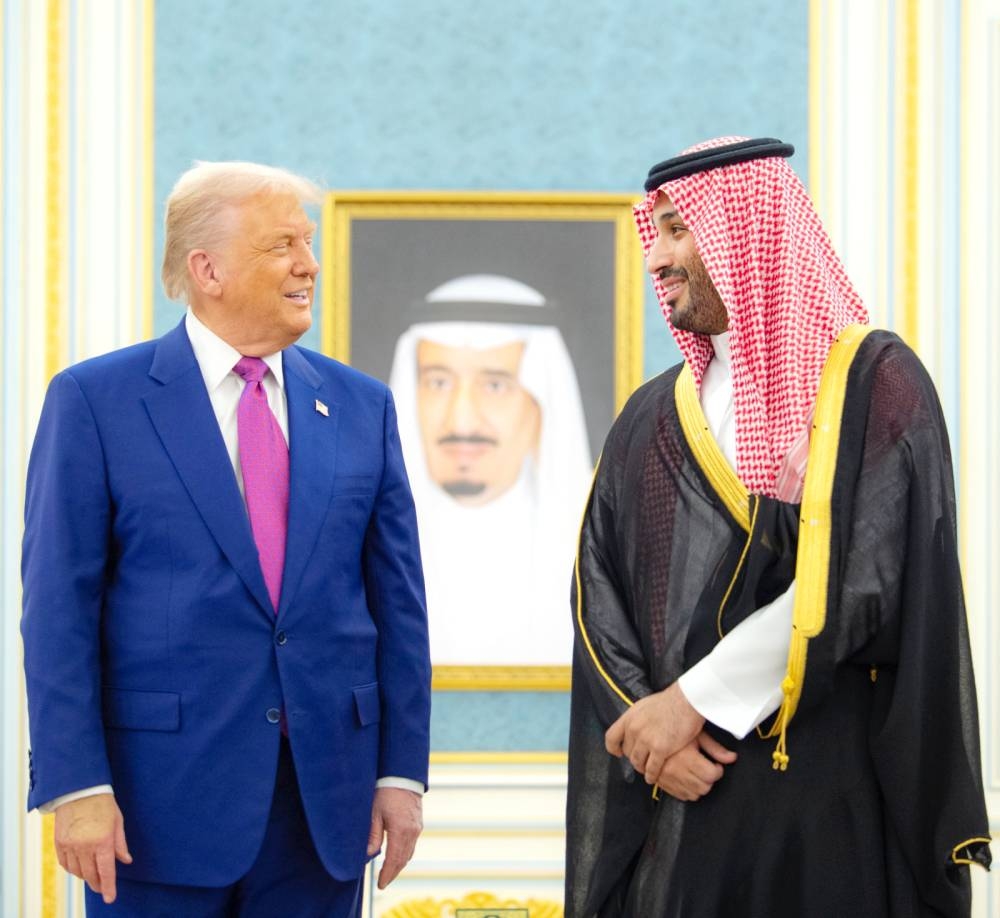
حديث بين ولي العهد والرئيس ترمب.


تابع قناة عكاظ على الواتساب
راوية حشمي (بيروت) HechmiRawiya@
In Riyadh, the capital that has begun to shape the region's directions and impose its rhythm on international equations, the visit of U.S. President Donald Trump acquired a dimension that transcends the ordinary in the language of politics and diplomacy. The visit was not fleeting, nor was the meeting merely protocol-driven; rather, it was a foundational moment for a new era in which alliances are written under different terms, and interests are woven with threads of mutual influence and parity.
The scene, which was closely watched by global capitals, was carefully drawn between two leaders who do not belong to the school of hesitation or political embellishment: Crown Prince Mohammed bin Salman, who is leading an unprecedented transformation in the structure of the Saudi state—economically, socially, and in terms of influence—and Donald Trump, returning to the international stage through the Gulf, carrying messages that affirm that the world is no longer managed solely from Washington.
Ending Damascus' Isolation and Restoring Balance
The results did not take long to unfold; massive investment and military deals were struck, reminiscent of his first visit in 2017, but this time they seemed deeper and more transformative, accompanied by understandings that include artificial intelligence, space technology, supply chains, and clean energy, reflecting an unprecedented convergence of interests in size and context between Riyadh and Washington.
The most striking event was Trump's announcement of lifting U.S. sanctions on Syria, a step that would not have occurred without Saudi Arabia's decisive presence in the background. The approach presented by Riyadh regarding the Syrian file linked the end of Damascus' regional isolation to the restoration of Eastern balance, offering a coherent proposal that convinced the U.S. administration that regional thawing begins with Syria.
The Saudi intervention was not merely technical or diplomatic; it came at a smart moment, supported by broader Arab transformations represented by Riyadh, and by international understandings that see the Saudi leadership today as a strong guarantor of stability in the region. The U.S. decision was not just a response to internal calculations, but interacted with the redistribution of roles led by the Kingdom, through a vision that invests crises and transforms them into opportunities.
Redefining the Relationship with the Gulf
The Western reading of the visit did not pass lightly; it noted a qualitative shift in power balances and decision-making centers. Western media did not settle for formal coverage but described the scene as "a redefinition of the relationship with the Gulf," and a partnership that transcends the traditional alliance towards relations based on parity and intersecting interests. New Western awareness emerged, indicating that Saudi Arabia is no longer a partner that merely receives, but one that dictates and shapes.
According to various Western platforms, Trump did not arrive alone; he brought along symbols from the economic and military elite, reflecting the magnitude of the American bet on Saudi Arabia as a regional center of gravity. Explicit questions were raised: Are American interests being redefined from Riyadh? Has Crown Prince Mohammed bin Salman become not just a partner, but a party that shapes the very frameworks of cooperation?
A Strategic Necessity for Shaping Influence
In Europe, the visit was described as "an alliance between political realism and economic realism," emphasizing that Saudi Arabia has become the only gateway for any Western influence in the Middle East. Even critical or satirical platforms did not hide their concern over a new equation imposed by Riyadh: Saudi Arabia is no longer a partner in a receiving position, but a party that determines the direction.
Mohammed bin Salman, as most Western analyses described him, is no longer viewed merely as a regional leader but as a decision-maker on the scale of a state. His leadership is now compared to roles that were once the exclusive domain of major powers, and the West engages with him as a decisive element in producing stability or chaos. Hence, the alliance with Saudi Arabia is no longer a luxury or a political choice, but a strategic necessity through which the balances of influence within the West itself are being redrawn.
Regionally, Arab capitals viewed this visit as an announcement of the beginning of a new phase of partnerships liberated from the constraints of ideology. From Cairo to Abu Dhabi, and from Baghdad to Amman, the assessment of the visit was not traditional; it was treated as a signal for restructuring relations, ending the phase of reliance on proxies and opening the door for direct communication between central powers. The Syrian file emerged as a vivid example of this approach: the decision to lift sanctions was not read as an American concession, but as a result of new balances shaped by Riyadh that reintegrated a state that was outside the equation.
Redefining the Features of the Global System
It is a moment that has imposed its language and vocabulary: the Saudi moment, the parity alliance, a Middle East without guardianship, and the Trump-Mohammed bin Salman era. A moment that confirms that the center of gravity is no longer confined to the West, but is distributed between Riyadh and Washington in a partnership that could redraw the features of the global system.
Donald Trump's visit to Saudi Arabia was not a fleeting stop in a busy political agenda, but a clear declaration of the repositioning of the center of international decision-making. Mohammed bin Salman did not just receive a high-profile guest; he welcomed a partner in shaping the upcoming phase of both the regional and international systems. The massive deals and major files that were resolved during the visit are merely a reflection of one undeniable truth: that Saudi Arabia, under the leadership of Mohammed bin Salman, is no longer just reacting to international transformations but is actively shaping them.
The scene, which was closely watched by global capitals, was carefully drawn between two leaders who do not belong to the school of hesitation or political embellishment: Crown Prince Mohammed bin Salman, who is leading an unprecedented transformation in the structure of the Saudi state—economically, socially, and in terms of influence—and Donald Trump, returning to the international stage through the Gulf, carrying messages that affirm that the world is no longer managed solely from Washington.
Ending Damascus' Isolation and Restoring Balance
The results did not take long to unfold; massive investment and military deals were struck, reminiscent of his first visit in 2017, but this time they seemed deeper and more transformative, accompanied by understandings that include artificial intelligence, space technology, supply chains, and clean energy, reflecting an unprecedented convergence of interests in size and context between Riyadh and Washington.
The most striking event was Trump's announcement of lifting U.S. sanctions on Syria, a step that would not have occurred without Saudi Arabia's decisive presence in the background. The approach presented by Riyadh regarding the Syrian file linked the end of Damascus' regional isolation to the restoration of Eastern balance, offering a coherent proposal that convinced the U.S. administration that regional thawing begins with Syria.
The Saudi intervention was not merely technical or diplomatic; it came at a smart moment, supported by broader Arab transformations represented by Riyadh, and by international understandings that see the Saudi leadership today as a strong guarantor of stability in the region. The U.S. decision was not just a response to internal calculations, but interacted with the redistribution of roles led by the Kingdom, through a vision that invests crises and transforms them into opportunities.
Redefining the Relationship with the Gulf
The Western reading of the visit did not pass lightly; it noted a qualitative shift in power balances and decision-making centers. Western media did not settle for formal coverage but described the scene as "a redefinition of the relationship with the Gulf," and a partnership that transcends the traditional alliance towards relations based on parity and intersecting interests. New Western awareness emerged, indicating that Saudi Arabia is no longer a partner that merely receives, but one that dictates and shapes.
According to various Western platforms, Trump did not arrive alone; he brought along symbols from the economic and military elite, reflecting the magnitude of the American bet on Saudi Arabia as a regional center of gravity. Explicit questions were raised: Are American interests being redefined from Riyadh? Has Crown Prince Mohammed bin Salman become not just a partner, but a party that shapes the very frameworks of cooperation?
A Strategic Necessity for Shaping Influence
In Europe, the visit was described as "an alliance between political realism and economic realism," emphasizing that Saudi Arabia has become the only gateway for any Western influence in the Middle East. Even critical or satirical platforms did not hide their concern over a new equation imposed by Riyadh: Saudi Arabia is no longer a partner in a receiving position, but a party that determines the direction.
Mohammed bin Salman, as most Western analyses described him, is no longer viewed merely as a regional leader but as a decision-maker on the scale of a state. His leadership is now compared to roles that were once the exclusive domain of major powers, and the West engages with him as a decisive element in producing stability or chaos. Hence, the alliance with Saudi Arabia is no longer a luxury or a political choice, but a strategic necessity through which the balances of influence within the West itself are being redrawn.
Regionally, Arab capitals viewed this visit as an announcement of the beginning of a new phase of partnerships liberated from the constraints of ideology. From Cairo to Abu Dhabi, and from Baghdad to Amman, the assessment of the visit was not traditional; it was treated as a signal for restructuring relations, ending the phase of reliance on proxies and opening the door for direct communication between central powers. The Syrian file emerged as a vivid example of this approach: the decision to lift sanctions was not read as an American concession, but as a result of new balances shaped by Riyadh that reintegrated a state that was outside the equation.
Redefining the Features of the Global System
It is a moment that has imposed its language and vocabulary: the Saudi moment, the parity alliance, a Middle East without guardianship, and the Trump-Mohammed bin Salman era. A moment that confirms that the center of gravity is no longer confined to the West, but is distributed between Riyadh and Washington in a partnership that could redraw the features of the global system.
Donald Trump's visit to Saudi Arabia was not a fleeting stop in a busy political agenda, but a clear declaration of the repositioning of the center of international decision-making. Mohammed bin Salman did not just receive a high-profile guest; he welcomed a partner in shaping the upcoming phase of both the regional and international systems. The massive deals and major files that were resolved during the visit are merely a reflection of one undeniable truth: that Saudi Arabia, under the leadership of Mohammed bin Salman, is no longer just reacting to international transformations but is actively shaping them.