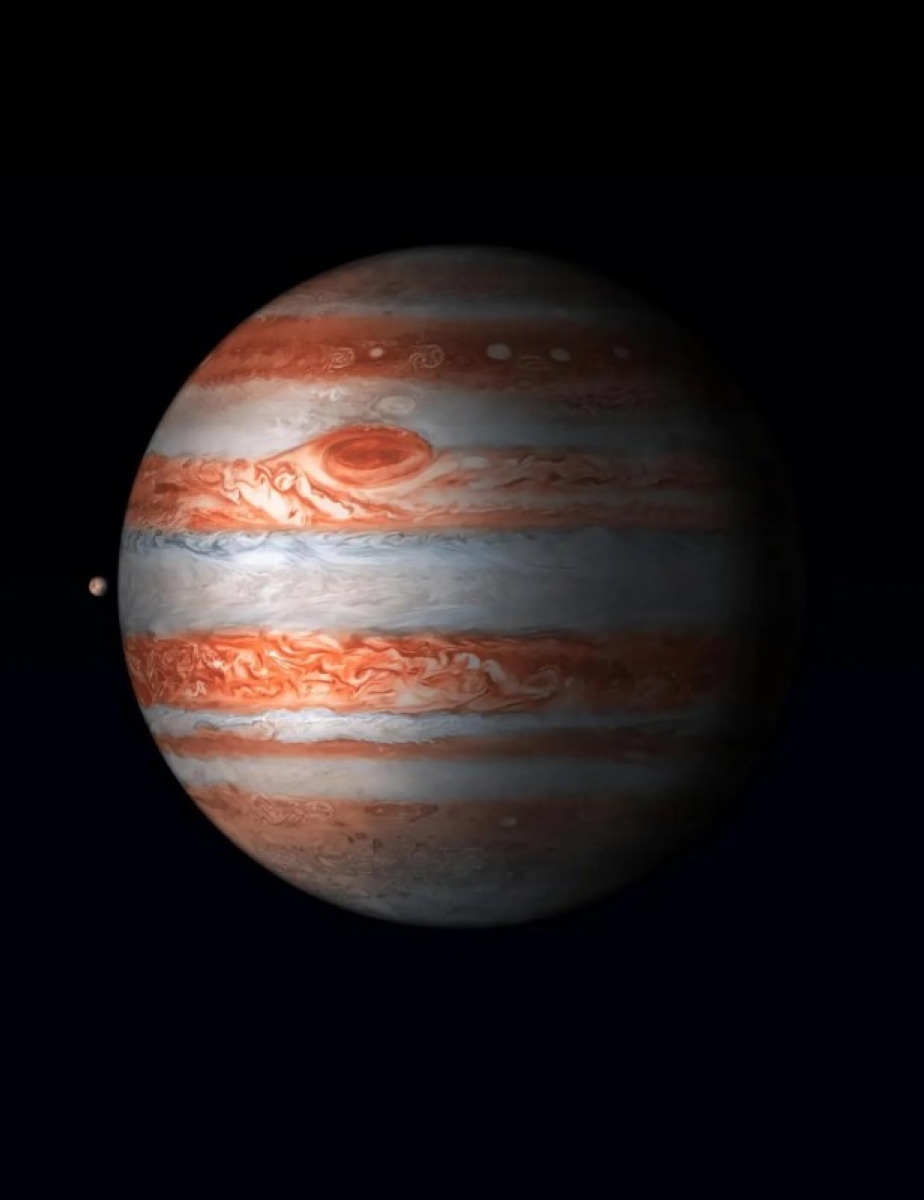
يُرصد كوكب المشتري، أكبر كواكب المجموعة الشمسية، في سماء المملكة والمنطقة العربية خلال النصف الثاني من شهر أكتوبر الجاري، حيث يمكن مشاهدته بوضوح بعد منتصف الليل وحتى قبيل شروق الشمس في الجهة الشرقية من القبة السماوية.
وأفاد رئيس الجمعية الفلكية بجدة المهندس ماجد أبو زاهرة، بأن المشتري يُعد من ألمع الأجرام السماوية بعد القمر وكوكب الزهرة، ويظهر بلون أبيض مائل إلى الصفرة مع لمعان ثابت، ويمكن رصده بالعين المجردة من المناطق ذات الأجواء الصافية.
وأوضح أن المناظير والتلسكوبات الصغيرة تكشف أقماره الأربعة الكبرى: آيو، وأوروبا، وغانيميد، وكاليستو، التي تبدو كنقاط ضوئية مصطفة بجانبه، مبينًا أن الكوكب يبدأ ظهوره بعد منتصف الليل ويرتفع تدريجيًا نحو الأفق الجنوبي الشرقي ليصل أعلى نقطة له في السماء قبيل الفجر، وهو الوقت الأنسب لمشاهدته أو التقاط الصور الفلكية له.
وبيّن أن المشتري سيكون خلال هذه الفترة في موقع مناسب للرصد مع ازدياد سطوعه تدريجيًا حتى يبلغ حالة التقابل في 10 يناير 2026، عندما يكون في أقرب مسافة من الأرض ليبدو أكثر إشراقًا من المعتاد.
The planet Jupiter, the largest planet in the solar system, will be visible in the sky over the Kingdom and the Arab region during the second half of October. It can be clearly seen after midnight until just before sunrise in the eastern part of the celestial dome.
The head of the Astronomical Society in Jeddah, Engineer Majid Abu Zahra, stated that Jupiter is one of the brightest celestial bodies after the Moon and Venus, appearing with a whitish-yellow color and a steady brightness. It can be observed with the naked eye from areas with clear skies.
He explained that small binoculars and telescopes reveal its four major moons: Io, Europa, Ganymede, and Callisto, which appear as aligned points of light beside it. He noted that the planet begins to appear after midnight and gradually rises towards the southeastern horizon, reaching its highest point in the sky just before dawn, which is the best time to observe it or capture astronomical photos of it.
He indicated that Jupiter will be in a favorable position for observation during this period, with its brightness gradually increasing until it reaches opposition on January 10, 2026, when it will be at its closest distance to Earth, appearing brighter than usual.