


برعاية وزير الثقافة رئيس مجلس أمناء مجْمع الملك سلمان العالمي للغة العربية الأمير بدر بن عبدالله بن فرحان، انطلق أمس (الإثنين)، المؤتمر السنوي الدولي الرابع لمجمع الملك سلمان العالمي للغة العربية، بعنوان «الصناعة المعجمية العالمية: التجارب، والجهود، والآفاق»، وذلك خلال الحفل الذي أُقيم في الرياض، بحضور نائب وزير الثقافة حامد محمد فايز، والأمين العام للمجمع الدكتور عبدالله صالح الوشمي، وجمع من القيادات الثقافية، والمهتمين والمختصين.
وألقى نائب وزير الثقافة -نيابة عن وزير الثقافة- كلمة أكد فيها أن المملكة تواصل حضورها الثقافي إقليمياً ودولياً، مرتكزة على رؤية المملكة 2030 التي تنهض بالثقافة وترسخ دورها في التنمية، مشيرا إلى أن القطاع الثقافي يحظى ببالغ اهتمام القيادة، ويتجلى ذلك في الحرص على دعم مسيرته، وتمكين مؤسساته، وتوسيع أثره.
وقال فايز: «انطلق مجمع الملك سلمان العالمي للغة العربية متشرفاً بالاسم الكريم، والرسالة العظيمة؛ تجسيدا لهذا الدعم، وخدمة للعربية، وتعزيزا لمكانتها، وحضورها، واستخداماتها. ويأتي هذا المؤتمر امتداداً لجهود المجمع في ترسيخ حضور اللغة العربية، والتأكيد على إسهامها في المشهد الثقافي العالمي».
بدوره، أوضح الوشمي، أن المؤتمر يأتي امتداداً لجهود المجمع في دعم الصناعة المعجمية، وتعزيز التعاون مع المؤسسات اللغوية في العالم، مبينا أن جلسات هذه النسخة تركز على استعراض التجارب الناجحة، ومناقشة التحديات، وتقديم حلول مبتكرة لتطوير المعاجم وتوسيع نطاقها، مشيرا إلى أن المجمع يحظى بالدعم المستمر من وزير الثقافة رئيس مجلس أمناء المجمع، ما يعزز تنفيذ مبادراته المتنوعة التي تسهم في خدمة اللغة العربية محلياً وعالمياً. وشهد اليوم الأول عدداً من الجلسات العلمية والحوارية التي شاركت فيها وزارات وجهات وطنية، ومجامع لغوية عربية، ومؤسسات دولية مختصة؛ لمناقشة قضايا الصناعة المعجمية، والتحولات المعاصرة، ودور التقنيات الحديثة والذكاء الاصطناعي في تطوير المعاجم.
مؤتمر مجمع الملك سلمان العالمي للغة يناقش الصناعة المعجمية والتحوّلات المعاصرة
7 أكتوبر 2025 - 03:47
|
آخر تحديث 7 أكتوبر 2025 - 03:47
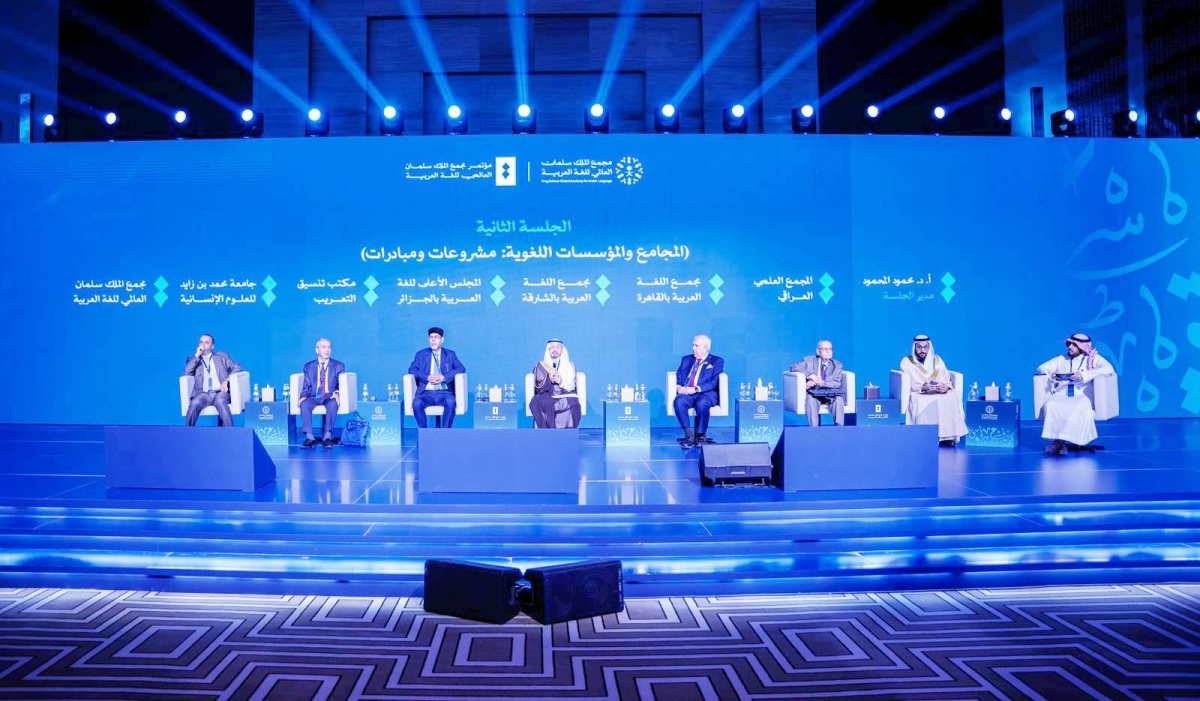
مشاركون في المؤتمر السنوي الدولي الرابع لمجمع الملك سلمان العالمي للغة العربية. (واس)


تابع قناة عكاظ على الواتساب
«عكاظ» (الرياض) okaz_online@
Under the patronage of the Minister of Culture and Chairman of the Board of Trustees of the King Salman Global Complex for the Arabic Language, Prince Badr bin Abdullah bin Farhan, the fourth annual international conference of the King Salman Global Complex for the Arabic Language launched yesterday (Monday), titled "Global Lexicographical Industry: Experiences, Efforts, and Prospects." This took place during a ceremony held in Riyadh, attended by the Deputy Minister of Culture Hamid Mohammed Fayez, the Secretary-General of the Complex Dr. Abdullah Saleh Al-Washmi, and a group of cultural leaders, enthusiasts, and specialists.
The Deputy Minister of Culture, speaking on behalf of the Minister of Culture, delivered a speech in which he emphasized that the Kingdom continues its cultural presence regionally and internationally, based on the Kingdom's Vision 2030, which elevates culture and establishes its role in development. He pointed out that the cultural sector receives great attention from the leadership, which is evident in the commitment to support its journey, empower its institutions, and expand its impact.
Fayez stated: "The King Salman Global Complex for the Arabic Language has launched, honored by its noble name and great mission; embodying this support, serving the Arabic language, and enhancing its status, presence, and uses. This conference comes as an extension of the Complex's efforts to establish the presence of the Arabic language and to affirm its contribution to the global cultural scene."
For his part, Al-Washmi clarified that the conference is an extension of the Complex's efforts to support the lexicographical industry and enhance cooperation with linguistic institutions worldwide, noting that the sessions of this edition focus on showcasing successful experiences, discussing challenges, and presenting innovative solutions for developing dictionaries and expanding their scope. He pointed out that the Complex enjoys continuous support from the Minister of Culture, Chairman of the Board of Trustees of the Complex, which enhances the implementation of its various initiatives that contribute to serving the Arabic language locally and globally. The first day witnessed a number of scientific and dialogue sessions in which ministries, national entities, Arab linguistic academies, and specialized international institutions participated to discuss issues related to the lexicographical industry, contemporary transformations, and the role of modern technologies and artificial intelligence in developing dictionaries.
The Deputy Minister of Culture, speaking on behalf of the Minister of Culture, delivered a speech in which he emphasized that the Kingdom continues its cultural presence regionally and internationally, based on the Kingdom's Vision 2030, which elevates culture and establishes its role in development. He pointed out that the cultural sector receives great attention from the leadership, which is evident in the commitment to support its journey, empower its institutions, and expand its impact.
Fayez stated: "The King Salman Global Complex for the Arabic Language has launched, honored by its noble name and great mission; embodying this support, serving the Arabic language, and enhancing its status, presence, and uses. This conference comes as an extension of the Complex's efforts to establish the presence of the Arabic language and to affirm its contribution to the global cultural scene."
For his part, Al-Washmi clarified that the conference is an extension of the Complex's efforts to support the lexicographical industry and enhance cooperation with linguistic institutions worldwide, noting that the sessions of this edition focus on showcasing successful experiences, discussing challenges, and presenting innovative solutions for developing dictionaries and expanding their scope. He pointed out that the Complex enjoys continuous support from the Minister of Culture, Chairman of the Board of Trustees of the Complex, which enhances the implementation of its various initiatives that contribute to serving the Arabic language locally and globally. The first day witnessed a number of scientific and dialogue sessions in which ministries, national entities, Arab linguistic academies, and specialized international institutions participated to discuss issues related to the lexicographical industry, contemporary transformations, and the role of modern technologies and artificial intelligence in developing dictionaries.


