


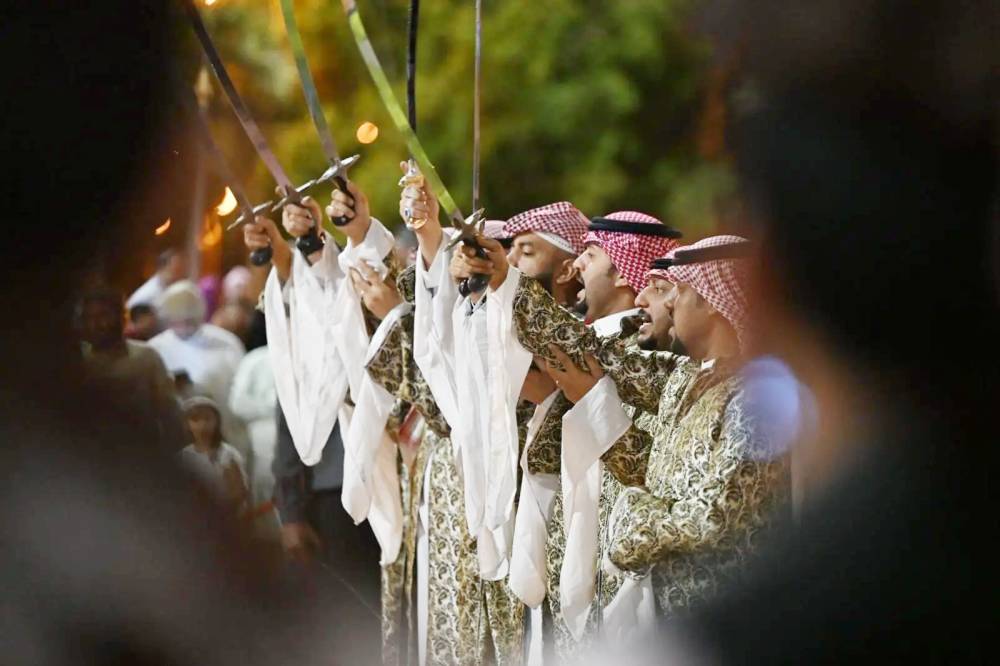
ترتبط العرضة السعودية بتاريخ الوطن وهويته، بوصفها إرثاً أصيلاً ورمزاً للوحدة والولاء، تناقلها السعوديون جيلاً بعد جيل في مناسبات الفرح والانتصار، وهي رقصة جماعية يؤديها الرجال مُصطفّين في صفوف متراصّة، مرددين في ثناياها الأبيات الوطنية على إيقاع قرع الطبول والتلويح بالسيوف، في ترنيمات تبعث روح القوة والحماس.
وبالعودة إلى تاريخ الدولة السعودية، ففي الثاني من شوال 1349هـ/فبراير 1932م، طلب الملك عبدالعزيز بن عبدالرحمن الفيصل -رحمه الله- من أبنائه وجنده أن يبتهجوا بقدوم العيد، بإقامة العرضة أمام قصره في المعابدة بمكة المكرمة، بمشاركة الأهالي، فارتفعت أصوات الطبول والبنادق.
وفي 16 شوال 1349هـ/ مارس 1931م وعقب استعراض الجيش السعودي الذي حضره الملك عبدالعزيز، تقدَّم الأمراء والأعيان بالسيوف والبنادق مُردّدين القصائد الحماسية على إيقاع الطبول أمام قصره بمكة المكرمة، في مشهد يجمع بين الفرح بالعيد، والتعبير عن الولاء والانتماء.
وحافظ ملوك المملكة العربية السعودية على إرث العرضة السعودية، وأدّوا هذا الفن في مناسبات مختلفة بصفته رمزاً للهوية الوطنية، وامتداداً لتاريخ عريق، وقد ارتبطت العرضة في الذاكرة الشعبية بالشجاعة والولاء، فكانت تعبيراً صادقاً عن وحدة الصف، وقوة العزيمة، التي تُعبّر عن الولاء والشجاعة، وتستنهض الهمم وتوحد الصفوف، ومن نافلة القول: إن العرضة لم تعد مجرّد فن أدائي، بل رمز للقوة والوحدة والهوية الوطنية، وصلة وصلٍ بين الماضي والحاضر، يبعث في الأجيال روح الاعتزاز والفخر بالوطن وتاريخه.
العرضة.. الإرث الأصيل رمز الوحدة والولاء
24 سبتمبر 2025 - 00:36
|
آخر تحديث 24 سبتمبر 2025 - 00:36


تابع قناة عكاظ على الواتساب
«عكاظ» (الرياض) OKAZ_online@
The Saudi Ardha is linked to the history and identity of the nation, as it is an authentic heritage and a symbol of unity and loyalty. Saudis have passed it down from generation to generation during occasions of joy and victory. It is a collective dance performed by men lined up in tightly packed rows, chanting national verses to the rhythm of drumbeats and waving swords, in melodies that evoke a spirit of strength and enthusiasm.
Returning to the history of the Saudi state, on the second of Shawwal 1349 AH / February 1932 AD, King Abdulaziz bin Abdulrahman Al Faisal - may God have mercy on him - requested his sons and soldiers to celebrate the arrival of Eid by holding the Ardha in front of his palace in Al-Ma’abadah in Mecca, with the participation of the locals, as the sounds of drums and rifles rose.
On the 16th of Shawwal 1349 AH / March 1931 AD, following a parade of the Saudi army attended by King Abdulaziz, the princes and dignitaries advanced with swords and rifles, chanting enthusiastic poems to the rhythm of drums in front of his palace in Mecca, in a scene that combined the joy of Eid with expressions of loyalty and belonging.
The kings of the Kingdom of Saudi Arabia have preserved the heritage of the Saudi Ardha and performed this art on various occasions as a symbol of national identity and an extension of a rich history. The Ardha has been associated in popular memory with courage and loyalty, serving as a sincere expression of unity, determination, and a reflection of loyalty and bravery. It inspires enthusiasm and unites ranks. It is worth mentioning that the Ardha has become more than just a performance art; it is a symbol of strength, unity, and national identity, a link between the past and the present, instilling in generations a spirit of pride and honor in the nation and its history.
Returning to the history of the Saudi state, on the second of Shawwal 1349 AH / February 1932 AD, King Abdulaziz bin Abdulrahman Al Faisal - may God have mercy on him - requested his sons and soldiers to celebrate the arrival of Eid by holding the Ardha in front of his palace in Al-Ma’abadah in Mecca, with the participation of the locals, as the sounds of drums and rifles rose.
On the 16th of Shawwal 1349 AH / March 1931 AD, following a parade of the Saudi army attended by King Abdulaziz, the princes and dignitaries advanced with swords and rifles, chanting enthusiastic poems to the rhythm of drums in front of his palace in Mecca, in a scene that combined the joy of Eid with expressions of loyalty and belonging.
The kings of the Kingdom of Saudi Arabia have preserved the heritage of the Saudi Ardha and performed this art on various occasions as a symbol of national identity and an extension of a rich history. The Ardha has been associated in popular memory with courage and loyalty, serving as a sincere expression of unity, determination, and a reflection of loyalty and bravery. It inspires enthusiasm and unites ranks. It is worth mentioning that the Ardha has become more than just a performance art; it is a symbol of strength, unity, and national identity, a link between the past and the present, instilling in generations a spirit of pride and honor in the nation and its history.


