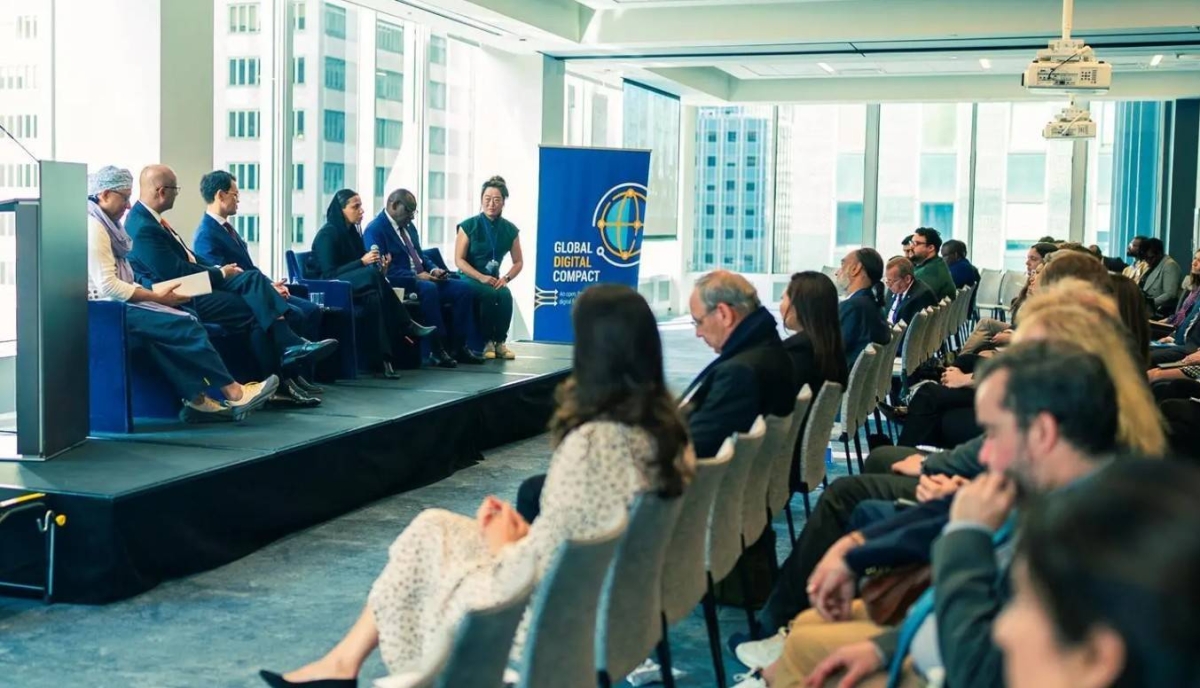
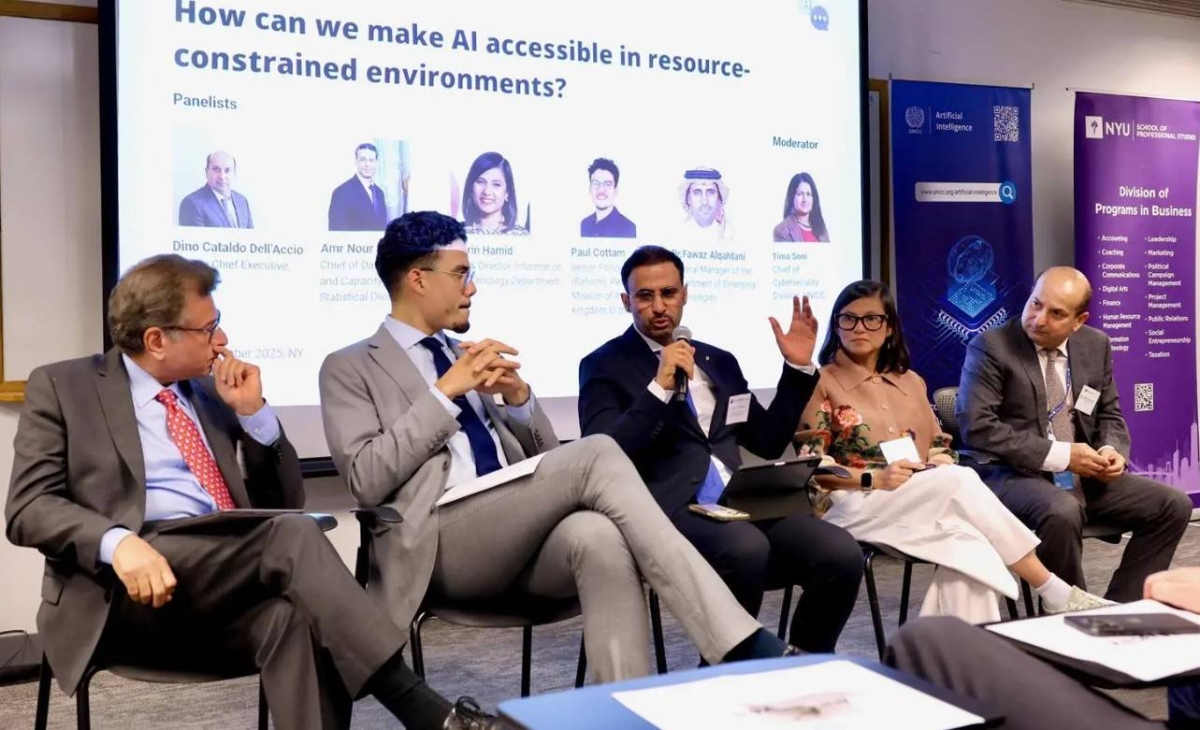
شاركت المملكة العربية السعودية، ممثلة في الهيئة السعودية للبيانات والذكاء الاصطناعي (سدايا)، أمس (الإثنين) في ثلاث جلسات أممية رفيعة المستوى ضمن أعمال الدورة الثمانين للجمعية العامة للأمم المتحدة (UNGA 80) المنعقدة هذه الأيام في مدينة نيويورك، بحضور كبار المسؤولين في المنظمات الدولية وممثلي جهات الذكاء الاصطناعي في مختلف دول العالم.
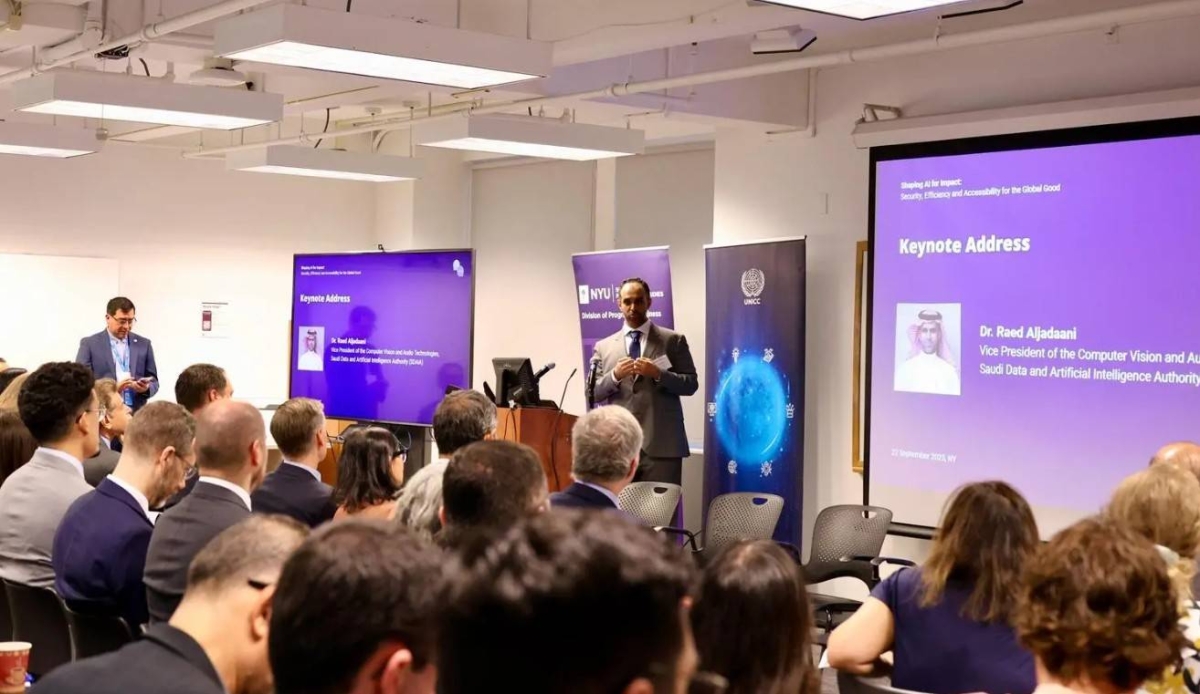
واستُهلّت المشاركة الأولى بجلسة أممية بعنوان: «تسخير الذكاء الاصطناعي وتعظيم أثره في الأمن والكفاءة من أجل الصالح العام» نظمها مركز الأمم المتحدة الدولي للحوسبة (UNICC) عبر «مركز الذكاء الاصطناعي»، في مقر جامعة نيويورك استعرض خلالها مساعد الرئيس التنفيذي لقطاع تقنيات الرؤية الحاسوبية والصوت في «سدايا» الدكتور رائد الجدعاني، تجربة المملكة في بناء منظومة متقدمة للذكاء الاصطناعي وتبنّي أحدث استخداماته التي أسهمت في توسيع آثاره الإيجابية على المستوى الوطني، مبينا أن التغلب على التحديات الرئيسة التي تواجه هذه التقنيات يُعد خطوة أساسية لإطلاق العنان لإمكانات الذكاء الاصطناعي وتسخيرها لخير المجتمعات البشرية.
وأكد أن المملكة أولت اهتماما كبيرا بتطوير القدرات البشرية، إدراكا منها أن استثمارات البنية التحتية والبيانات لن تحقق كامل إمكاناتها من دون كوادر وطنية مؤهلة، مفيدا أن «سدايا» أطلقت في هذا السياق الإطار الوطني للمعايير المهنية للبيانات والذكاء الاصطناعي الذي يحدد مؤشرات أداء واضحة للمتخصصين في المجال بمختلف مستويات المنظومة، بما يضمن توافق مهارات الكفاءات الوطنية مع المعايير العالمية.
كما أطلقت «سدايا» الإطار الأكاديمي السعودي لمؤهلات تخصصات الذكاء الاصطناعي، الذي يوجّه تصميم البرامج الأكاديمية والتدريبية وتقييمها بما يتماشى مع احتياجات سوق العمل ووفق أفضل الممارسات الدولية.
وأوضح أن هذه المبادرات تعكس نهجا إستراتيجيا شاملا عزز من جاهزية المملكة مما أكسبها اعترافا عالميا، حيث تحتل المرتبة السادسة عالميا في مؤشر الأمم المتحدة لتطوير الحكومة الإلكترونية، ومن بين أفضل 14 دولة في مؤشر الذكاء الاصطناعي العالمي.
وفي جلسة أخرى أكّدت مدير عام الإدارة العامة للشراكات الإستراتيجية والمؤشرات في «سدايا» رحاب بنت سعد العرفج أن المملكة نجحت في تحويل إستراتيجياتها في الذكاء الاصطناعي إلى واقع ملموس انعكس إيجابا على تحقيق جودة حياة المواطنين والمقيمين في المملكة، موضحة أن الإستراتيجية الوطنية للبيانات والذكاء الاصطناعي حصلت على المرتبة الأولى عالميا في فئة الإستراتيجية الحكومية وفق المؤشر العالمي للذكاء الاصطناعي
وأوضحت في الجلسة الدولية التي ناقشت سبل تعزيز التعاون الرقمي وتوطين الميثاق الرقمي العالمي (GDC) أن المملكة ترجمت هذه الإستراتيجيات إلى حلول نوعية مؤثرة، من أبرزها التطبيق الوطني الشامل «توكلنا» الذي أصبح بوابة وطنية موحدة لأكثر من 1000 خدمة، وحاز على جائزة الأمم المتحدة للخدمة العامة (UNPSA) لعام 2022 تقديرا لأثره المجتمعي، إضافة إلى «البنك الوطني للبيانات» الذي يربط أكثر من 385 نظاما حكوميا ويمكّن الجهات من الاستفادة من 480 خدمة، ما أسهم في تحقيق وفورات وعوائد تجاوزت 51 مليار ريال.
وأفادت أن هذه الجهود انعكست على مكانة المملكة في المؤشرات الدولية، إذ حققت المرتبة السادسة عالميا في مؤشر الأمم المتحدة لتطور الحكومة الإلكترونية، والمرتبة الأولى عالميا في المؤشر الفرعي لبيانات الحكومة المفتوحة، كما احتلت المرتبة الثانية عالميا في الوعي العام بالذكاء الاصطناعي، وتميزت بكونها الدولة الوحيدة التي تفوقت فيها مهارات المرأة على الرجل في مجال الذكاء الاصطناعي، في دلالة على شمولية التنمية الرقمية في المملكة.
ومن جهته استعرض مدير الإدارة العامة للتقنيات الحديثة بالمركز الوطني للذكاء الاصطناعي في «سدايا» الدكتور فواز القحطاني خلال مشاركته في جلسة نقاش أخرى العديد من الإستراتيجيات التي تمكّن المنظمات والشركات الصغيرة من توظيف الذكاء الاصطناعي لتحقيق كفاءة أعلى وخفض التكاليف التشغيلية، مبينا أن الاعتماد على تقنيات الأتمتة، والنشر الذكي، والقرارات المبنية على البيانات يمكن أن يحقق وفورات تراوح بين 10 و30% في مختلف المجالات التشغيلية.
ويأتي حضور المملكة ممثلة في «سدايا» في مثل هذه الجلسات الدولية تأكيدا لدورها الريادي في صياغة مستقبل الذكاء الاصطناعي على المستوى الدولي، من خلال إبراز مبادراتها الرائدة في الاستخدام المسؤول للتقنيات الناشئة، وتعزيز الشراكات بين الدول الأعضاء ومجتمع التقنية والقطاع الأكاديمي والخاص، بما يرسّخ مكانتها بوصفها شريكا دوليا موثوقا في صناعة القرار العالمي المتعلق بتقنيات الذكاء الاصطناعي.
The Kingdom of Saudi Arabia, represented by the Saudi Data and Artificial Intelligence Authority (SDAIA), participated yesterday (Monday) in three high-level UN sessions as part of the 80th session of the United Nations General Assembly (UNGA 80) currently taking place in New York City, with the presence of senior officials from international organizations and representatives of artificial intelligence entities from various countries around the world.
The first participation began with a UN session titled: "Harnessing Artificial Intelligence and Maximizing Its Impact on Security and Efficiency for the Common Good," organized by the United Nations International Computing Centre (UNICC) through the "Artificial Intelligence Center," at New York University. During this session, Dr. Raed Al-Jadani, Assistant CEO for Computer Vision and Audio Technologies at SDAIA, presented the Kingdom's experience in building an advanced artificial intelligence system and adopting the latest applications that have contributed to expanding its positive impacts at the national level, indicating that overcoming the main challenges facing these technologies is a fundamental step to unleash the potential of artificial intelligence and harness it for the benefit of human societies.
He emphasized that the Kingdom has placed great importance on developing human capabilities, recognizing that investments in infrastructure and data will not achieve their full potential without qualified national personnel. He noted that SDAIA has launched, in this context, the national framework for professional standards in data and artificial intelligence, which defines clear performance indicators for specialists in the field at various levels of the system, ensuring that the skills of national competencies align with global standards.
SDAIA also launched the Saudi academic framework for qualifications in artificial intelligence specialties, which guides the design and evaluation of academic and training programs in line with labor market needs and according to best international practices.
He explained that these initiatives reflect a comprehensive strategic approach that has enhanced the Kingdom's readiness, earning it global recognition, as it ranks sixth globally in the United Nations e-Government Development Index and among the top 14 countries in the Global Artificial Intelligence Index.
In another session, Rehab bint Saad Al-Oufaj, Director General of the General Administration for Strategic Partnerships and Indicators at SDAIA, confirmed that the Kingdom has succeeded in translating its artificial intelligence strategies into tangible realities that positively reflect on the quality of life for citizens and residents in the Kingdom. She explained that the national strategy for data and artificial intelligence ranked first globally in the government strategy category according to the Global Artificial Intelligence Index.
She clarified in the international session that discussed ways to enhance digital cooperation and localize the Global Digital Compact (GDC) that the Kingdom has translated these strategies into impactful qualitative solutions, most notably the comprehensive national application "Tawakkalna," which has become a unified national gateway for over 1,000 services and won the United Nations Public Service Award (UNPSA) for 2022 in recognition of its societal impact, in addition to the "National Data Bank," which connects more than 385 government systems and enables entities to benefit from 480 services, contributing to savings and returns exceeding 51 billion riyals.
She indicated that these efforts have reflected on the Kingdom's standing in international indicators, achieving sixth place globally in the United Nations e-Government Development Index, first place globally in the sub-index for open government data, and second place globally in public awareness of artificial intelligence. The Kingdom is distinguished as the only country where women's skills in artificial intelligence have surpassed those of men, indicating the inclusiveness of digital development in the Kingdom.
For his part, Dr. Fawaz Al-Qahtani, Director of the General Administration for Modern Technologies at the National Center for Artificial Intelligence in SDAIA, reviewed during his participation in another discussion session several strategies that enable organizations and small companies to leverage artificial intelligence to achieve higher efficiency and reduce operational costs, indicating that reliance on automation technologies, smart deployment, and data-driven decisions can achieve savings ranging from 10% to 30% in various operational areas.
The Kingdom's presence, represented by SDAIA, in such international sessions reaffirms its pioneering role in shaping the future of artificial intelligence at the international level, by highlighting its leading initiatives in the responsible use of emerging technologies and enhancing partnerships between member states, the technology community, and the academic and private sectors, thereby solidifying its position as a trusted international partner in global decision-making related to artificial intelligence technologies.