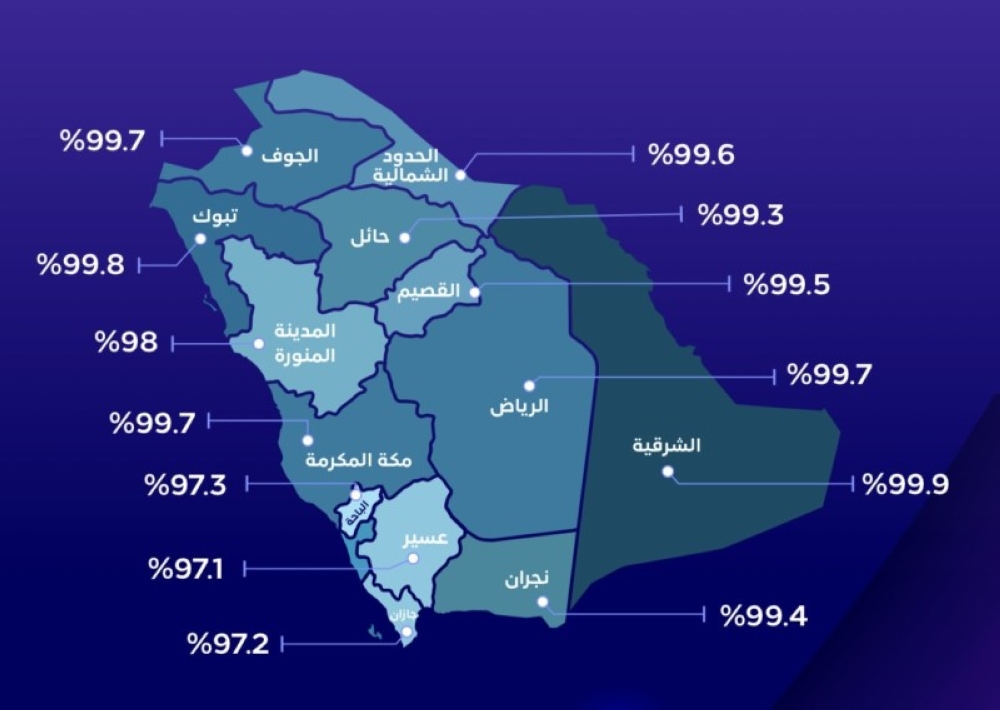
كشفت هيئة الاتصالات والفضاء والتقنية نسب انتشار استخدام الإنترنت في مناطق السعودية، وأظهرت البيانات تفاوتا طفيفا بين المناطق، مع تصدر الشرقية بنسبة 99.9% كأعلى معدل استخدام، فيما جاءت منطقة عسير في المرتبة الأخيرة بنسبة 97.1%. وتعكس هذه الأرقام التقدم الكبير في البنية التحتية الرقمية وتوسّع التغطية لخدمات الإنترنت في مختلف أنحاء المملكة.
وجاء الترتيب حسب نسب الانتشار: الشرقية: 99.9%، تبوك: 99.8%، مكة المكرمة والجوف والرياض: 99.7%، الحدود الشمالية: 99.6%، القصيم: 99.5%، نجران: 99.4%، حائل: 99.3%، المدينة المنورة: 98%، الباحة: 97.2%، وعسير: 97.1%.
وتُظهر النسب المرتفعة بشكل عام نجاح الخطط الوطنية في تعزيز الوصول الرقمي بجميع مناطق المملكة، إذ تجاوزت معظم المناطق حاجز 99%، وهو ما يعكس فاعلية الاستثمارات في البنية التحتية للاتصالات، والتوسّع في شبكات الجيل الخامس، وتحقيق أهداف التحول الرقمي ضمن رؤية المملكة 2030.
ورغم التحديات الجغرافية في بعض المناطق الجبلية أو الأقل كثافة سكانية، إلا أن المؤشرات تؤكد توجها وطنيا جادا نحو ضمان عدالة الوصول الرقمي لجميع المواطنين والمقيمين.
كما أن البيانات في سياق تقارير دولية سبق أن صنّفت المملكة ضمن الدول المتقدمة في سرعة الإنترنت، وجودة البنية التحتية الرقمية، مما يدعم تنافسيتها في مجالات الاقتصاد الرقمي والتقنيات الناشئة. وتؤكد أن المملكة تمضي بثقة نحو تحقيق مجتمع رقمي متكامل، يوفّر خدمات رقمية متقدمة، ويُسهم في رفع جودة الحياة، وتحفيز الاقتصاد المعرفي.
The Communications, Space and Technology Authority revealed the rates of internet usage across different regions of Saudi Arabia, showing slight variations between areas, with the Eastern Province leading at 99.9% as the highest usage rate, while the Asir region came last at 97.1%. These figures reflect significant progress in digital infrastructure and the expansion of internet service coverage throughout the Kingdom.
The ranking based on usage rates is as follows: Eastern Province: 99.9%, Tabuk: 99.8%, Makkah, Al-Jawf, and Riyadh: 99.7%, Northern Borders: 99.6%, Qassim: 99.5%, Najran: 99.4%, Ha'il: 99.3%, Medina: 98%, Al-Baha: 97.2%, and Asir: 97.1%.
The generally high rates indicate the success of national plans in enhancing digital access across all regions of the Kingdom, as most areas have surpassed the 99% threshold, reflecting the effectiveness of investments in telecommunications infrastructure, the expansion of 5G networks, and the achievement of digital transformation goals within the framework of Saudi Vision 2030.
Despite the geographical challenges in some mountainous or less populated areas, the indicators confirm a serious national direction towards ensuring equitable digital access for all citizens and residents.
Moreover, the data is contextualized within international reports that have previously classified the Kingdom among advanced countries in internet speed and the quality of digital infrastructure, supporting its competitiveness in the fields of digital economy and emerging technologies. It confirms that the Kingdom is confidently moving towards achieving an integrated digital society that provides advanced digital services, contributes to improving quality of life, and stimulates the knowledge economy.