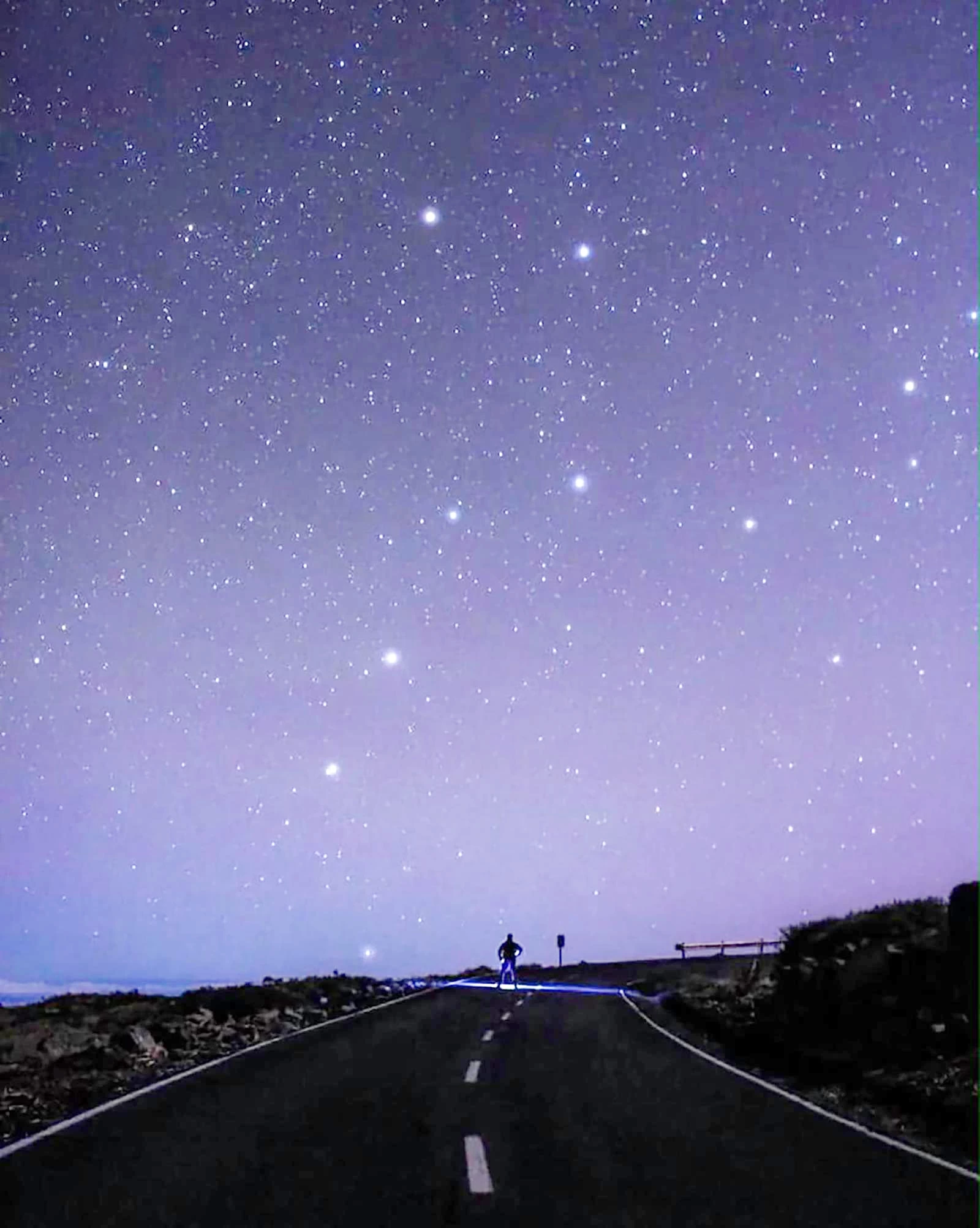
تشهد سماء المملكة والعالم العربي خلال نوفمبر 2026، ظواهر فلكية متنوعةً، تشمل أطوار القمر واقتراناته بالكواكب والنجوم، وزخات الشهب، وتقابل أورانوس، وفرصة رصد مجرة المرأة المسلسلة.
وأوضح رئيس الجمعية الفلكية بجدة المهندس ماجد أبو زاهرة، أن القمر يمر بالتربيع الأخير في 1 نوفمبر، والمحاق في 9 نوفمبر، والتربيع الأول في 17 نوفمبر، ويكتمل بدراً في 24 نوفمبر، قبل وصوله إلى الحضيض يوم 26 نوفمبر، فيما يُعرف إعلامياً بالبدر العملاق.
وتشهد سماء الفجر ظهور عطارد والزهرة والمريخ والمشتري بين 13 و22 نوفمبر، ويقترب الهلال من الزهرة في 7 نوفمبر، فيما يشكل المريخ والمشتري ونجم قلب الأسد مثلثاً فلكياً قبل شروق 22 نوفمبر.
وتبلغ الثوريات الشمالية ذروتها ليلة 11 و12 نوفمبر، والأسديات ليلة 17 و18 نوفمبر بمعدل 10 إلى 15 شهاباً في الساعة، كما تنشط الثوريات الجنوبية بمعدل خمسة شهب.
ويقترب القمر من زحل في 20 نوفمبر، ومن الثريا والدبران يومي 24 و25 نوفمبر، ويصل أورانوس إلى التقابل في 26 نوفمبر.
وتتيح ليالي نوفمبر رصد مجرة أندروميدا، البعيدة 2.5 مليون سنة ضوئية، من المواقع المظلمة، مع مراعاة تكيف العين مع الظلام نحو 20 دقيقة.
The sky of the Kingdom and the Arab world will witness various astronomical phenomena during November 2026, including the phases of the moon and its conjunctions with planets and stars, meteor showers, the opposition of Uranus, and the opportunity to observe the Andromeda Galaxy.
The head of the Astronomical Society in Jeddah, Engineer Majid Abu Zahra, explained that the moon will reach its last quarter on November 1, the new moon on November 9, the first quarter on November 17, and will be full on November 24, before reaching its perigee on November 26, which is popularly known as the supermoon.
During the dawn sky, Mercury, Venus, Mars, and Jupiter will appear between November 13 and 22, with the crescent moon approaching Venus on November 7, while Mars, Jupiter, and the star Regulus will form an astronomical triangle before sunrise on November 22.
The northern Taurids will peak on the nights of November 11 and 12, and the Leonids on the nights of November 17 and 18, with a rate of 10 to 15 meteors per hour, while the southern Taurids will be active at a rate of five meteors.
The moon will approach Saturn on November 20, and the Pleiades and Aldebaran on November 24 and 25, while Uranus will reach opposition on November 26.
The nights of November provide the opportunity to observe the Andromeda Galaxy, which is 2.5 million light-years away, from dark locations, taking into account that the eyes need to adapt to the darkness for about 20 minutes.