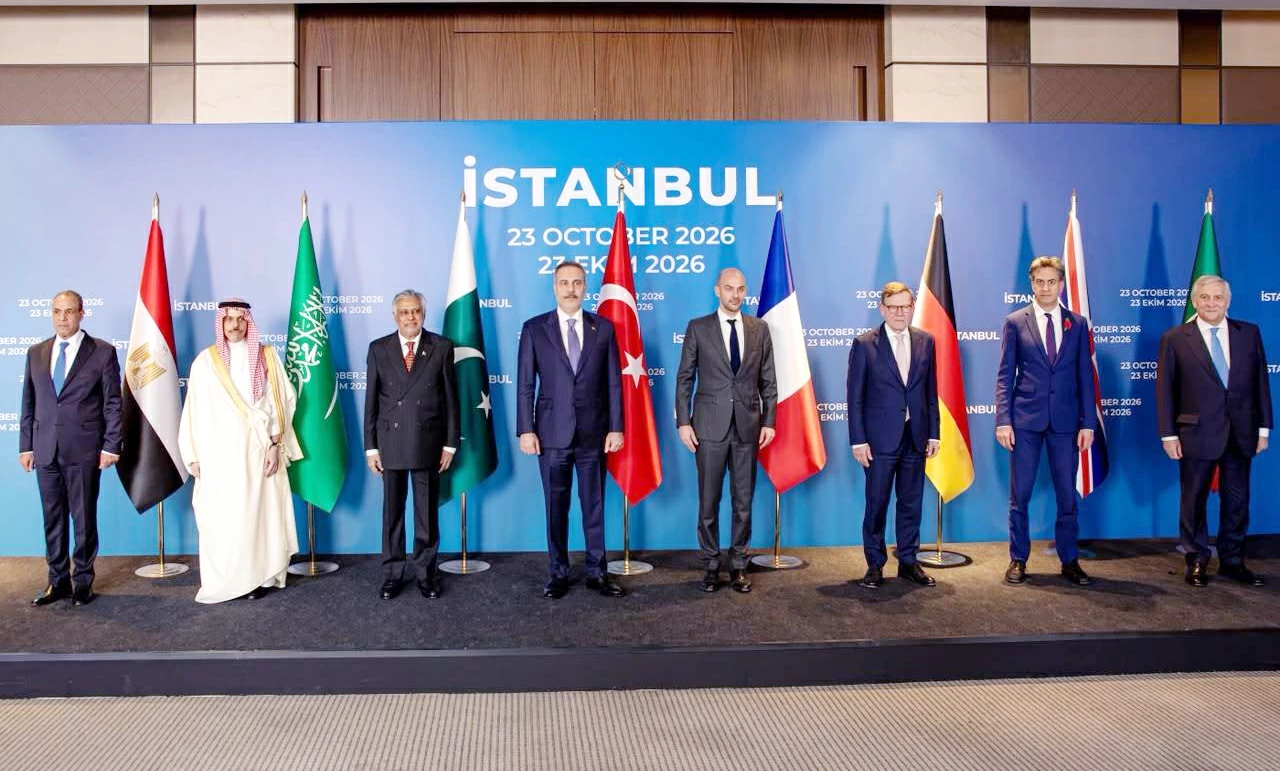
اجتمع وزراء خارجية المملكة العربية السعودية وتركيا ومصر وباكستان، إلى جانب وزراء خارجية فرنسا وألمانيا وإيطاليا والمملكة المتحدة، في إسطنبول، أمس، لبحث عدد من القضايا الإقليمية والدولية، في مقدمتها الصراع الأمريكي الإسرائيلي الإيراني، والصراع الإسرائيلي الفلسطيني، والهجمات الحوثية على المملكة واليمن، والتوترات المتصاعدة في الممرات البحرية.
وناقش الوزراء ضرورة التوصل إلى حل الدولتين عبر المفاوضات، وتداعيات الهجمات التي شنتها الميليشيا الحوثية على المملكة العربية السعودية وحكومة اليمن، إلى جانب أمن وحرية الملاحة، وتصاعد التوتر في مضيق هرمز وباب المندب والبحر الأسود.
وأكدوا، التزامهم بمواصلة الإسهام في الجهود الدبلوماسية الرامية إلى تعزيز السلام والاستقرار في المنطقة وخارجها، ومعالجة التداعيات الأمنية والاقتصادية والتجارية لهذه القضايا.
وشدد الوزراء على الحاجة الملحة إلى معالجة النزاعات الإقليمية عبر الحوار والدبلوماسية وخفض التصعيد، وإيجاد حلول تفاوضية مستدامة للنزاعات العالقة، استناداً إلى قرارات الأمم المتحدة ذات الصلة، واتفقوا على مواصلة الحوار لمنع النزاعات وتعزيز السلام والاستقرار في المنطقة.
The foreign ministers of the Kingdom of Saudi Arabia, Turkey, Egypt, and Pakistan, along with the foreign ministers of France, Germany, Italy, and the United Kingdom, gathered in Istanbul yesterday to discuss a number of regional and international issues, primarily the U.S.-Israeli-Iranian conflict, the Israeli-Palestinian conflict, the Houthi attacks on the Kingdom and Yemen, and the escalating tensions in maritime corridors.
The ministers discussed the necessity of reaching a two-state solution through negotiations, the repercussions of the attacks launched by the Houthi militia on the Kingdom of Saudi Arabia and the Yemeni government, as well as the security and freedom of navigation, and the rising tensions in the Strait of Hormuz, Bab el-Mandeb, and the Black Sea.
They reaffirmed their commitment to continue contributing to diplomatic efforts aimed at promoting peace and stability in the region and beyond, and addressing the security, economic, and trade repercussions of these issues.
The ministers emphasized the urgent need to address regional conflicts through dialogue and diplomacy, de-escalation, and finding sustainable negotiated solutions to the ongoing disputes, based on relevant United Nations resolutions, and agreed to continue the dialogue to prevent conflicts and promote peace and stability in the region.