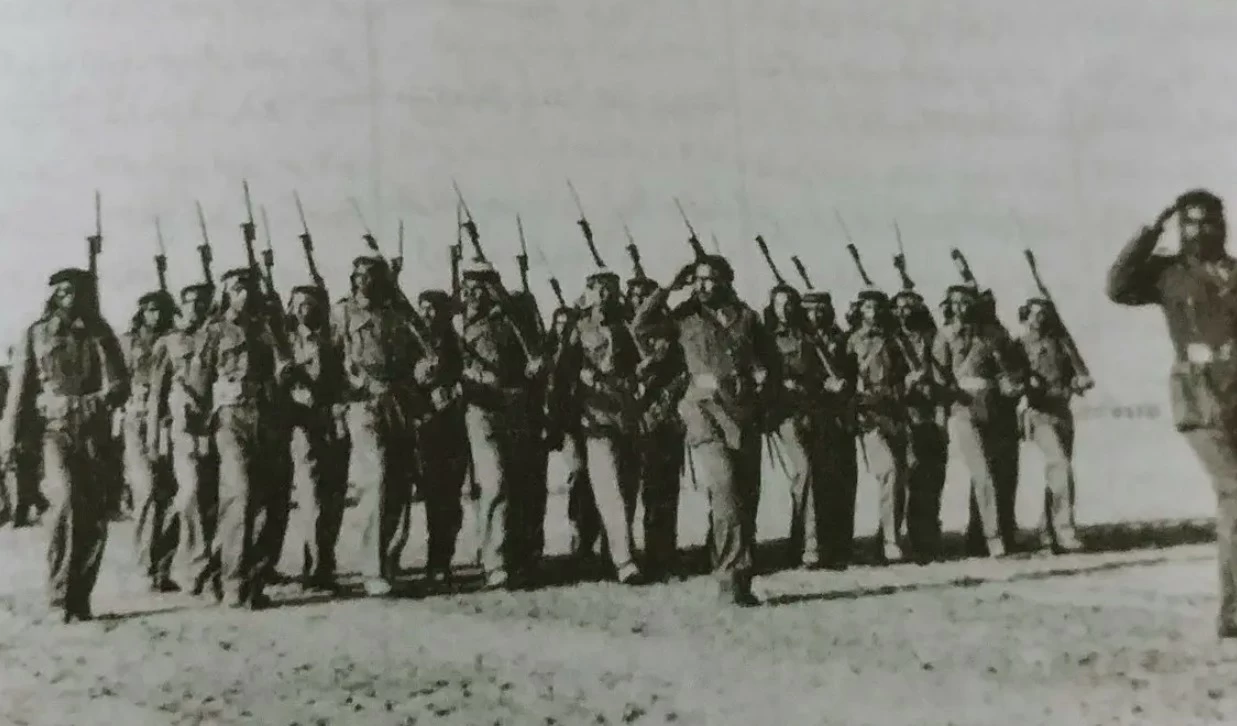
قبل أكثر من ثلاثة أرباع قرن، حمل سعوديون سلاحهم وعلم بلادهم وتوجهوا إلى فلسطين، في صفحة عسكرية حفظتها الصور والوثائق والمذكرات وشهادات الرجال الذين عاشوا حرب عام 1948، خلال عهد الملك عبدالعزيز بن عبدالرحمن آل سعود.
وتوثق دارة الملك عبدالعزيز تلك المشاركة بصور تاريخية لمجموعة من ضباط الجيش السعودي المشاركين في الدفاع عن فلسطين خلال عامي 1367-1368هـ/1948م، ونشرتها الدارة عبر حسابها الرسمي بوصفها جزءًا من الذاكرة التاريخية للمملكة ومشاركتها في القضية الفلسطينية.
جيش ومتطوعون
تكشف المصادر التاريخية، أن المشاركة السعودية اتخذت أكثر من مسار؛ إذ شاركت قوات من الجيش السعودي، إلى جانب سعوديين تطوعوا للقتال. وتشير مادة أرشيفية عن وثائق دارة الملك عبدالعزيز إلى أن الملك عبدالعزيز فتح باب التطوع استجابة لدعوة جامعة الدول العربية، فيما تجمعت قوات في قطنا قرب دمشق للتدريب قبل انتقالها إلى ميدان القتال في فلسطين.
ويوثق كتاب «مذكرات قائد الفوج السعودي في حرب تحرير فلسطين الأولى 1948م»، الذي أعده ووثقه العقيد خالد سعدون الشمري عن مذكرات والده العقيد سعدون حسين الشمري، جانبًا واسعًا من مشاركة السعوديين. ويضم الكتاب، الواقع في 432 صفحة، ملاحق بأسماء 376 متطوعًا سعوديًا من مدن ومناطق المملكة المختلفة، إضافة إلى أسماء الشهداء والجرحى والحاصلين على الأوسمة، وتشكيلات الفوج ووظائف أفراده وسجل المعارك والبرقيات والأوامر العسكرية والصور النادرة.
«نداء الشهامة»
لم تكتفِ دارة الملك عبدالعزيز بحفظ الصور؛ بل أنتجت الفيلم الوثائقي «نداء الشهامة.. الجيش السعودي في فلسطين 1367هـ/1948م»، مستعيدةً شهادات سعوديين شاركوا بأنفسهم في الحرب.
ويروي الفريق المتقاعد علي ماجد قباني، في الفيلم، أن القوات السعودية كانت مكونة من سريتين حربيتين كُلّفتا بالدفاع عن مدينة غزة، وتمركزتا في مواقع تباب علي المنطار شرق المدينة، ضمن العمليات العسكرية على الطريق الرابط بين غزة والمجدل.
أما المشارك إبراهيم بن ثواب العتيبي، فروى أن السعوديين حملوا العلم السعودي، وانتقلوا بين عدد من ميادين القتال، من المالكية إلى سعسع والرامة والشجرة. وقال في شهادته إن عدد المتطوعين السعوديين بلغ 513 متطوعًا، استشهد منهم 134، وأصيب 34 بجروح خطيرة، وحصل 130 على أوسمة.
ويختلف رقم 513 الوارد في شهادة العتيبي عن قائمة 376 متطوعًا الموثقة في ملاحق كتاب قائد الفوج؛ وهو ما يرجح اختلاف نطاق الحصر والتشكيلات التي يتناولها كل مصدر، ولذلك ينبغي إبقاء الرقمين منفصلين عند توثيق المشاركة.
السعوديون في غزة
تكشف شهادة قباني عن حضور القوات السعودية في غزة نفسها، فيما تحدث اللواء المتقاعد علي الذياب اليامي في وثائقي الدارة عن مشاركته ضمن فوج عسكري من السعوديين عُرف باسم «فوج اليرموك الأول»، ومشاركته في الهجوم على أحد المعسكرات المحصنة. كما سجل الفيلم شهادة العميد فايز بن عبدالخالق الأسمري عن العمليات التي شارك فيها السعوديون حتى توقف القتال بفعل الهدنة.
وهكذا بقيت صورة ضباط الجيش السعودي التي تحتفظ بها دارة الملك عبدالعزيز، ومذكرات قائد الفوج، وشهادات الرجال، سجلًا لأسماء سعوديين خرجوا من مناطق مختلفة من المملكة والتقت وجهتهم في فلسطين عام 1948.
اختلفت مناطقهم ومدنهم.. وحملوا راية واحدة ووجهة واحدة: فلسطين.
More than three-quarters of a century ago, Saudis took up their weapons and their country's flag and headed to Palestine, in a military chapter preserved by photographs, documents, memoirs, and the testimonies of the men who lived through the 1948 war, during the reign of King Abdulaziz bin Abdulrahman Al Saud.
The King Abdulaziz Foundation documents that participation with historical photographs of a group of Saudi army officers who participated in defending Palestine during the years 1367-1368 AH/1948 AD, and the foundation published them through its official account as part of the historical memory of the Kingdom and its involvement in the Palestinian cause.
Army and Volunteers
Historical sources reveal that Saudi participation took more than one form; as forces from the Saudi army participated alongside Saudis who volunteered to fight. An archival document from the King Abdulaziz Foundation indicates that King Abdulaziz opened the door for volunteering in response to a call from the Arab League, while forces gathered in Qatana near Damascus for training before moving to the battlefield in Palestine.
The book "Memoirs of the Commander of the Saudi Battalion in the First Liberation War of Palestine 1948," prepared and documented by Colonel Khalid Saadoun Al-Shammari based on the memoirs of his father, Colonel Saadoun Hussein Al-Shammari, documents a wide aspect of Saudi participation. The book, which spans 432 pages, includes appendices with the names of 376 Saudi volunteers from various cities and regions of the Kingdom, in addition to the names of martyrs, the wounded, and those who received medals, as well as the battalion formations, the roles of its members, battle records, telegrams, military orders, and rare photographs.
"The Call of Honor"
The King Abdulaziz Foundation did not stop at preserving photographs; it produced the documentary film "The Call of Honor... The Saudi Army in Palestine 1367 AH/1948 AD," recalling the testimonies of Saudis who participated in the war.
Retired Major General Ali Majid Qabbani recounts in the film that the Saudi forces consisted of two combat companies tasked with defending the city of Gaza, stationed at positions on the hills of Al-Muntar east of the city, as part of the military operations on the road linking Gaza and Majdal.
As for participant Ibrahim bin Thawab Al-Otaibi, he recounted that the Saudis carried the Saudi flag and moved between several battlefields, from Al-Malkiya to Sa'sa and Al-Rama and Al-Shajara. In his testimony, he stated that the number of Saudi volunteers reached 513, of whom 134 were martyred, 34 were seriously injured, and 130 received medals.
The figure of 513 mentioned in Al-Otaibi's testimony differs from the list of 376 documented volunteers in the appendices of the battalion commander's book; this suggests a difference in the scope of the count and the formations addressed by each source, and therefore the two numbers should be kept separate when documenting participation.
Saudis in Gaza
Qabbani's testimony reveals the presence of Saudi forces in Gaza itself, while retired Major General Ali Al-Dhiab Al-Yami spoke in the foundation's documentary about his participation in a military battalion of Saudis known as the "First Yarmouk Battalion," and his involvement in the attack on one of the fortified camps. The film also recorded the testimony of Brigadier General Faiz bin Abdulkhaleq Al-Asmari about the operations in which the Saudis participated until the fighting ceased due to the truce.
Thus, the image of the Saudi army officers preserved by the King Abdulaziz Foundation, the memoirs of the battalion commander, and the testimonies of the men remain a record of the names of Saudis who came from different regions of the Kingdom and converged their destination in Palestine in 1948.
Their regions and cities differed... but they carried one flag and one destination: Palestine.