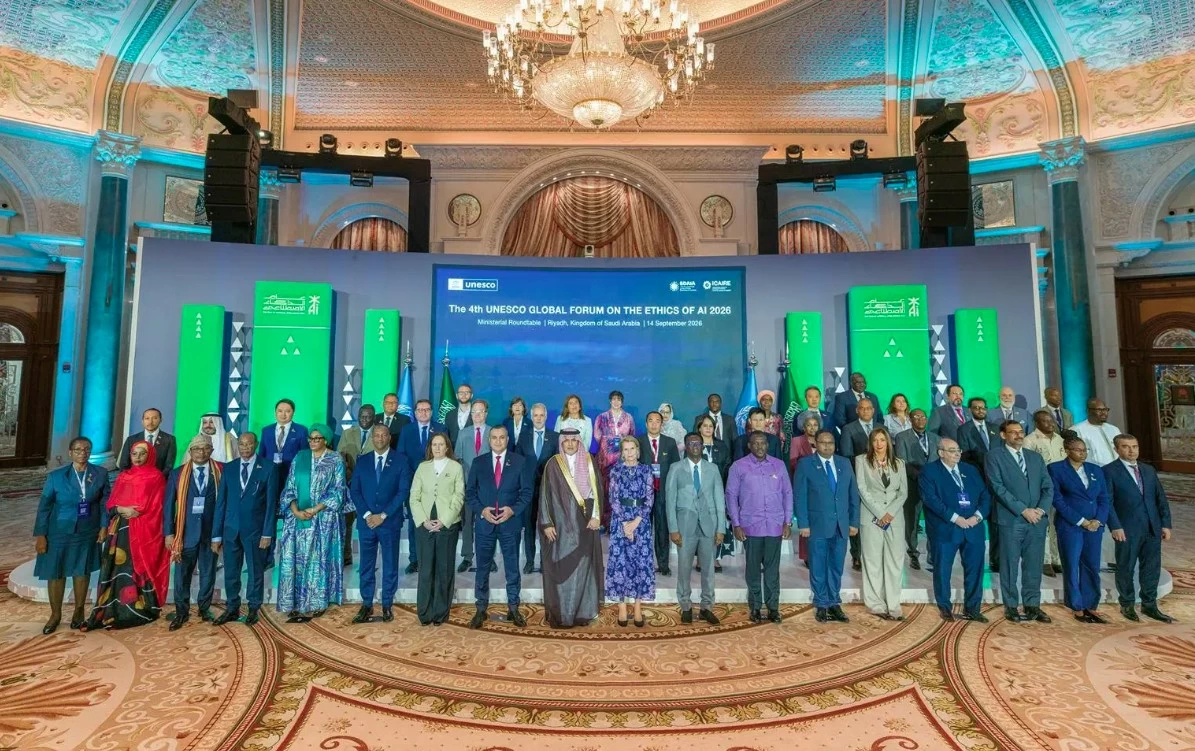
صدر بيان دولي مشترك بين المملكة العربية السعودية، ومنظمة الأمم المتحدة للتربية والعلم والثقافة (اليونسكو)، والمركز الدولي لأبحاث وأخلاقيات الذكاء الاصطناعي (آيكير)، عقب الاجتماع الوزاري المغلق الذي عُقد أمس بمدينة الرياض، ضمن أعمال النسخة الرابعة من منتدى اليونسكو العالمي لأخلاقيات الذكاء الاصطناعي، الذي تستضيفه المملكة العربية السعودية، خلال الفترة من 14 – 17 سبتمبر 2026، تحت شعار «تعاون دولي من أجل ذكاء اصطناعي مسؤول»، بمشاركة أكثر من 60 وزيراً وممثلاً دولياً حول العالم.
ورأس الاجتماع ممثل المملكة العربية السعودية، رئيس الهيئة السعودية للبيانات والذكاء الاصطناعي (سدايا) رئيس مجلس إدارة المركز الدولي لأبحاث وأخلاقيات الذكاء الاصطناعي (آيكير) الدكتور عبدالله بن شرف الغامدي، وعن منظمة اليونسكو نائبة المدير العام للمنظمة آسا رينير.
وفي بداية الاجتماع، رحب الدكتور الغامدي، بضيوف المملكة في هذا المنتدى، مشيداً بالتعاون البناء مع منظمة اليونسكو في عدد من المجالات لما فيه خير ومصلحة شعوب العالم في مجال الذكاء الاصطناعي الذي أضحى يتطور بشكل متسارع مع التقدم الذي تشهده التقنيات الحديثة في أنحاء العالم.
وجاء نص البيان على النحو التالي:
التعاون الدولي
شهد الاجتماع مناقشات مثرية بين الوزراء وكبار المسؤولين الممثلين لـ60 دولة في العالم، بشأن الفرص والتحديات التي يطرحها الذكاء الاصطناعي، مع التأكيد على أهمية تعزيز التعاون الدولي لضمان إسهام تطويره ونشره واستخدامه في رفاه الإنسان والتنمية المستدامة والصالح العام، مؤكدين أهمية الاستمرار في الاسترشاد بتوصية اليونسكو لأخلاقيات الذكاء الاصطناعي التي أُقرت عام 2021، بوصفها الأداة المعيارية العالمية التي توفر إطاراً مشتركاً لتوجيه تطوير الذكاء الاصطناعي ونشره واستخدامه على نحو أخلاقي وآمن وشامل ومستدام، مما يعزز الصالح العام وحقوق الإنسان والحريات الأساسية ورفاه الإنسان.
توصية اليونسكو
أشاد المشاركون في الاجتماع بالدور الريادي لمنظمة اليونسكو في حوكمة الذكاء الاصطناعي، وبمنهجية تقييم الجاهزية (RAM) وتقييم الأثر الأخلاقي (EIA)، بوصفهما أداتين عمليتين تدعمان الدول الأعضاء في صياغة السياسات الوطنية وتطوير الممارسات المؤسسية، مع تشجيع اليونسكو على تكثيف دعمها للدول الأعضاء لوضع إستراتيجيات وطنية تسترشد بهذه الأدوات وتأخذ في الاعتبار تباين السياقات والقدرات الوطنية والتنوع الثقافي واللغوي.
تقليص الفجوات
شدد المشاركون على أهمية التعاون الدولي والحوار بين الثقافات والتعلم المتبادل، ولا سيما في ظل التطور التقني السريع والبيئة العالمية المعقدة، ودور التعاون متعدد الأطراف في تعزيز الثقة والمشاركة الشاملة في تشكيل تقنيات الذكاء الاصطناعي وحوكمتها، بمشاركة فاعلة من النساء والشباب، مع إيلاء اهتمام خاص لحاجات الدول النامية ومشاركتها - لا سيما في أفريقيا - والعمل على تقليص الفجوات في الوصول إلى قدرات الذكاء الاصطناعي وبنيته التحتية.
تعزيز البنية التحتية
أكد المشاركون أهمية تعزيز البنية التحتية والقدرات المؤسسية والمهارات العامة وتبادل المعرفة بوصفها ركائز أساسية لضمان استخدام آمن وأخلاقي للذكاء الاصطناعي، إلى جانب تعزيز التعاون بين الحكومات والمنظمات الدولية والأوساط الأكاديمية والقطاع الخاص والمجتمع المدني لمواجهة التحديات التي تتجاوز الحدود الوطنية.
تحفيز الابتكار المسؤول
رحب رئيسا الاجتماع بروح الحوار والتعاون التي سادت مناقشات الوزراء، ودعيا الدول الأعضاء وأصحاب المصلحة كافة إلى تعزيز تنفيذ توصية اليونسكو بشأن أخلاقيات الذكاء الاصطناعي عبر أُطر الحوكمة الوطنية وتنمية القدرات، ونوّها بأهمية دعم التعاون الدولي لتطوير الذكاء الاصطناعي ونشره بشكل أخلاقي وآمن ومستدام، وحماية التنوع الثقافي واللغوي ومراعاة الأولويات والسياقات الوطنية، مع تعزيز الحوار وتبادل المعرفة بين مختلف أصحاب المصلحة لتمكين الجميع من الاستفادة من هذه التقنيات، فضلاً عن تحفيز الابتكار المسؤول ومعالجة المخاطر المحتملة بما يحفظ حقوق الإنسان وكرامته، وتعزيز الإلمام بالذكاء الاصطناعي وتمكين الأطفال والشباب والمشاركة في حوكمته مع حماية حقوقهم وسلامتهم في البيئة الرقمية.
A joint international statement was issued between the Kingdom of Saudi Arabia, the United Nations Educational, Scientific and Cultural Organization (UNESCO), and the International Center for Artificial Intelligence Research and Ethics (AIKER), following a closed ministerial meeting held yesterday in Riyadh, as part of the fourth edition of the UNESCO Global Forum on Artificial Intelligence Ethics, hosted by the Kingdom of Saudi Arabia from September 14 to 17, 2026, under the slogan “International Cooperation for Responsible Artificial Intelligence,” with the participation of more than 60 ministers and international representatives from around the world.
The meeting was chaired by the representative of the Kingdom of Saudi Arabia, the President of the Saudi Data and Artificial Intelligence Authority (SDAIA) and Chairman of the Board of the International Center for Artificial Intelligence Research and Ethics (AIKER), Dr. Abdullah bin Sharaf Al-Ghamdi, and from UNESCO, the Deputy Director-General of the organization, Asa Renner.
At the beginning of the meeting, Dr. Al-Ghamdi welcomed the guests of the Kingdom to this forum, praising the constructive cooperation with UNESCO in several areas for the benefit and interest of the peoples of the world in the field of artificial intelligence, which has been rapidly evolving with the advancements seen in modern technologies around the world.
The statement read as follows:
International Cooperation
The meeting witnessed enriching discussions among ministers and senior officials representing 60 countries worldwide regarding the opportunities and challenges posed by artificial intelligence, emphasizing the importance of enhancing international cooperation to ensure that its development, dissemination, and use contribute to human welfare, sustainable development, and the common good. They affirmed the importance of continuing to be guided by UNESCO's Recommendation on the Ethics of Artificial Intelligence, adopted in 2021, as the global normative tool that provides a common framework for guiding the development, dissemination, and use of artificial intelligence in an ethical, safe, inclusive, and sustainable manner, thereby enhancing the common good, human rights, fundamental freedoms, and human welfare.
UNESCO Recommendation
The participants in the meeting praised UNESCO's leading role in the governance of artificial intelligence, and the Readiness Assessment Methodology (RAM) and Ethical Impact Assessment (EIA) as practical tools that support member states in formulating national policies and developing institutional practices, encouraging UNESCO to intensify its support for member states to establish national strategies guided by these tools, taking into account the diversity of contexts, national capacities, and cultural and linguistic diversity.
Bridging the Gaps
The participants stressed the importance of international cooperation, intercultural dialogue, and mutual learning, especially in light of rapid technological advancement and the complex global environment, and the role of multilateral cooperation in fostering trust and inclusive participation in shaping and governing artificial intelligence technologies, with active participation from women and youth, paying special attention to the needs and involvement of developing countries—especially in Africa—and working to bridge the gaps in access to artificial intelligence capabilities and infrastructure.
Enhancing Infrastructure
The participants confirmed the importance of enhancing infrastructure, institutional capacities, general skills, and knowledge exchange as essential pillars to ensure the safe and ethical use of artificial intelligence, alongside strengthening cooperation among governments, international organizations, academia, the private sector, and civil society to address challenges that transcend national borders.
Stimulating Responsible Innovation
The chairs of the meeting welcomed the spirit of dialogue and cooperation that prevailed in the discussions among the ministers, calling on member states and all stakeholders to enhance the implementation of UNESCO's Recommendation on the Ethics of Artificial Intelligence through national governance frameworks and capacity development. They highlighted the importance of supporting international cooperation to develop and disseminate artificial intelligence in an ethical, safe, and sustainable manner, protecting cultural and linguistic diversity, and considering national priorities and contexts, while enhancing dialogue and knowledge exchange among various stakeholders to enable everyone to benefit from these technologies, as well as stimulating responsible innovation and addressing potential risks while safeguarding human rights and dignity, enhancing awareness of artificial intelligence, empowering children and youth, and involving them in its governance while protecting their rights and safety in the digital environment.