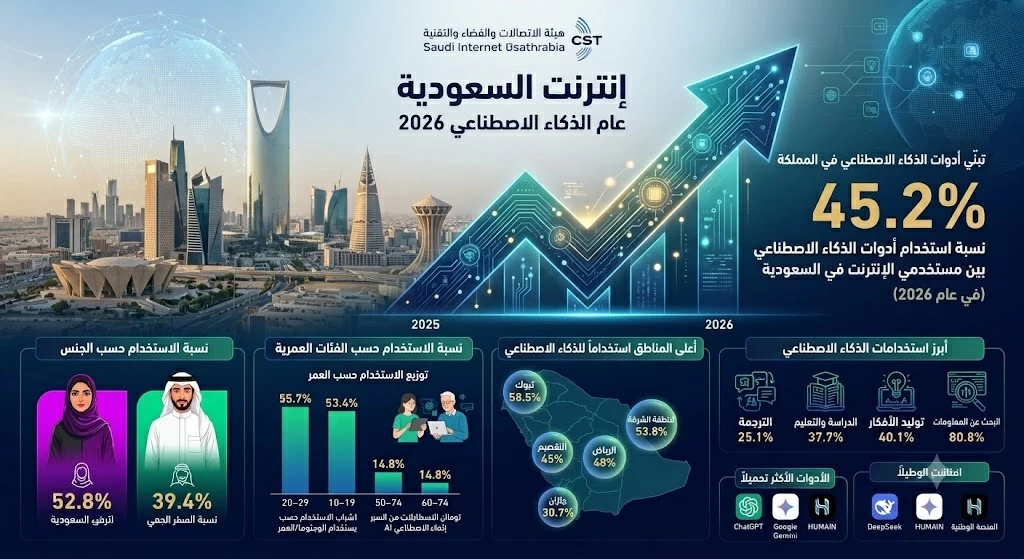
سجّل تبنّي أدوات الذكاء الاصطناعي في المملكة نموًا غير مسبوق، بعدما كشف تقرير (إنترنت السعودية) في نسخته الخامسة، الصادر عن هيئة الاتصالات والفضاء والتقنية، أن نسبة استخدام هذه الأدوات بين مستخدمي الإنترنت بلغت 45.2% خلال عام 2026، أي أكثر من ضعف ما سُجّل في العام السابق، في وقت تشهد فيه المملكة زخمًا واسعًا بالتزامن مع إطلاق (عام الذكاء الاصطناعي 2026).
وأظهر التقرير اتساع قاعدة المستخدمين عبر مختلف الفئات، إذ بلغت نسبة الاستخدام لدى الإناث 52.8% مقابل 39.4% لدى الذكور، فيما تصدّرت الفئة العمرية 20–29 عامًا بنسبة 55.7%، تلتها الفئة 10–19 عامًا بنسبة 53.4%، لتنخفض تدريجيًا مع التقدم في العمر وصولًا إلى 14.8% لدى الفئة 60–74 عامًا.
وعلى مستوى المناطق، جاءت منطقة تبوك في الصدارة بنسبة 58.5%، تلتها المنطقة الشرقية بنسبة 53.8%، بينما سجّلت جازان أدنى نسبة استخدام عند 30.7%، ما يعكس تفاوتًا في سرعة تبنّي التقنيات بين المناطق.
وفيما يتعلق بأوجه الاستخدام، تصدّر البحث عن المعلومات بنسبة 80.8%، يليه توليد الأفكار بنسبة 40.1%، ثم الدراسة والتعليم بنسبة 37.7%، وإنشاء الصور والفيديو والعروض التقديمية بنسبة 25.7%، والترجمة اللغوية بنسبة 25.1%، بينما بلغت نسبة استخدامها في مهام العمل نحو 17.3%.
وعلى مستوى التطبيقات، جاء ChatGPT في صدارة الأدوات الأكثر تحميلًا في المملكة، تلاه Google Gemini ثم DeepSeek، فيما ضمّت القائمة المنصة الوطنية HUMAIN التي تعكس حضورًا محليًا متناميًا في سوق الذكاء الاصطناعي.
وتزامن هذا النمو مع تقلّص الفجوة الرقمية بين كبار السن، إذ ارتفعت نسبة انتشار استخدام الإنترنت لدى الفئة 60–74 عامًا من 88.9% في 2024 إلى 92.8% في 2025، بزيادة 3.9 نقاط مئوية خلال عام واحد، ما يعزز قدرة هذه الفئة على الاستفادة من الخدمات الرقمية الحديثة.
ويؤكد التقرير أن هذا التوسع في استخدام أدوات الذكاء الاصطناعي يعكس تطور البيئة الرقمية في المملكة، في ظل جهود حكومية وتنظيمية مستمرة لتبنّي أفضل الممارسات العالمية، وتعزيز الابتكار، ورفع مستوى الجاهزية التقنية. كما يأتي هذا النمو بعد تحقيق المملكة المرتبة الأولى عالميًا في مؤشر الجاهزية الرقمية لعام 2025 الصادر عن الاتحاد الدولي للاتصالات، ما يعزز مكانتها في مسيرة التحول الرقمي وفق مستهدفات رؤية السعودية 2030.
The adoption of artificial intelligence tools in the Kingdom has witnessed unprecedented growth, as revealed by the fifth edition of the (Internet Saudi Arabia) report, issued by the Communications, Space, and Technology Commission, which indicated that the usage rate of these tools among internet users reached 45.2% in 2026, more than double the figure recorded in the previous year, at a time when the Kingdom is experiencing significant momentum coinciding with the launch of (The Year of Artificial Intelligence 2026).
The report showed an expansion in the user base across various demographics, with the usage rate among females at 52.8% compared to 39.4% among males, while the age group of 20–29 years led with a rate of 55.7%, followed by the 10–19 age group at 53.4%, gradually decreasing with age down to 14.8% in the 60–74 age group.
Regionally, the Tabuk area ranked first with a rate of 58.5%, followed by the Eastern Province at 53.8%, while Jazan recorded the lowest usage rate at 30.7%, reflecting disparities in the speed of technology adoption among regions.
Regarding usage aspects, information searching topped the list at 80.8%, followed by idea generation at 40.1%, then study and education at 37.7%, creation of images, videos, and presentations at 25.7%, and language translation at 25.1%, while the usage rate for work tasks was around 17.3%.
In terms of applications, ChatGPT was the most downloaded tool in the Kingdom, followed by Google Gemini and then DeepSeek, while the national platform HUMAIN was included in the list, reflecting a growing local presence in the artificial intelligence market.
This growth coincided with a reduction in the digital divide among the elderly, as the internet usage rate among the 60–74 age group increased from 88.9% in 2024 to 92.8% in 2025, an increase of 3.9 percentage points within one year, enhancing this group's ability to benefit from modern digital services.
The report confirms that this expansion in the use of artificial intelligence tools reflects the development of the digital environment in the Kingdom, amid ongoing governmental and regulatory efforts to adopt the best global practices, enhance innovation, and raise the level of technical readiness. This growth follows the Kingdom achieving the first global rank in the Digital Readiness Index for 2025 issued by the International Telecommunication Union, reinforcing its position in the digital transformation journey in line with the objectives of Saudi Vision 2030.