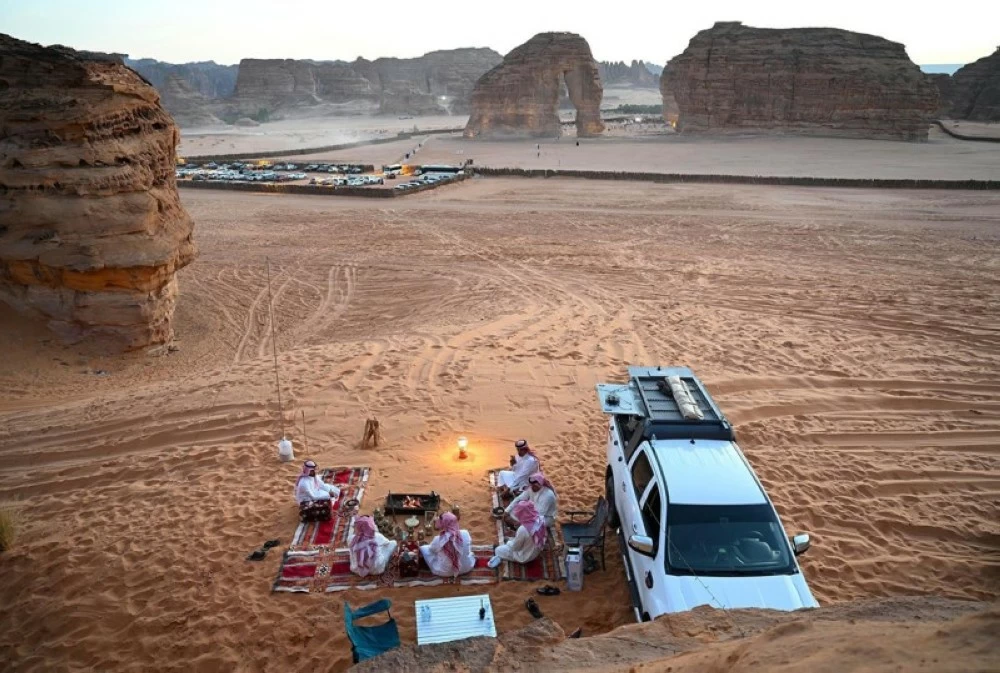
على ضوء النار، تمتد الأحاديث وتفتح مساحة واسعة للبساطة، فالبر هو الهروب الأجمل من ضجيج المدن إلى هدوء وسكون يشبهان استراحة الروح، فيه تستعيد الصحراء وبراريها ذاكرتها القديمة مع نسمات الشتاء التي تتسلل إلى المساءات، وتعود إليها «الكشتة» كطقس اجتماعي لا يقتصر على الخروج من صخب المدينة، بل يتجاوز إلى استعادة معنى البساطة واللقاء والدفء الإنساني.
ففي البر، تتصافح النجوم مع نار الحطب، وتتشكّل حكايات وذكريات لا تُكتب، لكنها تُحفظ في الذاكرة والوجدان.
تبدأ الحكاية مع الغروب؛ سيارات تصطف، وخيام تُنصب، ونار تُوقد، وكأنها قلب المكان النابض.
ومع اشتداد البرودة، تتقارب الجلسات وتعلو الضحكات، ويصبح الصمت لغة مشتركة بين الأصدقاء، تقطعه فناجين القهوة والدلال العربية.
ولا تكتمل «الكشتة» دون أطباقها الشعبية التي تحمل نكهة المكان والزمان، من الجمر تُولد الوجبات، ويصعد الدخان حاملًا روائح تشبه الحنين.
أطعمة بسيطة في مكوناتها، عميقة في معناها، تُعدّ بأيدٍ تعرف أن المشاركة هي سرّ الطعم الحقيقي.
في تلك اللحظات، تتحول لمة الأصدقاء إلى مصدر دفء يتقدّم على النار نفسها.
أحاديث عفوية، ذكريات تُستعاد، وخطط مؤجلة تُناقش بلا استعجال.
لا ساعات تُقاس، ولا هواتف تُهيمن، فالمكان يفرض إيقاعه الهادئ، ويعيد ترتيب الأولويات.
هكذا، تصبح نسمات البرد موعدًا سنويًا غير معلن، تعود معه «الكشتة» بوصفها مساحة للراحة، واحتفاءً بالبساطة، وتجديدًا للعلاقات. وفي البر، يتعلّم الناس أن الدفء تصنعه النار، وتصنعه أكثر الرفقة الصادقة والألفة، حين تلتقي تحت سماء مفتوحة، وتترك للبرد مهمته الوحيدة، أن يقرّب القلوب والذكريات.
By the light of the fire, conversations extend and create a wide space for simplicity. The outdoors is the most beautiful escape from the noise of cities to a calmness and tranquility that resemble a respite for the soul. Here, the desert and its wilderness regain their old memories with the winter breezes that sneak into the evenings, and the "kushteh" returns as a social ritual that is not limited to escaping the city's hustle and bustle, but goes beyond to reclaim the meaning of simplicity, meeting, and human warmth.
In the outdoors, the stars shake hands with the firewood, and stories and memories are formed that are not written down, but are preserved in memory and sentiment.
The story begins at sunset; cars line up, tents are pitched, and a fire is lit, as if it is the beating heart of the place.
As the cold intensifies, gatherings draw closer and laughter rises, and silence becomes a shared language among friends, interrupted only by coffee cups and traditional Arabic coffee pots.
The "kushteh" is not complete without its popular dishes that carry the flavor of the place and time. From the embers, meals are born, and the smoke rises carrying scents reminiscent of nostalgia.
Simple in their ingredients, deep in their meaning, these foods are prepared by hands that know that sharing is the secret to true flavor.
In those moments, the gathering of friends transforms into a source of warmth that surpasses the fire itself.
Spontaneous conversations, revived memories, and postponed plans are discussed without haste.
No clocks are measured, and no phones dominate, for the place imposes its calm rhythm and rearranges priorities.
Thus, the cold breezes become an unannounced annual appointment, bringing back the "kushteh" as a space for relaxation, a celebration of simplicity, and a renewal of relationships. In the outdoors, people learn that warmth is created by the fire, and even more so by sincere companionship and familiarity, when they meet under an open sky, leaving the cold with its only task: to bring hearts and memories closer together.