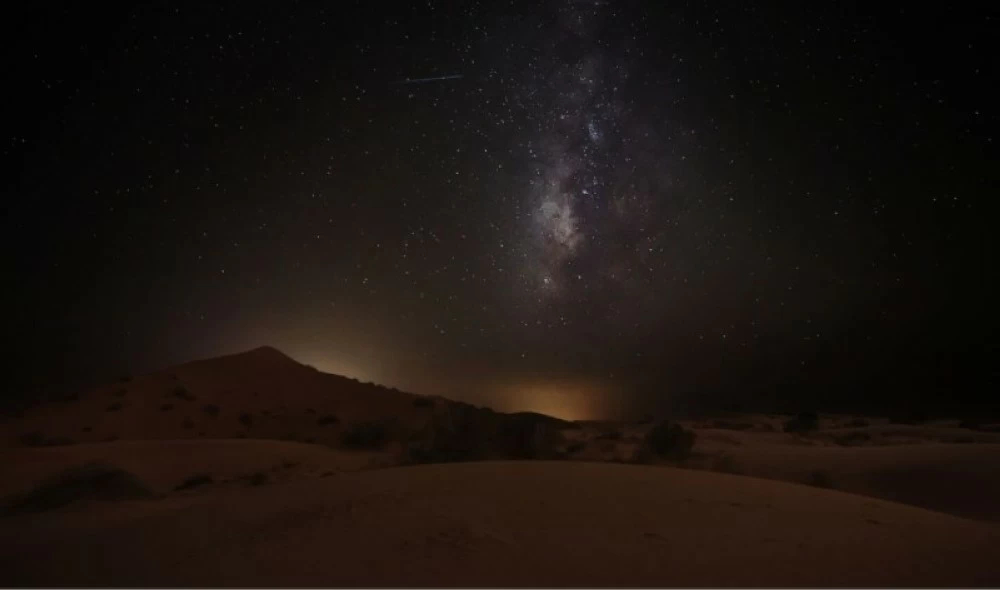
انضمت المملكة العربية السعودية إلى شبكة المواقع العالمية المعتمدة لحماية السماء الليلية، عبر اعتماد حديقة السماء المظلمة في صحراء النفود الكبير بمنطقة حائل، في خطوة تعكس التقدم الذي حققته المملكة في مجال حماية البيئات الطبيعية، وترسّخ حضورها ضمن المبادرات البيئية الدولية المعنية بالحد من التلوث الضوئي وصون السماء الطبيعية.
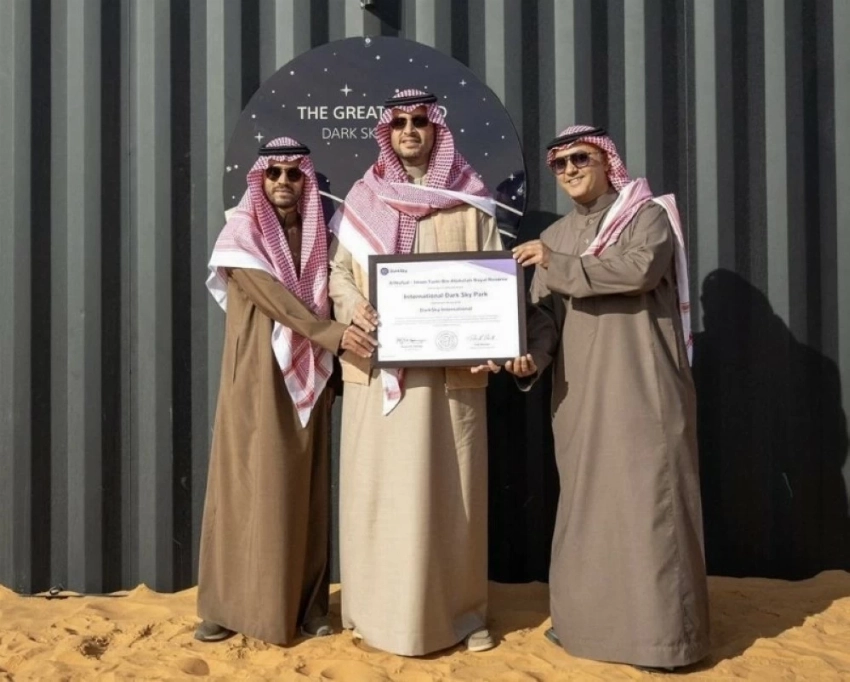
وزير الدولة الأمير تركي بن محمد بن فهد بن عبدالعزيز يتسلّم شهادة اعتماد حديقة السماء المظلمة بحضور نائب أمير منطقة حائل الأمير فيصل بن فهد بن مقرن بن عبدالعزيز، في توثيق للاعتماد الدولي للموقع.
وعلى إثر هذا الاعتماد، زار وزير الدولة عضو مجلس الوزراء رئيس مجلس إدارة هيئة تطوير محمية الإمام تركي بن عبدالله الملكية الأمير تركي بن محمد بن فهد بن عبدالعزيز، يرافقه نائب أمير منطقة حائل الأمير فيصل بن فهد بن مقرن بن عبدالعزيز، عدداً من مواقع المحمية، إذ التقى أهالي المجتمع المحلي واطّلع على أوضاع مستفيدي الرعي، إلى جانب جولة شملت مواقع تاريخية تقع ضمن نطاق المحمية.
وشملت الزيارة حديقة السماء المظلمة في صحراء النفود الكبير، الواقعة ضمن نطاق محمية الإمام تركي بن عبدالله الملكية، إذ اطّلع على الجهود العلمية والتنظيمية التي نُفذت لتطبيق معايير حماية السماء الليلية والحد من التلوث الضوئي، بما يحافظ على الخصائص الفلكية للموقع، ويعزز استدامة النظم البيئية، ويؤهل الحديقة لتكون منصة متقدمة للسياحة الفلكية والبحث العلمي.
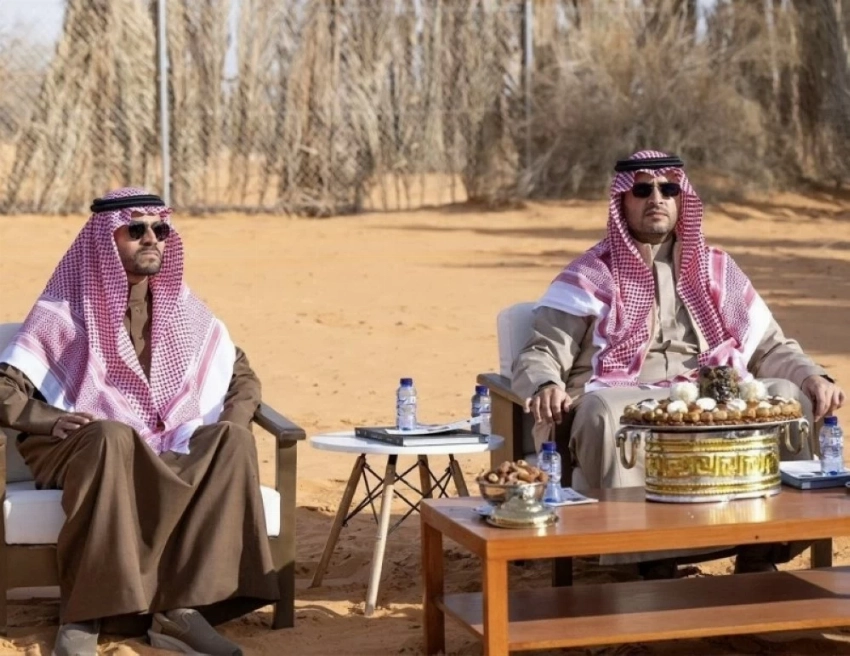
وزير الدولة الأمير تركي بن محمد بن فهد بن عبدالعزيز ونائب أمير منطقة حائل خلال زيارة ميدانية لحديقة السماء المظلمة
وبحسب الجمعية الدولية للسماء المظلمة، تمتد حديقة النفود الكبير للسماء المظلمة على مساحة تُقدَّر بنحو 13,416 كيلومتراً مربعاً، ضمن واحدة من أكبر الصحارى وأكثرها تميزاً بيئياً في شبه الجزيرة العربية، وتتميّز بكثبان رملية واسعة ذات لون برتقالي مائل إلى الحمرة، يصل ارتفاع بعضها إلى نحو 200 متر، ما يمنح الموقع قيمة طبيعية وبصرية فريدة.
وفي هذا السياق، أكَّد رئيس مجلس إدارة هيئة تطوير محمية الإمام تركي بن عبدالله الملكية أن هذا الإنجاز يأتي بدعم واهتمام القيادة الرشيدة، في ظل ما توليه من عناية راسخة بحماية البيئة واستدامة الموارد الطبيعية، انسجاماً مع مستهدفات رؤية المملكة 2030. وأشار إلى أن اعتماد حديقة السماء المظلمة في صحراء النفود الكبير يعكس توجهاً وطنياً رائداً نحو تعزيز مكانة المملكة ضمن المبادرات البيئية الدولية، في ظل التحديات العالمية المتزايدة المرتبطة بالتلوث الضوئي.
وأوضح أن الدراسات العلمية الدولية تشير إلى أن نحو 80% من سكان العالم يعيشون اليوم تحت سماء متأثرة بالإضاءة الاصطناعية، ما يبرز أهمية حماية المناطق الطبيعية المظلمة في المملكة بوصفها مورداً بيئياً وعلمياً وسياحياً نادراً.
وتجسّد حديقة السماء المظلمة في النفود الكبير نموذجاً وطنياً متكاملاً يوازن بين حماية الطبيعة وتعظيم أثرها التنموي، ويضع المملكة في موقع متقدم ضمن شبكة عالمية تضم أكثر من 250 موقعاً معتمداً في 22 دولة عبر 6 قارات، بوصفها شريكاً فاعلاً في حماية السماء الليلية للأجيال القادمة.
The Kingdom of Saudi Arabia has joined the global network of accredited sites for protecting the night sky by designating the Dark Sky Park in the Great Nafud Desert in the Hail region, in a move that reflects the progress the Kingdom has made in the field of protecting natural environments and solidifies its presence within international environmental initiatives aimed at reducing light pollution and preserving the natural sky.
وزير الدولة الأمير تركي بن محمد بن فهد بن عبدالعزيز يتسلّم شهادة اعتماد حديقة السماء المظلمة بحضور نائب أمير منطقة حائل الأمير فيصل بن فهد بن مقرن بن عبدالعزيز، في توثيق للاعتماد الدولي للموقع.
Following this designation, the Minister of State, a member of the Council of Ministers, and the Chairman of the Board of Directors of the Imam Turki bin Abdullah Royal Reserve Development Authority, Prince Turki bin Mohammed bin Fahd bin Abdulaziz, accompanied by the Deputy Emir of Hail Region, Prince Faisal bin Fahd bin Mqren bin Abdulaziz, visited several sites within the reserve, where he met with local community members and learned about the conditions of grazing beneficiaries, in addition to a tour that included historical sites located within the reserve's boundaries.
The visit included the Dark Sky Park in the Great Nafud Desert, which is located within the Imam Turki bin Abdullah Royal Reserve. He reviewed the scientific and organizational efforts implemented to apply the standards for protecting the night sky and reducing light pollution, which preserves the astronomical characteristics of the site, enhances the sustainability of ecosystems, and qualifies the park to be an advanced platform for astronomical tourism and scientific research.
وزير الدولة الأمير تركي بن محمد بن فهد بن عبدالعزيز ونائب أمير منطقة حائل خلال زيارة ميدانية لحديقة السماء المظلمة
According to the International Dark-Sky Association, the Great Nafud Dark Sky Park extends over an area estimated at about 13,416 square kilometers, within one of the largest and most environmentally distinctive deserts in the Arabian Peninsula. It features vast sand dunes with an orange-red hue, some reaching heights of about 200 meters, giving the site a unique natural and visual value.
In this context, the Chairman of the Board of Directors of the Imam Turki bin Abdullah Royal Reserve Development Authority confirmed that this achievement comes with the support and interest of the wise leadership, in light of its steadfast care for environmental protection and the sustainability of natural resources, in alignment with the objectives of Saudi Vision 2030. He noted that the designation of the Dark Sky Park in the Great Nafud Desert reflects a pioneering national direction towards enhancing the Kingdom's position within international environmental initiatives, amidst the increasing global challenges related to light pollution.
He explained that international scientific studies indicate that about 80% of the world's population currently lives under a sky affected by artificial lighting, highlighting the importance of protecting the dark natural areas in the Kingdom as a rare environmental, scientific, and tourism resource.
The Dark Sky Park in the Great Nafud embodies a comprehensive national model that balances nature protection with maximizing its developmental impact, placing the Kingdom in a leading position within a global network that includes more than 250 accredited sites in 22 countries across 6 continents, as an active partner in protecting the night sky for future generations.