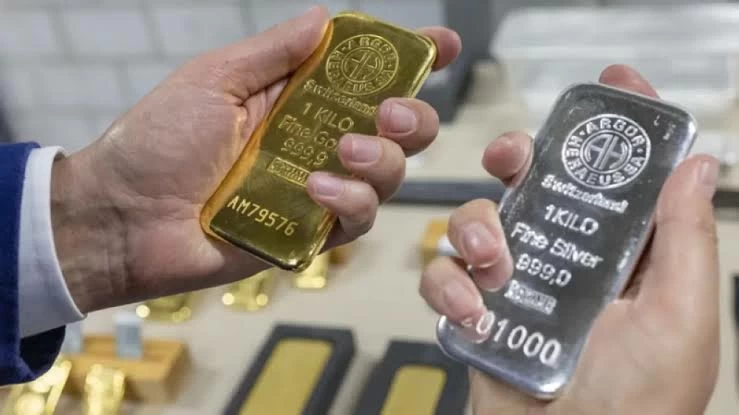
عاودت أسعار الذهب والفضة الصعود بقوة خلال الأسبوع الماضي، مدفوعة بتراجع عوائد السندات والدولار، بعد بيانات اقتصادية أمريكية عززت توقعات الأسواق بشأن خفض الفائدة.
وأنهت أسعار الذهب الأسبوع الماضي على ارتفاع بأكثر من 7%، لتغلق قرب 4,340 دولاراً للأوقية، في أفضل أداء أسبوعي لها منذ يناير، وكانت جلسة الأربعاء هي الأبرز، بعدما قفز الذهب بأكثر من 5% خلال يوم واحد، في واحدة من أقوى جلساته هذا العام، كما ارتفعت أسعار الفضة بنحو 6% خلال الأسبوع.
لكن رغم هذه المكاسب القوية، ما زال المعدنان بعيدين عن القمم التاريخية التي سجلاها في يناير، فالذهب بدأ عام 2026 قرب 4,300 دولار للأوقية، ما يعني أنه يتداول حالياً قريباً من مستويات بداية العام، لكنه ظل أقل بنحو 22% من قمته التاريخية التي سجلها في يناير عند نحو 5,600 دولار.
أكثر تقلباً
أما الفضة فكانت أكثر تقلباً، إذ أنهت الأسبوع قرب 63.30 دولار للأوقية، لكنها بقيت منخفضة بنحو 11% منذ بداية العام، مقارنة بمستوى يقارب 71 دولاراً في بداية 2026.
ويصبح الفارق أكبر عند مقارنة الأسعار بالقمم التاريخية، فالفضة سجلت في يناير قمة قرب 118 دولاراً للأونصة، ما يعني أنها ما زالت أقل بنحو 46% من تلك القمة.
وبمعنى آخر، فإن الذهب قريب من مستويات بداية العام، لكنه يحتاج إلى ارتفاع بنحو 29% من مستوياته الحالية لاستعادة قمته التاريخية، أما الفضة فتحتاج إلى ارتفاع يقترب من 86% للعودة إلى قمتها السابقة.
العامل الأبرز
وجاء العامل الأبرز للصعود من الولايات المتحدة، بعدما أظهرت بيانات الوظائف فقدان الاقتصاد الأمريكي نحو 23 ألف وظيفة في يوليو الماضي، في حين كانت الأسواق تتوقع إضافة نحو 80 ألف وظيفة.
ودفعت هذه المفاجأة عوائد سندات الخزانة الأمريكية والدولار إلى التراجع، بالتزامن مع انخفاض توقعات الأسواق بشأن رفع الفائدة الأمريكية في سبتمبر من أكثر من 50% إلى نحو 40%.
على مستوى الذهب، توقع كل من كومرتس بنك وسيتي غروب وصول السعر إلى نحو 4,500 دولار للأوقية بنهاية 2026، قبل أن يرتفع إلى نحو 5,000 دولار بنهاية العام القادم.
أما بنك أوف أمريكا، فيتبنى رؤية أكثر تحفظاً، متوقعاً وصول الذهب إلى 4,250 دولاراً بنهاية العام الحالي، ثم نحو 4,500 دولار بنهاية العام القادم.
مساحة أكبر
وبالنسبة للفضة، تتراوح توقعات هذه البنوك بين 55 و80 دولاراً للأونصة بنهاية العام الحالي، بينما تتراوح توقعاتها بين 60 و80 دولاراً بنهاية العام القادم.
ورغم قوة الارتداد الأخير، فإن الأسواق ما زالت بعيدة عن مستويات نشوة قمم أسعار يناير، فالذهب يحتاج إلى صعود يقارب 29% للعودة إلى قمته التاريخية، بينما تحتاج الفضة إلى ارتفاع يقارب 86%.
وأصبح الذهب أقرب إلى استعادة قمته التاريخية، لكن الفضة تمتلك مساحة صعود أكبر بكثير إذا عاد الزخم الاستثماري والمضاربي إلى السوق.
وبالتالي، فإن مسار المعدنين خلال الفترة القادمة سيظل مرتبطاً بدرجة كبيرة بتوقعات الفائدة الأمريكية، وحركة الدولار والعوائد، إلى جانب العوامل الخاصة بكل معدن، وعلى رأسها الطلب الصناعي بالنسبة إلى الفضة.
Gold and silver prices have resumed a strong rise during the past week, driven by a decline in bond yields and the dollar, following U.S. economic data that bolstered market expectations regarding interest rate cuts.
Gold prices ended last week up more than 7%, closing near $4,340 per ounce, marking its best weekly performance since January. Wednesday's session was particularly notable, as gold surged more than 5% in a single day, one of its strongest sessions this year. Silver prices also rose by about 6% during the week.
However, despite these strong gains, both metals remain far from the historical peaks they recorded in January. Gold started 2026 near $4,300 per ounce, which means it is currently trading close to the beginning-of-year levels, but it remains about 22% lower than its historical peak of around $5,600 recorded in January.
More Volatile
Silver was more volatile, ending the week near $63.30 per ounce, but it remained down about 11% since the beginning of the year, compared to a level of around $71 at the start of 2026.
The gap widens when comparing prices to historical peaks, as silver recorded a peak of around $118 per ounce in January, meaning it is still about 46% lower than that peak.
In other words, gold is close to the beginning-of-year levels, but it needs to rise about 29% from its current levels to regain its historical peak, while silver needs to rise nearly 86% to return to its previous peak.
The Main Factor
The main factor for the rise came from the United States, after job data showed that the U.S. economy lost about 23,000 jobs in July, while markets were expecting an addition of around 80,000 jobs.
This surprise drove U.S. Treasury yields and the dollar to decline, coinciding with a drop in market expectations regarding a U.S. interest rate hike in September from over 50% to about 40%.
Regarding gold, both Commerzbank and Citigroup expect the price to reach around $4,500 per ounce by the end of 2026, before rising to about $5,000 by the end of next year.
Bank of America, on the other hand, adopts a more conservative outlook, predicting gold to reach $4,250 by the end of this year, then around $4,500 by the end of next year.
Greater Room
For silver, the forecasts from these banks range between $55 and $80 per ounce by the end of this year, while their predictions range between $60 and $80 by the end of next year.
Despite the recent strong rebound, markets are still far from the euphoric levels of January price peaks. Gold needs to rise about 29% to return to its historical peak, while silver needs to rise about 86%.
Gold is closer to regaining its historical peak, but silver has much greater room for upward movement if investment and speculative momentum returns to the market.
Thus, the trajectory of both metals in the coming period will remain largely tied to expectations of U.S. interest rates, the movement of the dollar and yields, in addition to factors specific to each metal, with industrial demand being paramount for silver.