كثير من مشاريع تطوير التعليم تنجح في استكمال خططها وتنفيذ برامجها وتحقيق مؤشراتها لكن السؤال الذي يظل قائماً هو ما الذي تغير فعلاً داخل الفصل الدراسي؟ وهل شعر الطالب بأن تعليمه أصبح أفضل؟
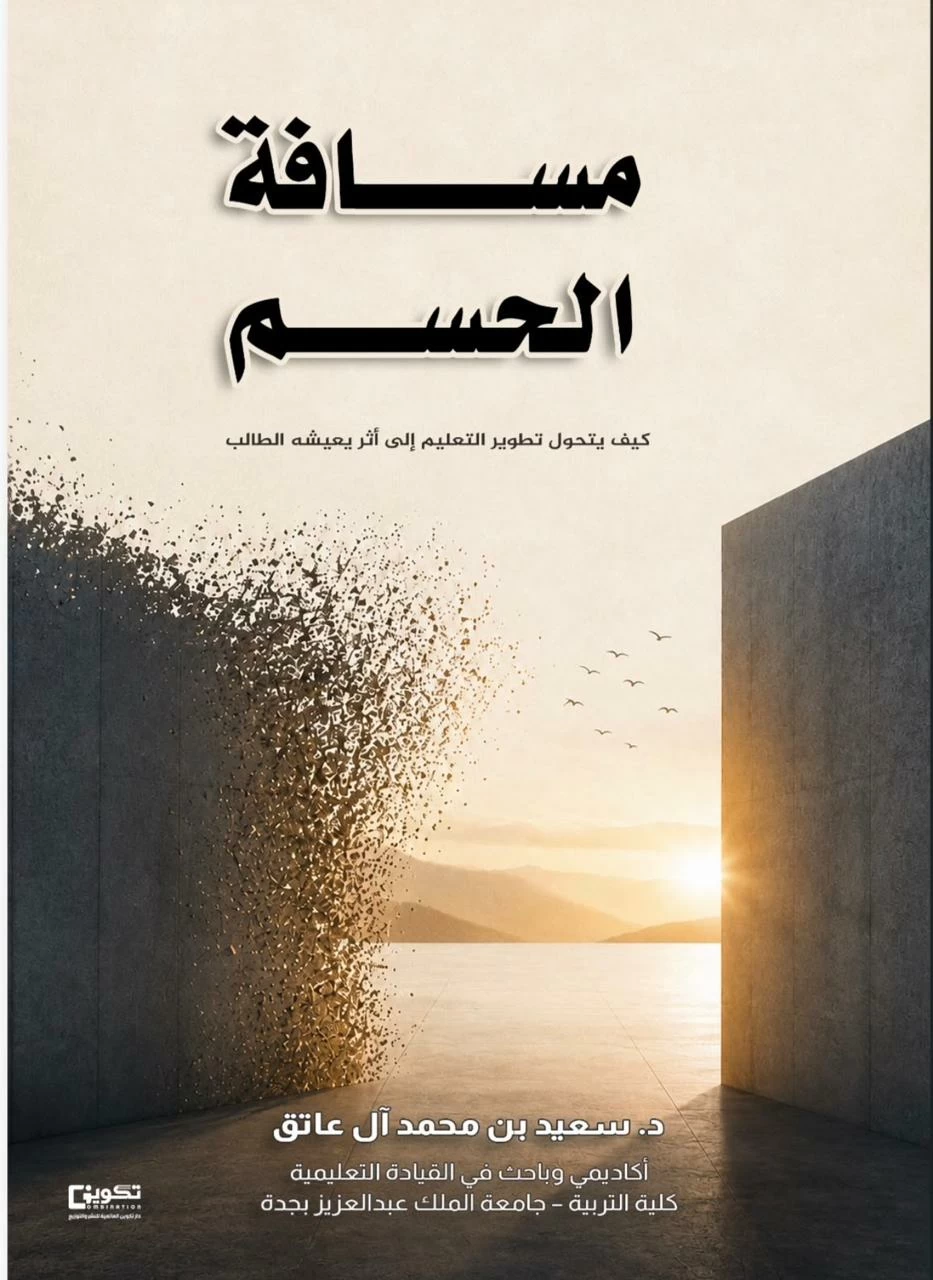
هذا السؤال يشكل جوهر كتاب «مسافة الحسم.. كيف يتحول تطوير التعليم إلى أثر يعيشه الطالب»، للدكتور سعيد بن محمد آل عاتق الصادر عن مجموعة تكوين المتحدة للنشر والتوزيع عام 2026.
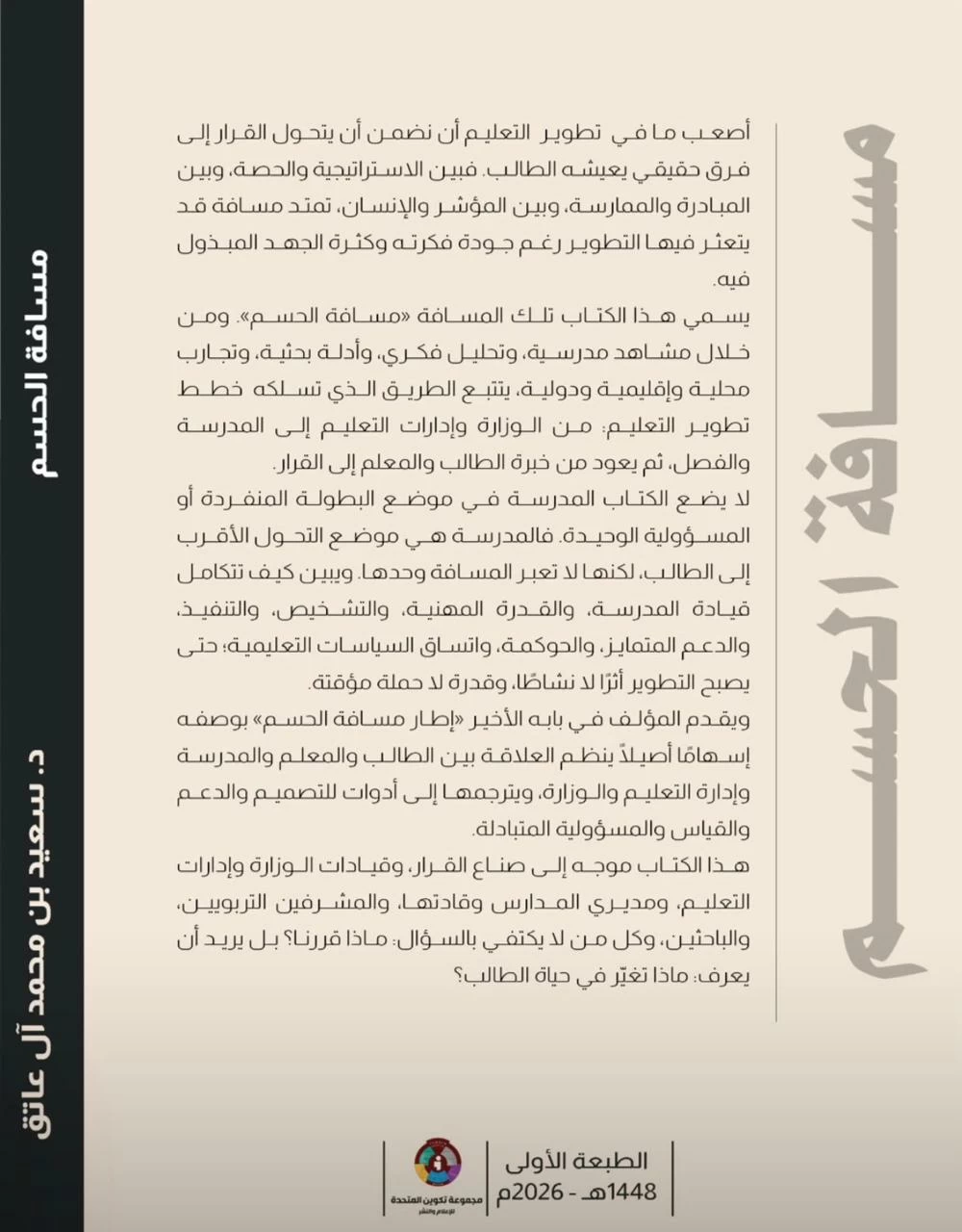
يناقش المؤلف قضية ظلت حاضرةً في المشهد التعليمي وهي الفجوة بين القرارات التي تصدر في المستويات الإدارية العليا وما يتحقق على أرض الواقع داخل المدارس. ويرى أن نجاح التطوير لا يقاس بكثرة المبادرات أو اكتمال الإجراءات وإنما بقدرته على تغيير الممارسة التعليمية وتحسين تجربة الطالب.
وعبر ثلاثة أبواب يتتبع الكتاب رحلة التطوير من صناعة القرار إلى تنفيذه. يبدأ بمناقشة أسباب تعثر بعض المشاريع التعليمية ثم ينتقل إلى تمكين المدرسة وحوكمة القرار وبناء القدرات المهنية قبل أن يقدم في بابه الأخير ما يسميه «إطار مسافة الحسم» الذي يربط بين الوزارة وإدارات التعليم والمدرسة والمعلم والطالب من خلال مسؤوليات وأدوات للمتابعة والقياس.
ومن القضايا المهمة التي يتوقف عندها الكتاب أن المدرسة لا تستطيع تحمل مسؤولية التطوير وحدها. فقد تمتلك القيادة المدرسية الرغبة في التغيير ويملك المعلم القدرة المهنية لكن نقص الصلاحيات أو الموارد أو تضارب المتطلبات قد يحول دون تحقيق النتائج المنتظرة.
ويلفت المؤلف إلى مشكلة أخرى تتمثل في الخلط بين تنفيذ المبادرة ونجاحها. فإقامة البرامج التدريبية واستكمال التقارير وتحقيق مؤشرات الأداء لا تعني بالضرورة تحسن مستوى التعلم. وقد تبدو النتائج الإدارية مطمئنةً بينما تظل الممارسات داخل الفصول على حالها.
ويتميز الكتاب بمحاولته الجمع بين الخبرة الميدانية والبحث العلمي دون الاكتفاء بتشخيص المشكلة. غير أن الإطار الذي يطرحه يحتاج إلى اختبار ميداني يكشف مدى ملاءمته للمدارس المختلفة وقدرته على معالجة التفاوت في الإمكانات والحاجات دون زيادة الأعباء الإدارية على العاملين فيها.
وتبرز أهمية الكتاب في توقيته مع اتساع مشاريع تطوير التعليم وتزايد الاهتمام بمؤشرات الأداء وجودة المخرجات. فهو يعيد النقاش إلى ما ينبغي أن يكون أساس كل عملية تطوير وهو الطالب وما يكتسبه من معرفة ومهارات وقيم.
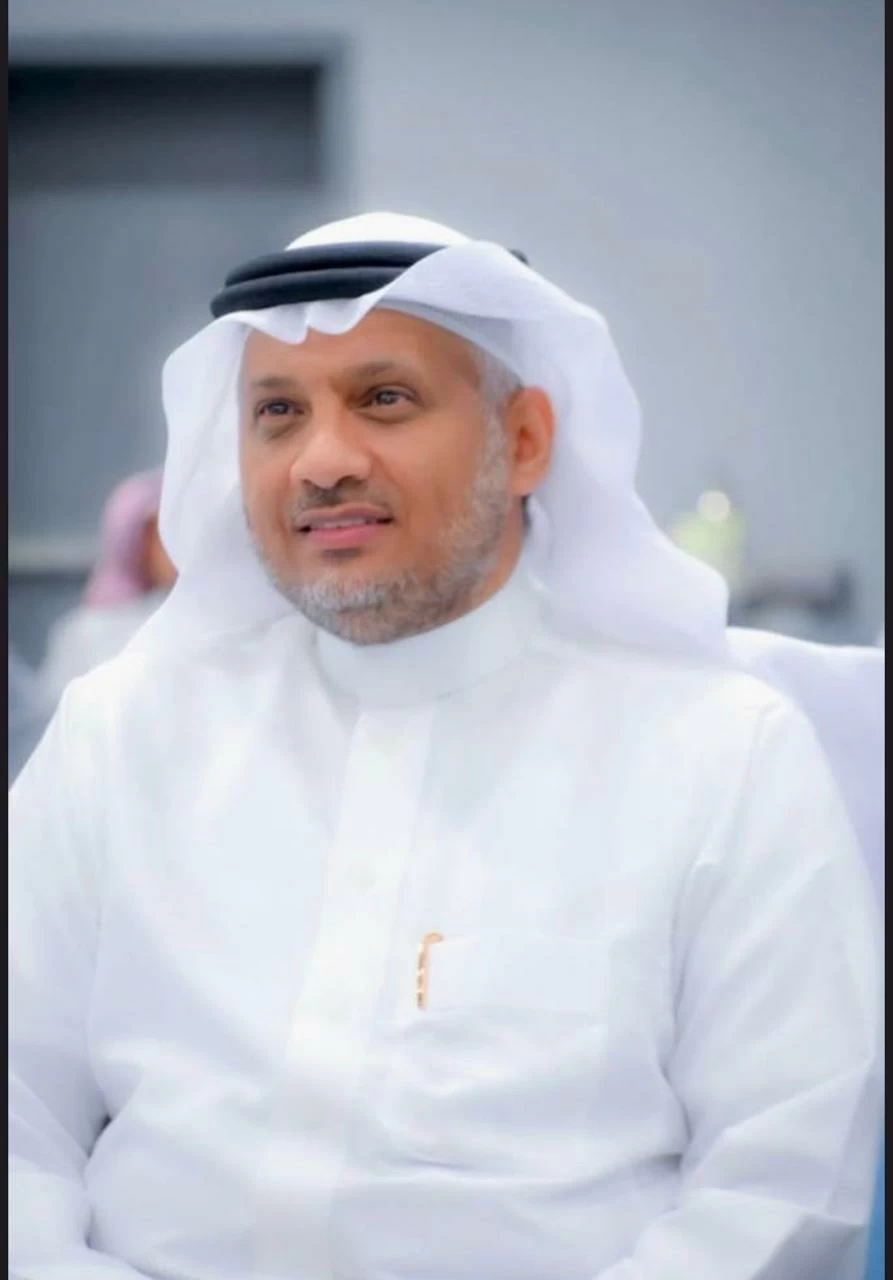
مؤلف الكتاب الدكتور سعيد بن محمد آل عاتق هو أكاديمي بجامعة الملك عبدالعزيز حاصل على الدكتوراه في الإدارة التعليمية من جامعة طيبة. بدأ مسيرته مديراً لمدرسة ثم عمل في الإشراف التربوي وتولى عدداً من المواقع القيادية بوزارة التعليم من بينها مساعد مدير عام التخطيط ومدير إدارة تخطيط التعليم العام ومساعد مدير عام التعليم بمحافظة جدة وشارك في إعداد دراسات واستراتيجيات تعليمية ولجان تطوير التعليم ومؤتمرات دولية وله أبحاث منشورة في القيادة والإدارة التربوية.
وتنعكس هذه التجربة في كتابه الذي يعيد طرح سؤال يستحق أن يكون حاضراً أمام كل قرار تعليمي: ماذا تغير في حياة الطالب؟
Many educational development projects succeed in completing their plans, implementing their programs, and achieving their indicators, but the question that remains is what has actually changed inside the classroom? And did the student feel that their education has become better?
This question forms the essence of the book "The Distance of Resolution... How Educational Development Transforms into an Impact Experienced by the Student," by Dr. Said bin Mohammed Al-Ataq, published by the United Takween Group for Publishing and Distribution in 2026.
The author discusses an issue that has been present in the educational scene, which is the gap between the decisions made at the higher administrative levels and what is achieved on the ground within schools. He believes that the success of development is not measured by the number of initiatives or the completion of procedures but by its ability to change educational practices and improve the student experience.
Through three sections, the book traces the journey of development from decision-making to implementation. It begins by discussing the reasons for the failure of some educational projects, then moves on to empowering the school, governance of decision-making, and building professional capacities before presenting in its final section what he calls the "Framework of Resolution Distance," which connects the ministry, education administrations, the school, the teacher, and the student through responsibilities and tools for follow-up and measurement.
One of the important issues the book addresses is that the school cannot bear the responsibility for development alone. While school leadership may have the desire for change and teachers may possess professional capabilities, a lack of authority, resources, or conflicting requirements may hinder achieving the expected results.
The author points to another problem, which is the confusion between implementing an initiative and its success. Establishing training programs, completing reports, and achieving performance indicators do not necessarily mean an improvement in learning levels. Administrative results may appear reassuring while practices inside classrooms remain unchanged.
The book is characterized by its attempt to combine field experience and scientific research without merely diagnosing the problem. However, the framework it proposes needs field testing to reveal its suitability for different schools and its ability to address disparities in capabilities and needs without increasing the administrative burdens on the staff.
The importance of the book is highlighted by its timing, coinciding with the expansion of educational development projects and the growing interest in performance indicators and the quality of outputs. It brings the discussion back to what should be the foundation of every development process: the student and what they acquire in terms of knowledge, skills, and values.
The author of the book, Dr. Said bin Mohammed Al-Ataq, is an academic at King Abdulaziz University, holding a Ph.D. in educational administration from Taibah University. He began his career as a school principal, then worked in educational supervision and held several leadership positions at the Ministry of Education, including Assistant Director General of Planning, Director of General Education Planning, and Assistant Director General of Education in Jeddah. He has participated in preparing educational studies and strategies, educational development committees, and international conferences, and has published research in leadership and educational administration.
This experience is reflected in his book, which raises a question that deserves to be present before every educational decision: What has changed in the life of the student?