


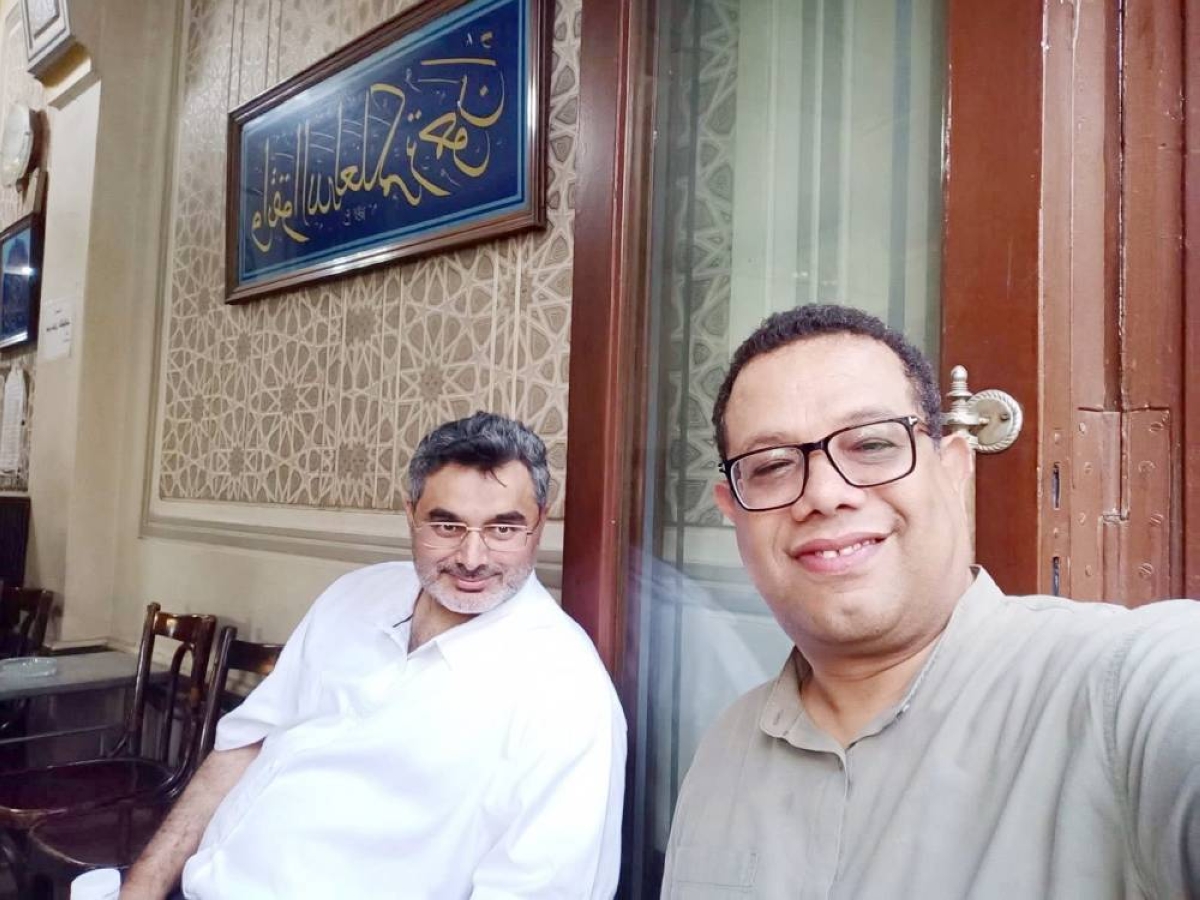
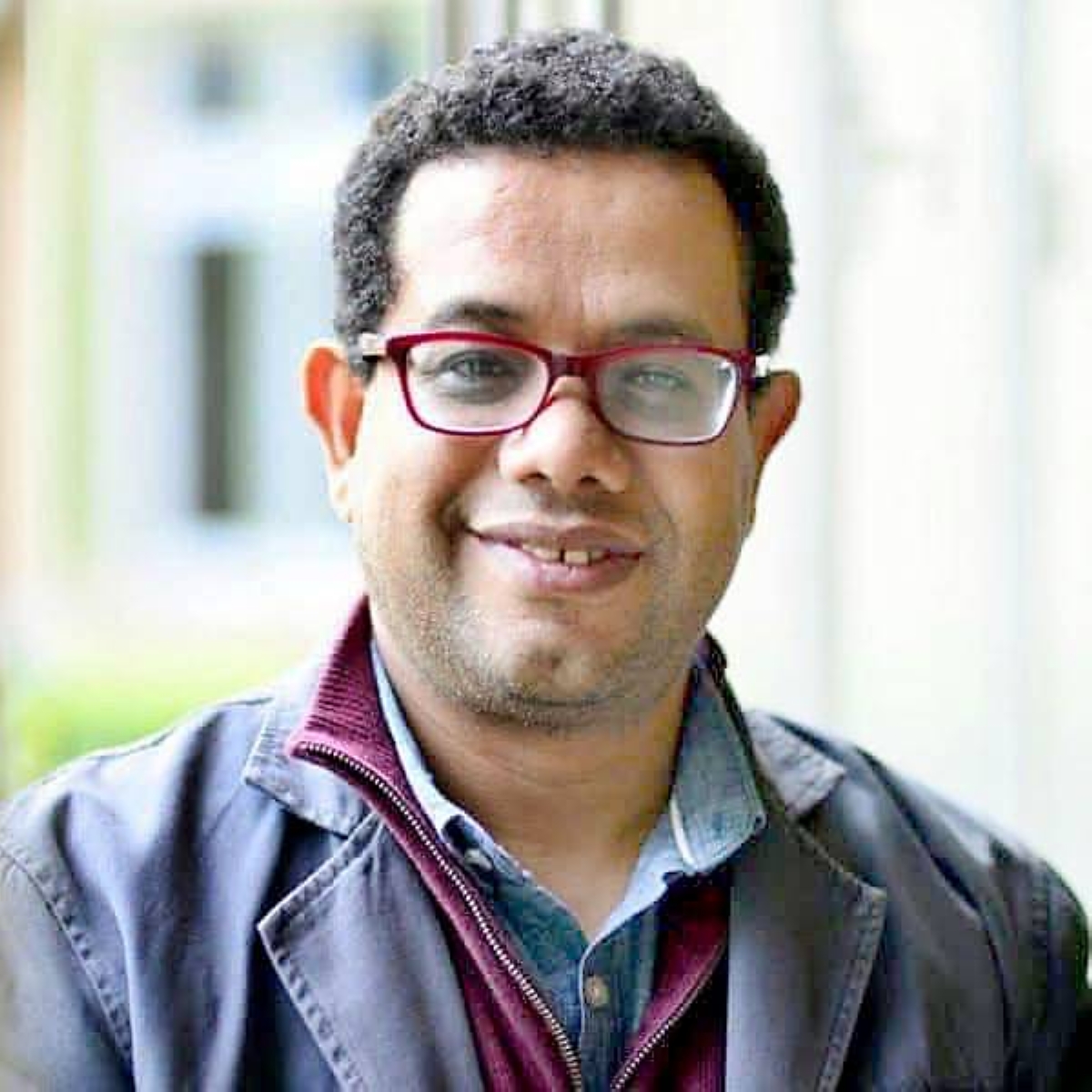
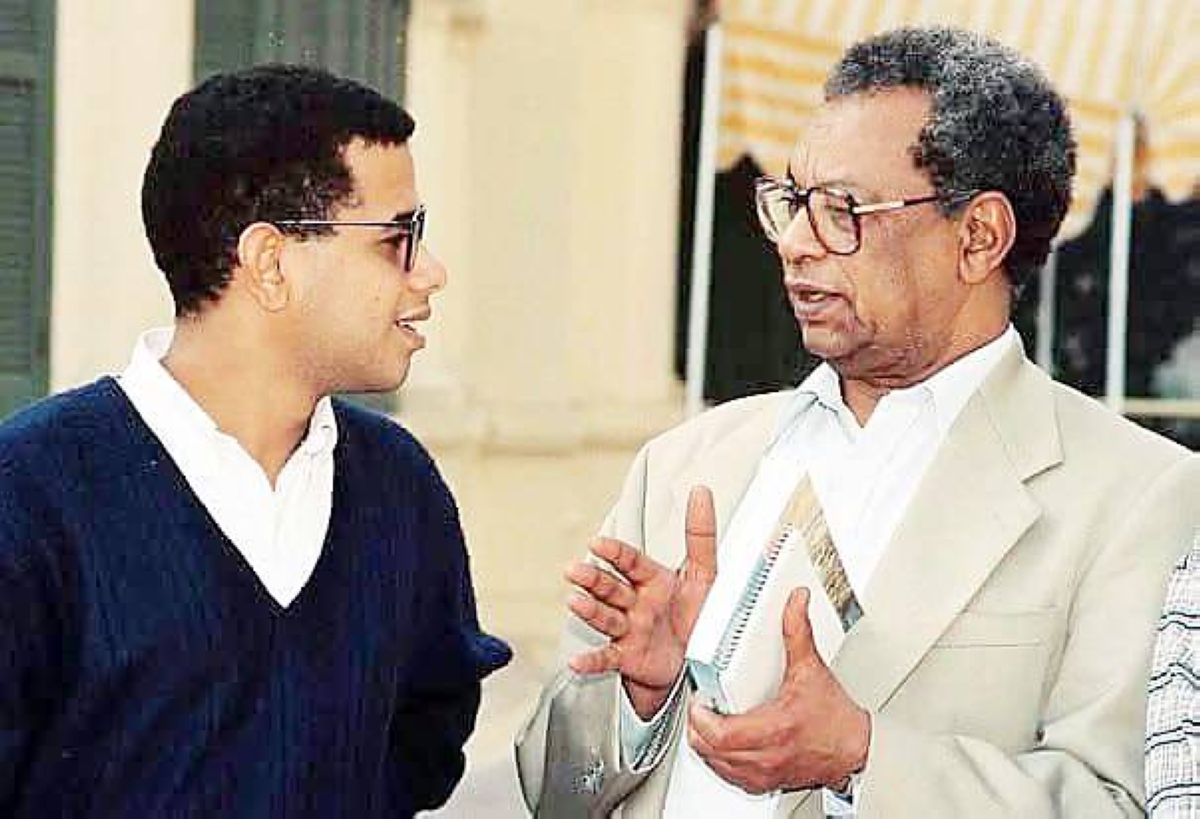
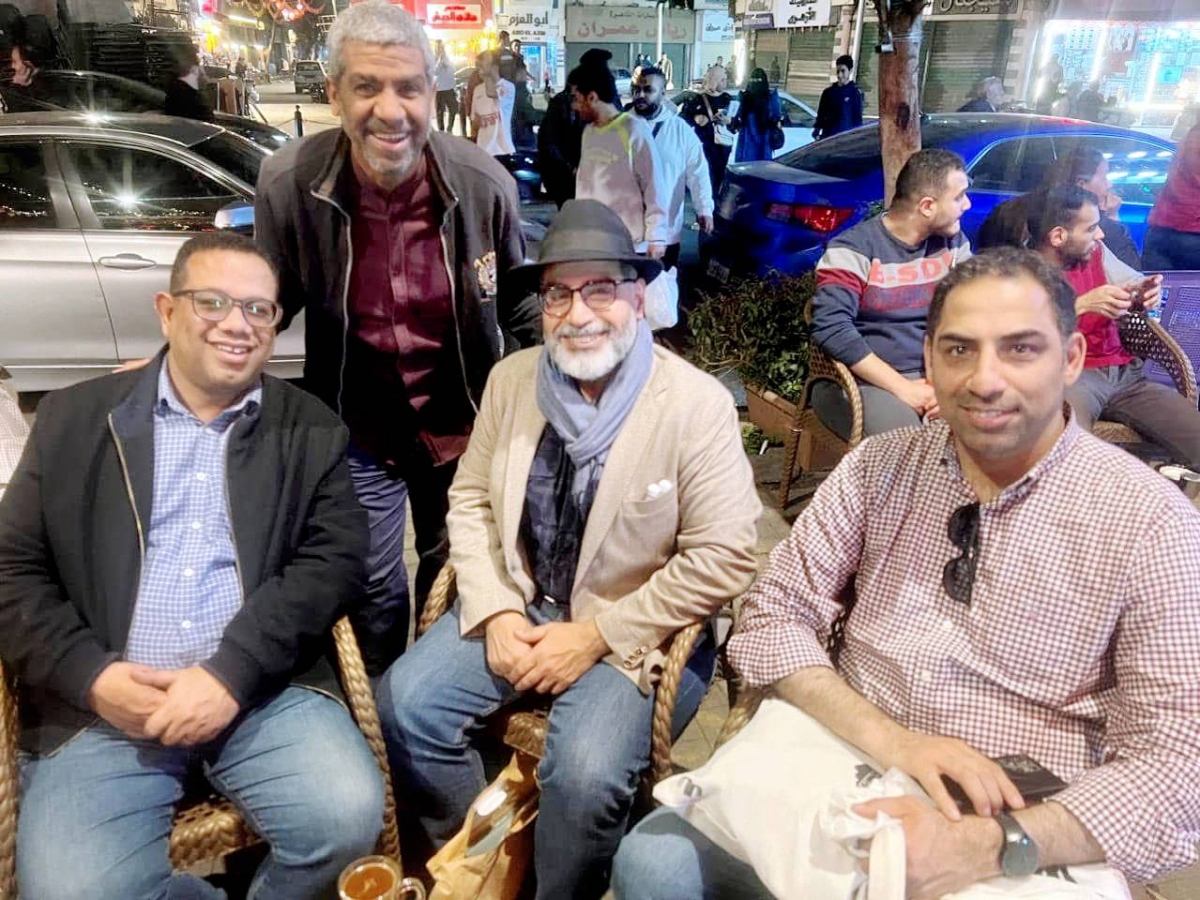
في المشهد الثقافي المصري والعربي يظلّ اسم الشاعر والصحفي سيد محمود حاضراً بخصوصيته المزدوجة، فهو الصحفي والشاعر؛ الشاعر الذي توقّف عن النشر ولم يتوقّف عن الكتابة، والصحفي الذي ما زال يطارد (صاحبة الجلالة) رغم خوفه وقلقه عليها!
في هذا الحوار حاولنا الاقتراب أكثر من طفولته وبداياته في الصحافة ورؤيته للأدب والثقافة وأحلامه.. فإلى نصّ الحوار:
• حدثنا عن طفولتك ابتداءً.
•• كانت طفولتي عادية جداً، تليق بأبسط فئات الطبقة الوسطى، والدي نزح من الصعيد في أوائل الستينيات واستقر في ضاحية على أطراف القاهرة مع آخرين من عائلته تُسمى حلوان وتبعد عن وسط المدينة 25 كيلومتراً، كانت تبدو بعيدة جداً بمعايير الطفولة، لا يربطها بالعاصمة سوى قطار شهير ظهر في فيلم (ضربة شمس) لنور الشريف وطريق بامتداد كورنيش النيل، وطريق آخر يمثل سواراً حول القاهرة.
كان أبي من بين هؤلاء الذين زودتهم (الناصرية) بهوية جديدة، التحق بالعمل في أحد هذه المصانع وكان من الملايين الذين استفادوا من ثمارها، وبالتالي أتيح لي ولإخوتي أن نسكن في مساكن العمال، وأن نتلقى التعليم في مدارس بلا مصروفات، وتلقيت تعليمي طفلاً في أحد الكتاتيب الملحقة بأحد المساجد ثم دخلت المدارس الحكومية.
• علاقتك بالقراءة، كيف بدأت؟
•• بدأت معي من (الإعدادية) مع اكتشاف المكتبة المدرسية، كنا مولعين بأنيس منصور ومصطفى محمود، وبفضل أمينة المكتبة حصلت على أول جائزة في حياتي ارتبطت بالقراءة؛ (مقلمة صاج) عليها خريطة الوطن العربي وقلم حبر وشهادة استثمار للبنك الأهلي قيمتها 10 جنيهات وكانت مبلغاً له قيمة أمام مصروف طفل، وفي المرحلة الثانويّة، إثر اللقاء برفاق جدد في فصلي كانوا ذوي صلة عميقة بالقراءة لديهم ثقافة دينية بالأساس لكنها تتسع لتشمل نجيب محفوظ وتوفيق الحكيم، وما أزال أذكر المتعة التي وجدتها مع كتاب (تحت شمس الفكر) لتوفيق الحكيم الذي قرأته في ليلة واحدة بترشيح من صديقي محمد عبدالعاطي ثم استيقظت لشراء نسخة لا تزال معي، وأصبحت فاعلاً في جماعة قراءة كانت تنتظم في جلسات داخل مكتبة، قرأت توفيق الحكيم قراءة كاملة ويوسف إدريس وإحسان عبدالقدوس وكل موجات القراءة التي كانت منتشرة في السنوات الأخيرة من الثمانينيات. قرأت في تلك المكتبة روايات لنجيب محفوظ في شهر ظهورها مثل (أفراح القبة) ما يعني أن الدولة كانت واعية بمسؤولياتها قبل أن يأتي عهد الخصخصة.
• ماذا عن وشائج القربى مع الصحافة؟
•• بداياتي الصحفية تشكلت بشكل غامض جداً، أنا درست (تاريخ)، وكنت أكتب شعراً غنائياً، وأشارك في كتابة بعض الأغنيات المرافقة لمسرحيات، وأقوم بإعداد بعض المسرحيات لصالح فرقة أسسها صديق في الجامعة وهي فرقة (الشظية والاقتراب) للمخرج محمد أبو السعود الذي رحل قبل خمس سنوات ونال جوائز عدة وشارك في مهرجانات دولية.
وخُصص لي باب في مجلة المسرح التي كان يرأس تحريرها الدكتور محمد عناني، وكنا نعد نشرة اتجاهات الرأي في الصحافة العربية، وبالتالي كنت أقرأ كل الصحف، وبما أنني أكتب وقتها في المسرح وشاعر، كُلِفتُ بتحرير القسم الثقافي، وقراءة كل ما ينشر عن الثقافة في الصحف العربية، والتركيز على قضيّة بعينها، وقرأت مقالاً في صحيفة (الحياة) وقرّرت أن أعقّب عليه، ذهبت وسلّمت هذا التعقيب لمكتب الصحيفة، ونُشر التعقيب. ثم عدت مرة أخرى، وفي العودة التقيت وقتها بالروائي إبراهيم أصلان، فدعاني للكتابة، وفي مرّة أخرى توفيت الصديقة سناء المصري ورأيت من الضروري أن أكتب تقريراً صحفياً عن مسيرتها، وذهبت به إلى مجلة (الوسط) التي كانت تصدر عن صحيفة (الحياة) والتقاني هناك صحفي جميل هو محمد الشاذلي ورحّب بي وعاملني بدلال، ونشر التقرير، ومن خلال النشر في مجلة الوسط جئت مرة بموضوع آخر. وتعاونت مع صحيفة (الحياة)، ومع الصديق عبده وازن الذي أسهم مساهمة كبيرة في تكريس اسمي وتقديمي، وعملت في صحيفة (الدستور) التي يرأس تحريرها إبراهيم عيسى وكان هذا هو إصدارها الأول، وكانت (الأهرام) تؤسس مجلة (الأهرام العربي) فتلقيت عرضاً من الصديق إبراهيم داوود للعمل في (الأهرام) وكانت هذه نقلة مهمة داخل مصر.
• من كان له التأثير الأكبر على توجهك المهني؟
•• أعتقد أن أكثر شخص كان له تأثير أكبر على توجهاتي المهنية هم ثلاثة أسماء أو أربعة، أولهم رئيس تحرير مجلة «الهلال» كامل زهيري صحفي، وأحمد بهاء الدين، وصلاح عيسى، و الصحفي الكبير محمود عوض.
• ما التحديات التي واجهتها في العمل الثقافي الصحفي مقارنة بالأنواع الأخرى من الصحافة؟
•• التحدي الرئيسي الذي واجهني في العمل في الصحافة الثقافية، تمثل في أن القسم الثقافي ليس مهماً ويمكن التضحية بصفحاته إذا جاء الإعلان، لأنّ الإعلان هو من ينفق على الصحيفة وهو من يسهم في تدبير الرواتب، وهناك أشخاص يقدمون الدعم للصفحات الثقافية، منهم إبراهيم عيسى، وكان أستاذاً في صياغة العناوين؛ وتعلمت الدرس في طريقة الكتابة، وصياغة العناوين، الجاذبية، وكلها دروس مع تراكم التجربة والخبرة أفادتني كثيراً.
• كيف ترى التحولات التي شهدتها الصحافة الثقافية في مصر والعالم العربي خلال العقدين الأخيرين؟
•• هناك تحديات عامة يمر بها الجميع، طبيعة المنافسات الرقمية التي تتيح شبكة هائلة من المعارف، أنا غير قلق على الصحافة إلاّ الصحافة العربية، لأن الصحافة العربية تستهلك الوسائط كما تستهلك موضات الملابس والماركات.
• كيف يمكن الاحتفاظ بالقارئ؟
•• هناك بعض التجارب التي تؤكد أن القارئ موجود لكنه بحاجة إلى من يذهب إليه بطريقة ذكية، منها تجربة عزت القمحاوي في مجلة (الدوحة) لفترة وجيزة، والصديق أحمد زين في مجلة (الفيصل) تنفتح على قرّاء جدد، وتجربة رجاء النقاش الملهمة للجميع سواء في مجلة (الهلال) أو في مجلة (الدوحة) خلال الثمانينيات.
• لماذا اختفى الشاعر سيد محمود وحضر الكاتب والصحفي؟
•• بالنسبة لاختفاء الشعر، أنا أعتقد أنّ اختفاء الشاعر مرتبط باختفاء الشعر، الشعر اختفى من الحياة الأدبية بشكل كبير جداً. لم أقدم نفسي للحياة الأدبية شاعراً إلاّ في الفترة الجامعيّة وما جاء بعدها بقليل. منذ أن مارست العمل الصحفي أردت الفصل بين دور اللاعب وبين دور الحكم.
الشاعر يستطيع أن يكتب كلّ يوم لكنه لا يستطيع أن يكتب ما يرغب في كتاباته كل يوم. أنا أكتب ولا أنشر، أحبّ الشّعر ولا أريد أن يتحوّل إلى مهنة. الشعر ليس مهنة ولا ينبغي أن يصبح كذلك، وفي كل الأحوال لا أعتبر نفسي شاعراً محترفاً.
• هل ما زالت الثقافة في مصر بخير؟
•• الثقافة في مصر بخير بطبيعة الحال، أنا أعتقد ذلك لأنّ لدينا مؤشرات. إذا كانت الجوائز الأدبية العربية مؤشراً فالترشيحات المصرية في الصدارة وتحظى بنصيب الأسد في كل الجوائز. رغم كل المشاكل الاقتصادية هناك توسع في عدد القراء. الزيادة واضحة في عدد الطبقة الوسطى التي تستهلك الكتب وتتعامل مع الوسائط في وسائل التواصل الاجتماعي المختلفة وتعتني عناية كبرى بالمحتوى الثقافي. هذا بالنسبة للأجيال الجديدة، هناك رصيد كبير في الثقافة المصرية أعتقد أنّه غير مهدّد بأيّ حال من الأحوال. ما حدث أنّ هناك صعوداً لمراكز ثقافية عربية أخرى، الخليج يسهم بفعاليّة الآن في المشهد الثقافي العربي، وهذا أمر طبيعي بعد سنوات التحديث. المغرب العربي بدوله المختلفة يساهم ويقدم دفعات كبيرة للعمل الثقافي، سواء من خلال مساهمات الأفراد أو من خلال المهرجانات ذات تأثير وفاعلية مثل (قرطاج) و(أصيلة) أو بعض لأنشطة التي تظهر في تونس أحياناً. كل ذلك يقول إن المشهد الثقافي متغيّر.. لم تعد العواصم التقليدية بيروت أو القاهرة أو بغداد أو دمشق تؤدي الأدوار نفسها لتغييرات مختلفة، بعضها سياسي سلبي وبعضها إيجابي. لكنّ الجانب الإيجابي أنّ هناك اتساعاً أكثر في المساحة الثقافية ومراكز متعددة، تعدد أفاد كثيراً الحياة الثقافية. الجوائز الأدبية أيضاً ساهمت مساهمة كبيرة في أن تثير الجدل والنقاش على مواقع التواصل الاجتماعي وتسمح باشتباك دائم ومستمر مع الإنتاج الثقافي، وهذه ميزة، لأنّ الإنتاج الثقافي لم يعد حكراً على فئة المثقفين.
• حوار أجريته مع مثقف عربي ولا تنساه، ولماذا؟
•• بالنسبة للحوار العربي الذي لا يمكن أن أنساه، هذا سؤال صعب، لأنني أجريت حوارات هائلة مع أسماء كثيرة ومهمة، لكن أعتقد أنّ حواري بالتزامن مع أحداث غزة مع الكاتبة الفلسطينية سوزان أبو الهوى وهي تعيش في الولايات المتحدة الأمريكية كان الأصعب. لم أُجْرِ حواراً وأنا أريد أن أبكي إلاّ بعد هذا الحوار. أنا تأثرت كثيراً بما قالته سوزان أبو الهوى التي جاءت من أمريكا مع فريق من المتطوعين من جنسيات مختلفة لتوثيق ما يحدث في غزة. أنا تألمت بالفعل وفي لحظة من الحوار لم أعد قادراً على أداء المهمة لأنّ الطبقة التي كانت في صوت سوزان أبو الهوى صاحبة كتاب (عندما ينام العالم) من الصعب تجاوزها أو تخطيها. هذه مسألة مؤلمة جداً بالنسبة لي وكانت الحقيقة شديدة الألم. أنا بكيت بالفعل، وأتذكر أنني بعد أن أنهيت الحوار وكنا في أحد فنادق الزمالك مشيت لفترات طويلة بلا رغبة في الحديث مع أحد أو الجلوس لكيلا أستعيد هذه اللحظة. كنت أرغب بالسير في طريق لا ينتهي، فعلا كان يوماً قاسياً جداً.
في المقابل أحبُّ حوار أجريته مع الطيب صالح، لأنه كشف لي معدنه الطيب، وبساطته الآسرة، ولن أتحدث عن محمود درويش لأن الحديث عنه صار مستهلكاً.
• الجوائز الأدبية العربية، هل ترى أنها خدمت الإبداع؟ أم جنت عليه؟
•• الجوائز انتقلت بالأدب من فضاء محدود ومتعلق باستهلاك فئة محدودة بعينها إلى ربطه بدوائر أوسع وتأثير أكثر اتصالاً مع الجمهور رغم شبهة التسليع والمنافسة، إلاّ أنني أعتقد أن القارئ الذي يتورط مع كتاب ويحبه هو بالضرورة يتورط مع القراءة ويستطيع مع الانخراط في هذه المسألة أن ينمّي ذائقته ويجعلها دائماً في وضع أفضل، وبالتالي يصبح قادراً على النجاة من فخ الاستهلاك.
أي عمل أدبي هو عرضة للقبول أو الرفض. لا يوجد إجماع في الأدب كما لا يوجد إجماع في الأديان والفلسفات. هناك دائماً انقسام واستقطاب. يمكن أن أختار رواية ولا تعجب صديقاً يتعامل معي بشكل يومي. يمكننا أن نتوافق على المعايير، لكنّ الذائقة تبقى صاحبة الدور الأكبر.
• سلطة الجمهور اليوم، هل تشكّل خطراً على الكاتب والصحفي؟
•• دائماً الجمهور فيه فكرة فاشية إلى حدّ ما، يمكن أن تقود الكاتب أو الفنان إلى أزمات، الآن (السوشل ميديا) وبالذات مواقع التواصل الاجتماعي كـ(الفيسبوك) أو (تويتر) أحياناً تستدعي الكتّاب إلى معارك هم في غنى عنها أصلاً. يمكن لقارئ أن يكتب رأياً في كتاب فيقوم المؤلف بالردّ عليه ولدينا عشرات الأمثلة على هذا النوع من الاشتباكات. أعتقد أنّ هناك ميزة في تواصل القارئ المباشر مع الكاتب، دون حواجز من أي نوع لكن الإشكال أنّ بعض الكتّاب تحولوا إلى أطراف في المسألة وهنا يكون المأزق، وبالتالي فسلطة الجمهور موجودة في مناصرة كاتب أو دعمه ومقاطعته. لكن، مع التواصل الاجتماعي وامتلاك ديموقراطية الوسيط أصبح الأشخاص لديهم دائما قدرة في إبداء الرأي وأحياناً يكون هذا الرأي مؤسساً على معرفة وأحياناً لا يكون. الأمر الذي يمكن أن يسبب مشكلة كبيرة جداً.
• كتابك (المتن المجهول) هل كنت تريد من خلاله أن تلفت الانتباه إلى دور مصر في تشكّل محمود درويش الثقافي والسياسي؟
•• فكرة الكتاب جمع ما نشره في مصر في فترة قضاها في مصر وغير ملتفت إليها بالشكل الذي يلازمه. محمود أقرّ لي بأنه غادر مصر بسرعة ولم تكن متاحة أمامه فرصة جمع ما نشره في صحيفة (الأهرام) مثلاً ليلتحق بكتب باستثناء مقال واحد! كان سيكتب لي المقدمة ولكن بعد موته أصبحت هناك أسئلة: في أي سياق جاء؟ ولماذا جاء؟ ومتى جاء؟ هذه الأسئلة كانت بحاجة إلي إجابة، واشتغلت عليها بروح المؤرّخ وأدواته لتفسير الفترة وربطها بالسياق المتعلّق بتجربة محمود درويش.
• ماذا عن أحلام سيد محمود العامة والخاصة؟
•• لا أريد أن أقول ما قاله بريخت: «كيف يمكن أن أتحدث عن الوردة والدم في الشوارع؟». أعتقد أنّ هناك تحدياً إنسانياً فظيعاً. من المؤلم أن نشهد جميعاً حالة السيولة في العالم. العالم اليوم يفتقد إلى عقل راشد وعقل جديد يستطيع أن يدير أيّ صراع. ربما تكون أمنيتي العامة أن تتوقّف كل حالات الانتهاك الإنساني. الإنسانية منتهكة، وأظلّ بالشهور غير قادر على مشاهدة التلفزيون. التلفزيون لديّ جثة هامدة لايتم استدعاؤه إلاّ في رمضان، لأنني ورغم عملي الصحفي أخاف من نشرات الأخبار!
يرى أن الإبداع في مصر لم ينحسر وأن هناك عواصم تراجع دورها
سيد محمود: الشعر اختفى.. وقلق على الصحافة الثقافية
19 سبتمبر 2025 - 01:18
|
آخر تحديث 19 سبتمبر 2025 - 01:18


تابع قناة عكاظ على الواتساب
حاوره : علي فايع (أبها) alma33e@
In the Egyptian and Arab cultural scene, the name of the poet and journalist Said Mahmoud remains present with its dual specificity; he is both a journalist and a poet—the poet who stopped publishing but did not stop writing, and the journalist who still chases (the Queen of Arts) despite his fear and anxiety for her!
In this interview, we tried to get closer to his childhood, his beginnings in journalism, his vision of literature and culture, and his dreams... So here is the text of the interview:
• Tell us about your childhood to start with.
•• My childhood was very ordinary, fitting the simplest categories of the middle class. My father migrated from Upper Egypt in the early sixties and settled in a suburb on the outskirts of Cairo with others from his family called Helwan, which is 25 kilometers away from downtown. It seemed very far by childhood standards, connected to the capital only by a famous train that appeared in the film (Darb Shams) starring Nour El Sherif, and a road along the Nile Corniche, and another road that serves as a bracelet around Cairo.
My father was among those who were given a new identity by (Nasserism); he joined one of these factories and was one of the millions who benefited from its fruits. Consequently, my siblings and I had the opportunity to live in workers' housing and receive education in schools without fees. I received my early education as a child in one of the Kuttabs attached to a mosque, then I entered public schools.
• What about your relationship with reading? How did it begin?
•• It began for me in (middle school) with the discovery of the school library. We were enamored with Anis Mansour and Mustafa Mahmoud, and thanks to the librarian, I received my first award in life related to reading; a (tin pencil case) with a map of the Arab world, a fountain pen, and a savings certificate from the National Bank worth 10 pounds, which was a significant amount for a child's allowance. In high school, after meeting new classmates in my class who had a deep connection to reading, primarily with a religious culture that expanded to include Naguib Mahfouz and Tawfiq al-Hakim, I still remember the pleasure I found with the book (Under the Sun of Thought) by Tawfiq al-Hakim, which I read in one night on the recommendation of my friend Mohamed Abdel-Aty. I then woke up to buy a copy that I still have. I became an active member of a reading group that met in a library. I read Tawfiq al-Hakim completely, as well as Youssef Idris and Ihsan Abdel Quddous, and all the waves of reading that were prevalent in the late 1980s. I read Naguib Mahfouz's novels in the month of their release, such as (The Wedding of the Dome), which means that the state was aware of its responsibilities before the era of privatization.
• What about your ties to journalism?
•• My journalistic beginnings formed in a very mysterious way. I studied (History), wrote lyrical poetry, participated in writing some songs accompanying plays, and prepared some plays for a troupe founded by a friend in university called (The Shard and Proximity) for director Mohamed Abu Saoud, who passed away five years ago and won several awards and participated in international festivals.
I was assigned a section in the theater magazine that was edited by Dr. Mohamed Anani, and we prepared a newsletter on trends in opinion in Arab journalism, so I read all the newspapers. Since I was writing at that time in theater and was a poet, I was tasked with editing the cultural section, reading everything published about culture in Arab newspapers, and focusing on a specific issue. I read an article in (Al-Hayat) newspaper and decided to comment on it. I went and submitted this comment to the newspaper's office, and it was published. Then I returned again, and during that return, I met the novelist Ibrahim Aslan, who invited me to write. On another occasion, my friend Sana Al-Masri passed away, and I felt it necessary to write a journalistic report about her career. I took it to (Al-Wasat) magazine, which was published by (Al-Hayat) newspaper, and there I met a wonderful journalist, Mohamed Al-Shazly, who welcomed me and treated me with kindness, and published the report. Through publishing in Al-Wasat magazine, I came up with another topic. I collaborated with (Al-Hayat) newspaper and with my friend Abdo Wazen, who contributed significantly to establishing my name and introducing me. I worked at (Al-Dostor) newspaper, which was edited by Ibrahim Eissa, and this was its first issue. (Al-Ahram) was establishing (Al-Ahram Al-Arabi) magazine, so I received an offer from my friend Ibrahim Dawood to work at (Al-Ahram), which was an important transition within Egypt.
• Who had the greatest influence on your professional direction?
•• I believe that the most influential people on my professional direction are three or four names: the first is the editor-in-chief of "Al-Hilal" magazine, Kamel Zahiri, a journalist, Ahmed Bahaa El-Din, Salah Eissa, and the great journalist Mahmoud Awad.
• What challenges did you face in cultural journalism compared to other types of journalism?
•• The main challenge I faced in working in cultural journalism was that the cultural section is not important and its pages can be sacrificed if advertisements come in, because advertising is what finances the newspaper and contributes to managing salaries. There are people who provide support for cultural pages, including Ibrahim Eissa, who was a master in crafting headlines; I learned the lesson in writing, crafting headlines, and attraction, all of which are lessons that, with the accumulation of experience and knowledge, benefited me greatly.
• How do you see the transformations that cultural journalism has undergone in Egypt and the Arab world over the last two decades?
•• There are general challenges that everyone is going through, the nature of digital competition that offers a vast network of knowledge. I am not worried about journalism except for Arab journalism, because Arab journalism consumes media as it consumes fashion trends and brands.
• How can we retain the reader?
•• There are some experiences that confirm that the reader exists but needs someone to approach them in a smart way, such as the experience of Ezzat Al-Qamhawi in (Doha) magazine for a short period, and my friend Ahmed Zain in (Al-Faisal) magazine opening up to new readers, and the inspiring experience of Raga’a Al-Naqash for everyone, whether in (Al-Hilal) magazine or in (Doha) magazine during the 1980s.
• Why has the poet Said Mahmoud disappeared while the writer and journalist have emerged?
•• Regarding the disappearance of poetry, I believe that the disappearance of the poet is linked to the disappearance of poetry; poetry has largely disappeared from literary life. I did not present myself to literary life as a poet except during my university years and a little after that. Since I started working in journalism, I wanted to separate the role of the player from the role of the referee.
A poet can write every day, but he cannot write what he wants to write every day. I write but do not publish; I love poetry and do not want it to turn into a profession. Poetry is not a profession and should not become one; in any case, I do not consider myself a professional poet.
• Is culture in Egypt still doing well?
•• Culture in Egypt is doing well, of course; I believe that because we have indicators. If Arab literary awards are an indicator, then Egyptian nominations are at the forefront and hold the lion's share in all awards. Despite all the economic problems, there is an expansion in the number of readers. The increase is clear in the number of the middle class that consumes books and engages with media on various social media platforms and pays great attention to cultural content. This is true for the new generations; there is a significant cultural capital in Egyptian culture that I believe is not threatened in any way. What has happened is that there has been a rise of other Arab cultural centers; the Gulf is now actively contributing to the Arab cultural scene, which is natural after years of modernization. The Maghreb countries are contributing and providing significant boosts to cultural work, whether through individual contributions or through influential and effective festivals like (Carthage) and (Asilah) or some activities that occasionally appear in Tunisia. All of this indicates that the cultural scene is changing... The traditional capitals of Beirut, Cairo, Baghdad, or Damascus no longer play the same roles due to various changes, some of which are politically negative and some positive. However, the positive side is that there is a broader cultural space and multiple centers, and this diversity has greatly benefited cultural life. Literary awards have also significantly contributed to sparking debate and discussion on social media and allowing for constant engagement with cultural production, which is an advantage, as cultural production is no longer the exclusive domain of a certain class of intellectuals.
• An interview you conducted with an Arab intellectual that you will never forget, and why?
•• Regarding the Arab interview that I can never forget, this is a difficult question because I have conducted tremendous interviews with many important names, but I believe that my interview coinciding with the events in Gaza with the Palestinian writer Susan Abu Al-Hawa, who lives in the United States, was the hardest. I did not conduct an interview while wanting to cry except after this interview. I was deeply affected by what Susan Abu Al-Hawa said, who came from America with a team of volunteers from different nationalities to document what was happening in Gaza. I was genuinely pained, and at one moment during the interview, I could no longer perform the task because the layer in Susan Abu Al-Hawa's voice, the author of the book (When the World Sleeps), was hard to surpass or overcome. This was a very painful matter for me, and the truth was intensely painful. I really cried, and I remember that after I finished the interview, and we were in one of the hotels in Zamalek, I walked for long periods without wanting to talk to anyone or sit down so as not to relive that moment. I wanted to walk on an endless path; indeed, it was a very harsh day.
On the other hand, I love the interview I conducted with Tayeb Saleh because it revealed to me his good nature and captivating simplicity, and I will not talk about Mahmoud Darwish because the discussion about him has become worn out.
• Do you think that Arab literary awards have served creativity? Or have they harmed it?
•• Awards have moved literature from a limited space related to the consumption of a specific category to linking it to broader circles and more direct influence with the audience, despite the suspicion of commodification and competition. However, I believe that a reader who becomes involved with a book and loves it is necessarily involved with reading and can, by engaging in this matter, develop their taste and keep it in a better position, thus becoming capable of escaping the trap of consumption.
Any literary work is subject to acceptance or rejection. There is no consensus in literature, just as there is no consensus in religions and philosophies. There is always division and polarization. I might choose a novel that does not appeal to a friend I interact with daily. We can agree on the criteria, but taste remains the biggest player.
• Does the authority of the audience today pose a danger to the writer and journalist?
•• The audience always has a somewhat fascist idea, which can lead the writer or artist into crises. Now, social media, especially platforms like (Facebook) or (Twitter), sometimes summon writers to battles they are actually better off without. A reader can write an opinion about a book, and the author responds to them, and we have dozens of examples of this type of engagement. I believe there is an advantage in the direct communication of the reader with the writer, without barriers of any kind, but the problem is that some writers have turned into parties in the matter, and here lies the dilemma. Thus, the authority of the audience exists in supporting a writer or boycotting them. However, with social communication and the democratization of the medium, people always have the ability to express opinions, and sometimes this opinion is based on knowledge and sometimes it is not. This can cause a very big problem.
• Your book (The Unknown Text), did you want to draw attention to Egypt's role in shaping Mahmoud Darwish's cultural and political identity?
•• The idea of the book is to collect what he published in Egypt during a period he spent in Egypt, which has not been given the attention it deserves. Mahmoud admitted to me that he left Egypt quickly and did not have the opportunity to gather what he published in (Al-Ahram) newspaper, for example, to be included in books except for one article! He was supposed to write the introduction for me, but after his death, questions arose: In what context did he come? Why did he come? When did he come? These questions needed answers, and I worked on them with the spirit of a historian and its tools to interpret the period and link it to the context related to Mahmoud Darwish's experience.
• What about Said Mahmoud's general and personal dreams?
•• I do not want to say what Brecht said: "How can I talk about the rose and the blood in the streets?" I believe there is a terrible human challenge. It is painful for all of us to witness the state of fluidity in the world. Today, the world lacks a mature mind and a new intellect capable of managing any conflict. Perhaps my general wish is for all cases of human violation to stop. Humanity is violated, and I often find myself unable to watch television for months. The television for me is a lifeless body that is only called upon during Ramadan, because despite my journalistic work, I fear news broadcasts!
In this interview, we tried to get closer to his childhood, his beginnings in journalism, his vision of literature and culture, and his dreams... So here is the text of the interview:
• Tell us about your childhood to start with.
•• My childhood was very ordinary, fitting the simplest categories of the middle class. My father migrated from Upper Egypt in the early sixties and settled in a suburb on the outskirts of Cairo with others from his family called Helwan, which is 25 kilometers away from downtown. It seemed very far by childhood standards, connected to the capital only by a famous train that appeared in the film (Darb Shams) starring Nour El Sherif, and a road along the Nile Corniche, and another road that serves as a bracelet around Cairo.
My father was among those who were given a new identity by (Nasserism); he joined one of these factories and was one of the millions who benefited from its fruits. Consequently, my siblings and I had the opportunity to live in workers' housing and receive education in schools without fees. I received my early education as a child in one of the Kuttabs attached to a mosque, then I entered public schools.
• What about your relationship with reading? How did it begin?
•• It began for me in (middle school) with the discovery of the school library. We were enamored with Anis Mansour and Mustafa Mahmoud, and thanks to the librarian, I received my first award in life related to reading; a (tin pencil case) with a map of the Arab world, a fountain pen, and a savings certificate from the National Bank worth 10 pounds, which was a significant amount for a child's allowance. In high school, after meeting new classmates in my class who had a deep connection to reading, primarily with a religious culture that expanded to include Naguib Mahfouz and Tawfiq al-Hakim, I still remember the pleasure I found with the book (Under the Sun of Thought) by Tawfiq al-Hakim, which I read in one night on the recommendation of my friend Mohamed Abdel-Aty. I then woke up to buy a copy that I still have. I became an active member of a reading group that met in a library. I read Tawfiq al-Hakim completely, as well as Youssef Idris and Ihsan Abdel Quddous, and all the waves of reading that were prevalent in the late 1980s. I read Naguib Mahfouz's novels in the month of their release, such as (The Wedding of the Dome), which means that the state was aware of its responsibilities before the era of privatization.
• What about your ties to journalism?
•• My journalistic beginnings formed in a very mysterious way. I studied (History), wrote lyrical poetry, participated in writing some songs accompanying plays, and prepared some plays for a troupe founded by a friend in university called (The Shard and Proximity) for director Mohamed Abu Saoud, who passed away five years ago and won several awards and participated in international festivals.
I was assigned a section in the theater magazine that was edited by Dr. Mohamed Anani, and we prepared a newsletter on trends in opinion in Arab journalism, so I read all the newspapers. Since I was writing at that time in theater and was a poet, I was tasked with editing the cultural section, reading everything published about culture in Arab newspapers, and focusing on a specific issue. I read an article in (Al-Hayat) newspaper and decided to comment on it. I went and submitted this comment to the newspaper's office, and it was published. Then I returned again, and during that return, I met the novelist Ibrahim Aslan, who invited me to write. On another occasion, my friend Sana Al-Masri passed away, and I felt it necessary to write a journalistic report about her career. I took it to (Al-Wasat) magazine, which was published by (Al-Hayat) newspaper, and there I met a wonderful journalist, Mohamed Al-Shazly, who welcomed me and treated me with kindness, and published the report. Through publishing in Al-Wasat magazine, I came up with another topic. I collaborated with (Al-Hayat) newspaper and with my friend Abdo Wazen, who contributed significantly to establishing my name and introducing me. I worked at (Al-Dostor) newspaper, which was edited by Ibrahim Eissa, and this was its first issue. (Al-Ahram) was establishing (Al-Ahram Al-Arabi) magazine, so I received an offer from my friend Ibrahim Dawood to work at (Al-Ahram), which was an important transition within Egypt.
• Who had the greatest influence on your professional direction?
•• I believe that the most influential people on my professional direction are three or four names: the first is the editor-in-chief of "Al-Hilal" magazine, Kamel Zahiri, a journalist, Ahmed Bahaa El-Din, Salah Eissa, and the great journalist Mahmoud Awad.
• What challenges did you face in cultural journalism compared to other types of journalism?
•• The main challenge I faced in working in cultural journalism was that the cultural section is not important and its pages can be sacrificed if advertisements come in, because advertising is what finances the newspaper and contributes to managing salaries. There are people who provide support for cultural pages, including Ibrahim Eissa, who was a master in crafting headlines; I learned the lesson in writing, crafting headlines, and attraction, all of which are lessons that, with the accumulation of experience and knowledge, benefited me greatly.
• How do you see the transformations that cultural journalism has undergone in Egypt and the Arab world over the last two decades?
•• There are general challenges that everyone is going through, the nature of digital competition that offers a vast network of knowledge. I am not worried about journalism except for Arab journalism, because Arab journalism consumes media as it consumes fashion trends and brands.
• How can we retain the reader?
•• There are some experiences that confirm that the reader exists but needs someone to approach them in a smart way, such as the experience of Ezzat Al-Qamhawi in (Doha) magazine for a short period, and my friend Ahmed Zain in (Al-Faisal) magazine opening up to new readers, and the inspiring experience of Raga’a Al-Naqash for everyone, whether in (Al-Hilal) magazine or in (Doha) magazine during the 1980s.
• Why has the poet Said Mahmoud disappeared while the writer and journalist have emerged?
•• Regarding the disappearance of poetry, I believe that the disappearance of the poet is linked to the disappearance of poetry; poetry has largely disappeared from literary life. I did not present myself to literary life as a poet except during my university years and a little after that. Since I started working in journalism, I wanted to separate the role of the player from the role of the referee.
A poet can write every day, but he cannot write what he wants to write every day. I write but do not publish; I love poetry and do not want it to turn into a profession. Poetry is not a profession and should not become one; in any case, I do not consider myself a professional poet.
• Is culture in Egypt still doing well?
•• Culture in Egypt is doing well, of course; I believe that because we have indicators. If Arab literary awards are an indicator, then Egyptian nominations are at the forefront and hold the lion's share in all awards. Despite all the economic problems, there is an expansion in the number of readers. The increase is clear in the number of the middle class that consumes books and engages with media on various social media platforms and pays great attention to cultural content. This is true for the new generations; there is a significant cultural capital in Egyptian culture that I believe is not threatened in any way. What has happened is that there has been a rise of other Arab cultural centers; the Gulf is now actively contributing to the Arab cultural scene, which is natural after years of modernization. The Maghreb countries are contributing and providing significant boosts to cultural work, whether through individual contributions or through influential and effective festivals like (Carthage) and (Asilah) or some activities that occasionally appear in Tunisia. All of this indicates that the cultural scene is changing... The traditional capitals of Beirut, Cairo, Baghdad, or Damascus no longer play the same roles due to various changes, some of which are politically negative and some positive. However, the positive side is that there is a broader cultural space and multiple centers, and this diversity has greatly benefited cultural life. Literary awards have also significantly contributed to sparking debate and discussion on social media and allowing for constant engagement with cultural production, which is an advantage, as cultural production is no longer the exclusive domain of a certain class of intellectuals.
• An interview you conducted with an Arab intellectual that you will never forget, and why?
•• Regarding the Arab interview that I can never forget, this is a difficult question because I have conducted tremendous interviews with many important names, but I believe that my interview coinciding with the events in Gaza with the Palestinian writer Susan Abu Al-Hawa, who lives in the United States, was the hardest. I did not conduct an interview while wanting to cry except after this interview. I was deeply affected by what Susan Abu Al-Hawa said, who came from America with a team of volunteers from different nationalities to document what was happening in Gaza. I was genuinely pained, and at one moment during the interview, I could no longer perform the task because the layer in Susan Abu Al-Hawa's voice, the author of the book (When the World Sleeps), was hard to surpass or overcome. This was a very painful matter for me, and the truth was intensely painful. I really cried, and I remember that after I finished the interview, and we were in one of the hotels in Zamalek, I walked for long periods without wanting to talk to anyone or sit down so as not to relive that moment. I wanted to walk on an endless path; indeed, it was a very harsh day.
On the other hand, I love the interview I conducted with Tayeb Saleh because it revealed to me his good nature and captivating simplicity, and I will not talk about Mahmoud Darwish because the discussion about him has become worn out.
• Do you think that Arab literary awards have served creativity? Or have they harmed it?
•• Awards have moved literature from a limited space related to the consumption of a specific category to linking it to broader circles and more direct influence with the audience, despite the suspicion of commodification and competition. However, I believe that a reader who becomes involved with a book and loves it is necessarily involved with reading and can, by engaging in this matter, develop their taste and keep it in a better position, thus becoming capable of escaping the trap of consumption.
Any literary work is subject to acceptance or rejection. There is no consensus in literature, just as there is no consensus in religions and philosophies. There is always division and polarization. I might choose a novel that does not appeal to a friend I interact with daily. We can agree on the criteria, but taste remains the biggest player.
• Does the authority of the audience today pose a danger to the writer and journalist?
•• The audience always has a somewhat fascist idea, which can lead the writer or artist into crises. Now, social media, especially platforms like (Facebook) or (Twitter), sometimes summon writers to battles they are actually better off without. A reader can write an opinion about a book, and the author responds to them, and we have dozens of examples of this type of engagement. I believe there is an advantage in the direct communication of the reader with the writer, without barriers of any kind, but the problem is that some writers have turned into parties in the matter, and here lies the dilemma. Thus, the authority of the audience exists in supporting a writer or boycotting them. However, with social communication and the democratization of the medium, people always have the ability to express opinions, and sometimes this opinion is based on knowledge and sometimes it is not. This can cause a very big problem.
• Your book (The Unknown Text), did you want to draw attention to Egypt's role in shaping Mahmoud Darwish's cultural and political identity?
•• The idea of the book is to collect what he published in Egypt during a period he spent in Egypt, which has not been given the attention it deserves. Mahmoud admitted to me that he left Egypt quickly and did not have the opportunity to gather what he published in (Al-Ahram) newspaper, for example, to be included in books except for one article! He was supposed to write the introduction for me, but after his death, questions arose: In what context did he come? Why did he come? When did he come? These questions needed answers, and I worked on them with the spirit of a historian and its tools to interpret the period and link it to the context related to Mahmoud Darwish's experience.
• What about Said Mahmoud's general and personal dreams?
•• I do not want to say what Brecht said: "How can I talk about the rose and the blood in the streets?" I believe there is a terrible human challenge. It is painful for all of us to witness the state of fluidity in the world. Today, the world lacks a mature mind and a new intellect capable of managing any conflict. Perhaps my general wish is for all cases of human violation to stop. Humanity is violated, and I often find myself unable to watch television for months. The television for me is a lifeless body that is only called upon during Ramadan, because despite my journalistic work, I fear news broadcasts!


