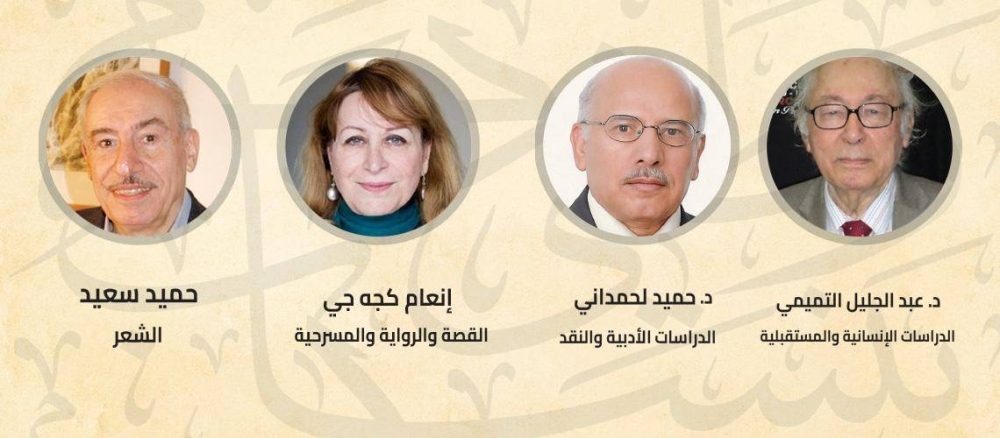
أعلنت جائزة سلطان بن علي العويس الثقافية فوز الشاعر العراقي حميد سعيد بجائزة الشعر، والروائية العراقية إنعام كجه جي بجائزة القصة والرواية والمسرحية، والناقد المغربي حميد لحمداني بجائزة الدراسات الأدبية والنقد، والمفكر التونسي عبد الجليل التميمي بجائزة الدراسات الإنسانية المستقبلية. وأوضح الأمين العام لمؤسسة سلطان بن علي العويس الثقافية عبد الحميد أحمد أن لجنة تحكيم الجائزة قررت فوز أدباء هذا العام، لتميزهم كل في مجاله، ولأعمالهم التي أسهمت في تطور الأدب والثقافة في العالم العربي، وعدّ منح جائزة الشعر للشاعر العراقي حميد سعيد تتويجاً لما تتمتع به تجربته الشعرية من تماسك واطلاع واسع على التراث العربي والإنساني من جهة، ووعي عميق بحداثة القصيدة العربية في مراحلها الفنية والتاريخية المترابطة من جهة أخرى، فقصيدته تغترف مادتها وجمالياتها من حياة محتشدة بالألم والأمل والوعي بتحديات العصر وصولاً إلى قصيدة مؤثرة ومقلقة تتماهى مع تطلعات الأمة إلى حياة أكثر جمالاً وعدلاً، مؤكداً أن تجربة الروائية العراقية إنعام كجه جي تميزت بقدرة على المزج بين الجانبين التوثيقي و الأدبـي. وبرزت في أعمالها موضوعات الهوية، والمنفى، والاغتراب، والتشظي النفسي، والحنين الذي يعيد اكتشاف الماضي ويطرحه برؤية نقدية جديدة، وهو ما عبّرت عنه شخصيات عاشت على أطراف التاريخ ولم تجد من يروي حكاياتها، ومنها نساء واقعات في قلب الحياة، يحضرن في منجزها الأدبي بقوتهن، وضعفهن، ونجاحاتهن، وانكساراتهن، وبكل ما يلقين من تناقضات وتحديات، مضيفاً أن الناقد المغربي حميد لحمداني يتفرد منهجه النّقدي بأصالة منهجيّة، وتراكم معرفي، واستمراريّة نقديّة لمشروع ضخم ومتراكم، بدأ تقريباً في سبعينات القرن العشرين، ولا يزال مستمراً في تحقيق التّثاقف المعرفي بين النقد العربي والغربي، حيث تنفتح تجربته على المنجز الغربي بوعي يتمثّل معطياته، ويعيد إنتاجه في سياق معرفي جديد، من خلال تقديم المنهج ومراجعته ونقده، والاشتغال على النقد التطبيقي، فيما وصف الباحث التونسي عبد الجليل التميمي بأبرز المؤرخين العرب المعاصرين، وتمثل أعماله البحث التاريخي كما جرى تطويره في الفكر المعاصر، إضافة إلى تنوع مجال اهتمامه التاريخي، حيث انصبت أعماله على دراسة تاريخ الموريسكيين في الأندلس، وتاريخ الولايات العربية في العهد العثماني، وتاريخ تونس المعاصر، وتعد أعماله نموذجاً للتوثيق التاريخي المستند إلى القواعد الجديدة في الكتابة التاريخية.
يذكر أن مؤسسة سلطان بن علي العويس تحتفل هذا العام بمرور 100 عام على ولادة الشاعر سلطان العويس (1925 ـ 2025)، وأقرت منظمة اليونسكو عام 2025 للاحتفال بمئويته، وأعدت المؤسسة برنامجاً ثقافياً حافلاً طيلة العام، وبهذه المناسبة قرر مجلس أمناء المؤسسة رفع قيمة الجائزة إلى 150 ألف دولار بدلاً من 120 ألف دولار لكل حقل.
The Sultan bin Ali Al Owais Cultural Award announced the winners: Iraqi poet Hamid Said won the poetry award, Iraqi novelist Inam Kachachi won the award for short stories, novels, and plays, Moroccan critic Hamid Lahmadi won the literary studies and criticism award, and Tunisian thinker Abdel Jalil Al-Tamimi won the award for future human studies. The Secretary-General of the Sultan bin Ali Al Owais Cultural Foundation, Abdul Hamid Ahmed, explained that the award's judging committee decided to honor this year's writers for their distinct contributions in their respective fields and for their works that have contributed to the development of literature and culture in the Arab world. He considered the awarding of the poetry prize to Iraqi poet Hamid Said as a crowning achievement for the coherence of his poetic experience and his extensive knowledge of Arab and human heritage on one hand, and a deep awareness of the modernity of Arabic poetry in its interconnected artistic and historical phases on the other. His poetry draws its material and aesthetics from a life filled with pain and hope, and an awareness of the challenges of the era, culminating in an impactful and unsettling poem that resonates with the nation's aspirations for a more beautiful and just life. He emphasized that the experience of Iraqi novelist Inam Kachachi is characterized by her ability to blend documentary and literary aspects. Her works prominently feature themes of identity, exile, alienation, psychological fragmentation, and nostalgia that rediscover the past and present it with a new critical perspective, as expressed through characters who lived on the fringes of history and found no one to tell their stories, including women caught in the heart of life, who appear in her literary output with their strength, weaknesses, successes, and failures, amidst all the contradictions and challenges they face. He added that Moroccan critic Hamid Lahmadi's critical approach is distinguished by its methodological originality, accumulated knowledge, and a continuous critical project that began almost in the 1970s and continues to achieve cultural exchange between Arab and Western criticism, where his experience opens up to Western achievements with a conscious understanding of their data, reinterpreting them in a new cognitive context through presenting, reviewing, and critiquing the methodology, while working on applied criticism. Tunisian researcher Abdel Jalil Al-Tamimi is considered one of the most prominent contemporary Arab historians, and his works represent historical research as it has been developed in contemporary thought, in addition to the diversity of his historical interests, as his works focus on studying the history of the Moriscos in Andalusia, the history of Arab states during the Ottoman era, and contemporary Tunisian history, making his works a model for historical documentation based on new principles in historical writing.
It is worth noting that the Sultan bin Ali Al Owais Foundation is celebrating this year the 100th anniversary of the birth of poet Sultan Al Owais (1925 - 2025), and UNESCO has declared 2025 to celebrate his centenary. The foundation has prepared a rich cultural program throughout the year, and on this occasion, the Board of Trustees of the foundation decided to raise the prize value to $150,000 instead of $120,000 for each field.