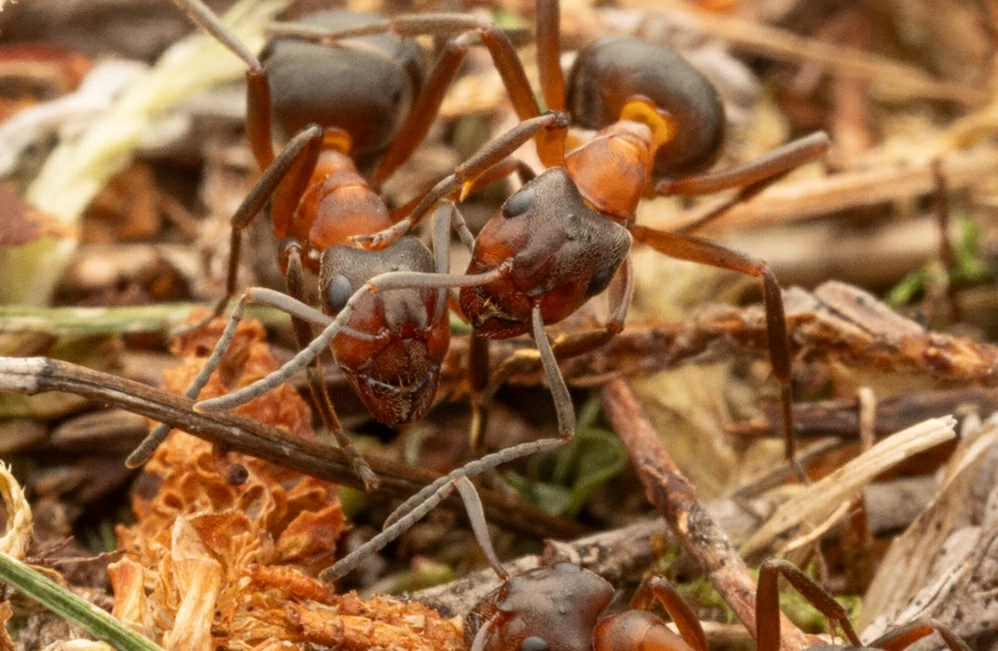
لم تكن مجوهرات أو سبائك ذهبية، بل آلاف النمل النادر كانت هدفاً لعملية سرقة غريبة دفعت الشرطة البريطانية إلى فتح تحقيق لكشف ملابساتها.
فقد باشرت السلطات في بريطانيا البحث عن مجهولين بعد اختفاء عش كامل من النمل ضيق الرأس من محمية (تشادلي نايتون هيث) بمقاطعة ديفون (جنوب غربي إنجلترا)، في حادثة أثارت قلق المختصين بالحياة البرية بسبب أهمية النوع المستهدف وندرته.
واكتشف العاملون في المحمية اختفاء العش بشكل كامل، فيما كشفت المعاينات عن وجود حفرة في موقعه وآثار تشير إلى استخدام أداة للحفر، ما عزز فرضية إزالته عمداً بدلاً من تعرضه لعوامل طبيعية.
ويُعرف النمل المسروق علمياً باسم (فورميكا إكسسيكتا)، ويُعد من أندر أنواع النمل في بريطانيا، بينما تمثِّل المحمية آخر موطن معروف له داخل إنجلترا. ويُقدَّر عدد أفراد المستعمرة الواحدة من هذا النوع بما يتراوح بين 1005 آلاف نملة؛ ما يعني أن عملية السرقة ربما شملت آلاف الحشرات دفعة واحدة.
وتدير المحمية مؤسسة (ديفون للحياة البرية) التي تتابع حماية هذا النوع ومراقبة مستعمراته ضمن برامج للحفاظ عليه من التراجع والاختفاء. وتضم المنطقة 142 عشاً نشطاً، إلا أن فقدان عش واحد يظل خسارة مؤثرة نظراً لندرة النوع وأهمية كل مستعمرة في استمراره.
ويتميز النمل ضيق الرأس بتنظيم اجتماعي معقد يعتمد على الملكات والعاملات في التكاثر ورعاية الصغار وجمع الغذاء وحماية العش، فيما يمكن أن تعيش الملكات لفترات طويلة قد تصل إلى 25 عاماً، ما يجعل خسارة مستعمرة كاملة ضربة لجهود الحفاظ عليها.
وأبلغت المؤسسة الشرطة بالواقعة مطالبةً بالمساعدة في تحديد المسؤولين عن إزالة العش، في حين لا تزال دوافع الحادثة مجهولة، وسط تساؤلات حول ما إذا كانت المستعمرة قد سُرقت للاحتفاظ بها أو نقلها إلى موقع آخر.
ومع استمرار التحقيقات، يؤكد المختصون أن خطورة الحادثة لا ترتبط بقيمة مادية، بل بخسارة مستعمرة نادرة تمثل جزءاً مهماً من التنوع البيئي في آخر معاقل هذا النوع داخل إنجلترا.
The target of a bizarre theft was not jewelry or gold bars, but thousands of rare ants, prompting British police to launch an investigation to uncover the circumstances surrounding the incident.
The authorities in Britain have begun searching for unknown individuals after an entire nest of narrow-headed ants disappeared from the (Chudleigh Knighton Heath) reserve in Devon (southwest England), in an incident that raised concerns among wildlife specialists due to the importance and rarity of the targeted species.
Workers at the reserve discovered the complete disappearance of the nest, while inspections revealed a hole at its location and signs indicating the use of a digging tool, which reinforced the hypothesis that it was deliberately removed rather than being subjected to natural factors.
The stolen ants are scientifically known as (Formica exsecta) and are considered one of the rarest ant species in Britain, with the reserve representing its last known habitat within England. The number of individuals in a single colony of this species is estimated to range between 1,000 to 5,000 ants; this means that the theft may have involved thousands of insects at once.
The reserve is managed by the (Devon Wildlife Trust), which monitors the protection of this species and its colonies as part of programs aimed at preventing its decline and extinction. The area contains 142 active nests, but the loss of one nest remains a significant loss due to the rarity of the species and the importance of each colony for its survival.
The narrow-headed ants are characterized by a complex social organization that relies on queens and workers for reproduction, caring for the young, foraging for food, and protecting the nest, while queens can live for long periods of up to 25 years, making the loss of an entire colony a blow to conservation efforts.
The trust reported the incident to the police, requesting assistance in identifying those responsible for the removal of the nest, while the motives behind the incident remain unknown, raising questions about whether the colony was stolen for retention or to be relocated to another site.
As investigations continue, specialists emphasize that the seriousness of the incident is not related to monetary value, but to the loss of a rare colony that represents an important part of the ecological diversity in the last strongholds of this species within England.