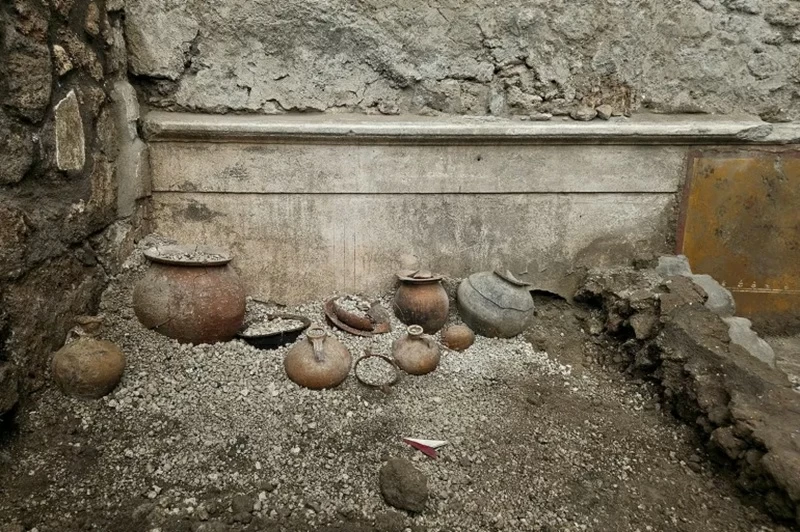
بعد نحو ألفي عام من اختفائها تحت الرماد البركاني، أعادت خزانة أثرية في مدينة بومبي الإيطالية إلى الواجهة، تفاصيل من الحياة اليومية لسكان الإمبراطورية الرومانية، كاشفة عن مقتنيات شخصية وأدوات استخدمها أصحاب المنزل قبل أن يختفوا في ظروف لا تزال غامضة حتى اليوم.
وعثر علماء الآثار على بقايا الخزانة داخل منزل يقع في شارع (فيا ديل أبوندانزا)، أحد أبرز شوارع بومبي القديمة، خلال أعمال تنقيب وترميم أتاحت الوصول إلى غرف لم تكن قد دُرست بالكامل من قبل.
ورغم أن الخزانة الخشبية لم تصل بحالتها الأصلية، فإن الباحثين تمكنوا من إعادة تصور شكلها ومحتوياتها اعتماداً على بقاياها وآثارها المحفوظة، ليكشفوا عن مجموعة من المقتنيات التي تعكس جوانب من حياة سكان المنزل قبل كارثة عام 79 ميلادياً.
قلادة طفل تحمل ذكريات
وضمت المكتشفات 38 قطعة نقدية برونزية محفوظة داخل وعاء منسوج، إلى جانب صندوق خشبي يحتوي على أثقال من الرصاص يُعتقد أنها استُخدمت في أعمال الوزن والتجارة، ما يرجح ارتباط أحد قاطني المنزل بنشاط تجاري.
غير أن أكثر القطع إثارة لاهتمام الباحثين كانت قلادة تضم 24 تميمة صغيرة مصنوعة من العظام والزجاج والفخار والكريستال الصخري، وتحمل أشكالًا لآلهة ورموز كانت تُستخدم للحماية في المجتمع الروماني القديم.
وتُعرف هذه القلائد باسم (كريبونديا)، وكانت تُمنح للأطفال بوصفها تمائم للحماية، كما تصدر أصواتاً خفيفة عند الحركة تساعد ذويهم على تتبعهم. ويعتقد الباحثون أن القلادة ربما احتفظ بها أحد سكان المنزل كتذكار من طفولته، ما يضفي على الاكتشاف بُعداً إنسانياً يتجاوز قيمته الأثرية.
لغز الرحيل المفاجئ
وأثار العثور على النقود والحلي والأغراض الشخصية داخل المنزل تساؤلات بشأن الطريقة التي غادر بها سكانه المكان قبل ثوران بركان فيزوف الذي دمّر المدينة ودفنها تحت طبقات هائلة من الرماد والمواد البركانية.
ويرجح علماء الآثار أن السكان اضطروا إلى الفرار على عجل، تاركين وراءهم مقتنيات ذات قيمة مادية وعاطفية، إلا أن الأدلة المتاحة لا تكشف ما إذا كانوا نجحوا في النجاة أم لقوا حتفهم خلال الكارثة.
ولم تتوقف المفاجآت عند الخزانة، إذ عثر الباحثون أيضاً على بقايا هيكلين عظميين لفأرين داخل جرة فخارية مخصصة للتخزين، في إشارة إلى أن سكان بومبي كانوا يواجهون تحديات يومية مألوفة لا تختلف كثيراً عن مشكلات المنازل الحديثة.
ويرى القائمون على الموقع الأثري أن أهمية الاكتشاف تكمن في قدرته على تجميع تفاصيل متناثرة من حياة أشخاص عاشوا قبل قرون، بدءاً من أعمالهم وعاداتهم اليومية، وصولاً إلى ذكريات طفولتهم ومقتنياتهم الخاصة.
وبينما تواصل فرق التنقيب أعمالها في أحياء بومبي المختلفة، ما زالت هوية أصحاب الخزانة ومصيرهم النهائي مجهولين، لكن مقتنياتهم الصغيرة نجحت في إعادة إحياء جانب من حياتهم بعد نحو ألفي عام من اختفائهم.
After nearly two thousand years of being buried under volcanic ash, an archaeological cabinet in the Italian city of Pompeii has brought to light details of the daily life of the inhabitants of the Roman Empire, revealing personal belongings and tools used by the homeowners before they vanished under circumstances that remain mysterious to this day.
Archaeologists discovered the remains of the cabinet inside a house located on (Via dell'Abbondanza), one of the most prominent streets of ancient Pompeii, during excavation and restoration work that allowed access to rooms that had not been fully studied before.
Although the wooden cabinet did not survive in its original condition, researchers were able to reimagine its shape and contents based on its remains and preserved traces, uncovering a collection of items that reflect aspects of the lives of the home's residents before the disaster of 79 AD.
A Child's Necklace Carrying Memories
The discoveries included 38 bronze coins preserved inside a woven container, along with a wooden box containing lead weights believed to have been used for weighing and trade, suggesting a connection of one of the home's occupants to commercial activity.
However, the most intriguing piece for researchers was a necklace containing 24 small amulets made of bone, glass, pottery, and rock crystal, featuring shapes of deities and symbols that were used for protection in ancient Roman society.
These necklaces are known as (crepundia) and were given to children as protective talismans; they also made soft sounds when moved, helping their guardians to keep track of them. Researchers believe that the necklace may have been kept by one of the home's residents as a memento of their childhood, adding a human dimension to the discovery that transcends its archaeological value.
The Mystery of the Sudden Departure
The discovery of coins, jewelry, and personal items inside the house raised questions about how its residents left the place before the eruption of Mount Vesuvius, which destroyed the city and buried it under massive layers of ash and volcanic material.
Archaeologists speculate that the residents were forced to flee in haste, leaving behind belongings of both material and emotional value, but the available evidence does not reveal whether they succeeded in escaping or perished during the disaster.
The surprises did not stop at the cabinet, as researchers also found the remains of two skeletons of mice inside a storage jar, indicating that the residents of Pompeii faced familiar daily challenges not unlike those of modern households.
The site managers believe that the significance of the discovery lies in its ability to piece together scattered details of the lives of people who lived centuries ago, from their work and daily habits to their childhood memories and personal belongings.
While excavation teams continue their work in various neighborhoods of Pompeii, the identity of the cabinet's owners and their ultimate fate remain unknown, but their small possessions have succeeded in reviving a glimpse of their lives nearly two thousand years after their disappearance.