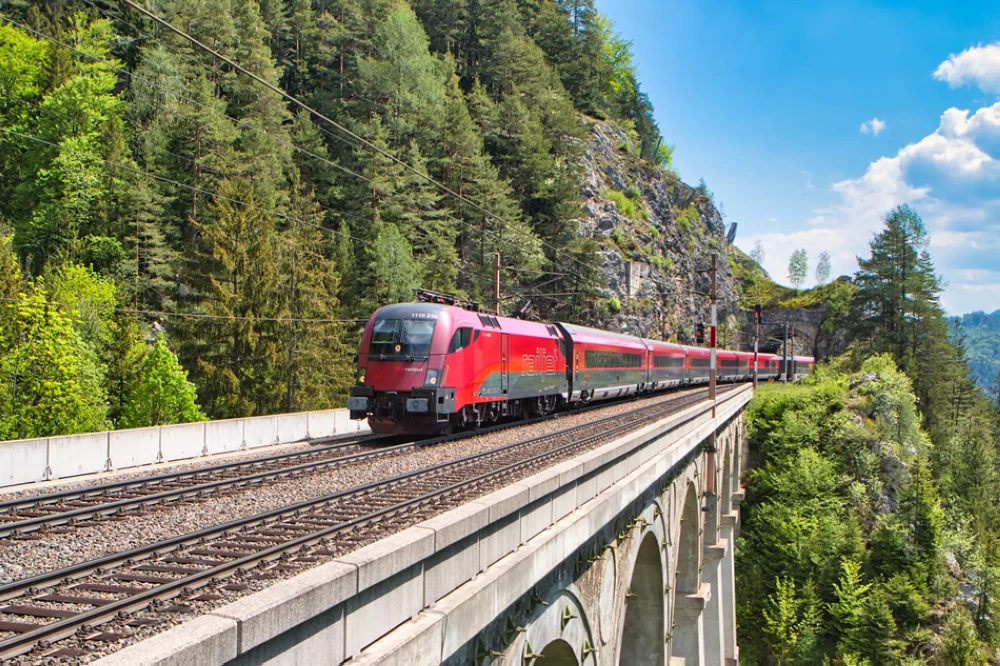
سجل مسافرو السكك الحديدية في الاتحاد الأوروبي رقمًا قياسيًا بلغ 457 مليار كيلومتر من السفر في العام الماضي، وفق ما أعلنه مكتب الإحصاء الأوروبي «يوروستات» الجمعة.
ويزيد هذا الرقم بنسبة 2.6% عن العام السابق، ويُعد الأعلى منذ بدء جمع البيانات عام 2004، دون احتساب نقل الركاب عبر مترو الأنفاق والترام وقطارات الضواحي.
وتصدرت لوكسمبورج، الدولة الصغيرة، قائمة الرحلات لكل فرد، إذ سجلت 46 رحلة لكل ساكن في عام 2025، وهو أعلى معدل في الاتحاد الأوروبي، علمًا بأن السفر بالقطار في الدرجة الثانية مجاني في أنحاء البلاد.
وحلّت المجر ثانية بـ 35.9 رحلة لكل ساكن، ثم الدنمارك بـ 35.6 رحلة، فيما جاءت ألمانيا في المركز الرابع بـ 35.3 رحلة.
أما من حيث الأرقام المطلقة، فتربعت ألمانيا بلا منازع على عرش الصدارة، إذ أحصى «يوروستات» ما يقل قليلًا عن 2.95 مليار مسافر على شبكة السكك الحديدية فيها عام 2025، تلتها فرنسا بـ 1.3 مليار مسافر، ثم إيطاليا بـ 844 مليون مسافر.
وفي الطرف المقابل، جاءت ليتوانيا في أدنى القائمة بـ5 ملايين مسافر، ثم إستونيا بـ8 ملايين، واليونان بـ14 مليونًا.
Rail travelers in the European Union recorded a record 457 billion kilometers of travel last year, according to the European statistics office "Eurostat" announced on Friday.
This figure represents an increase of 2.6% compared to the previous year and is the highest since data collection began in 2004, not including passenger transport via subways, trams, and commuter trains.
Luxembourg, the small country, topped the list of trips per capita, recording 46 trips per resident in 2025, the highest rate in the European Union, noting that second-class train travel is free throughout the country.
Hungary came in second with 35.9 trips per resident, followed by Denmark with 35.6 trips, while Germany ranked fourth with 35.3 trips.
In terms of absolute numbers, Germany undoubtedly held the top spot, with "Eurostat" counting just under 2.95 billion passengers on its railway network in 2025, followed by France with 1.3 billion passengers, and Italy with 844 million passengers.
On the other end of the spectrum, Lithuania ranked lowest on the list with 5 million passengers, followed by Estonia with 8 million, and Greece with 14 million.