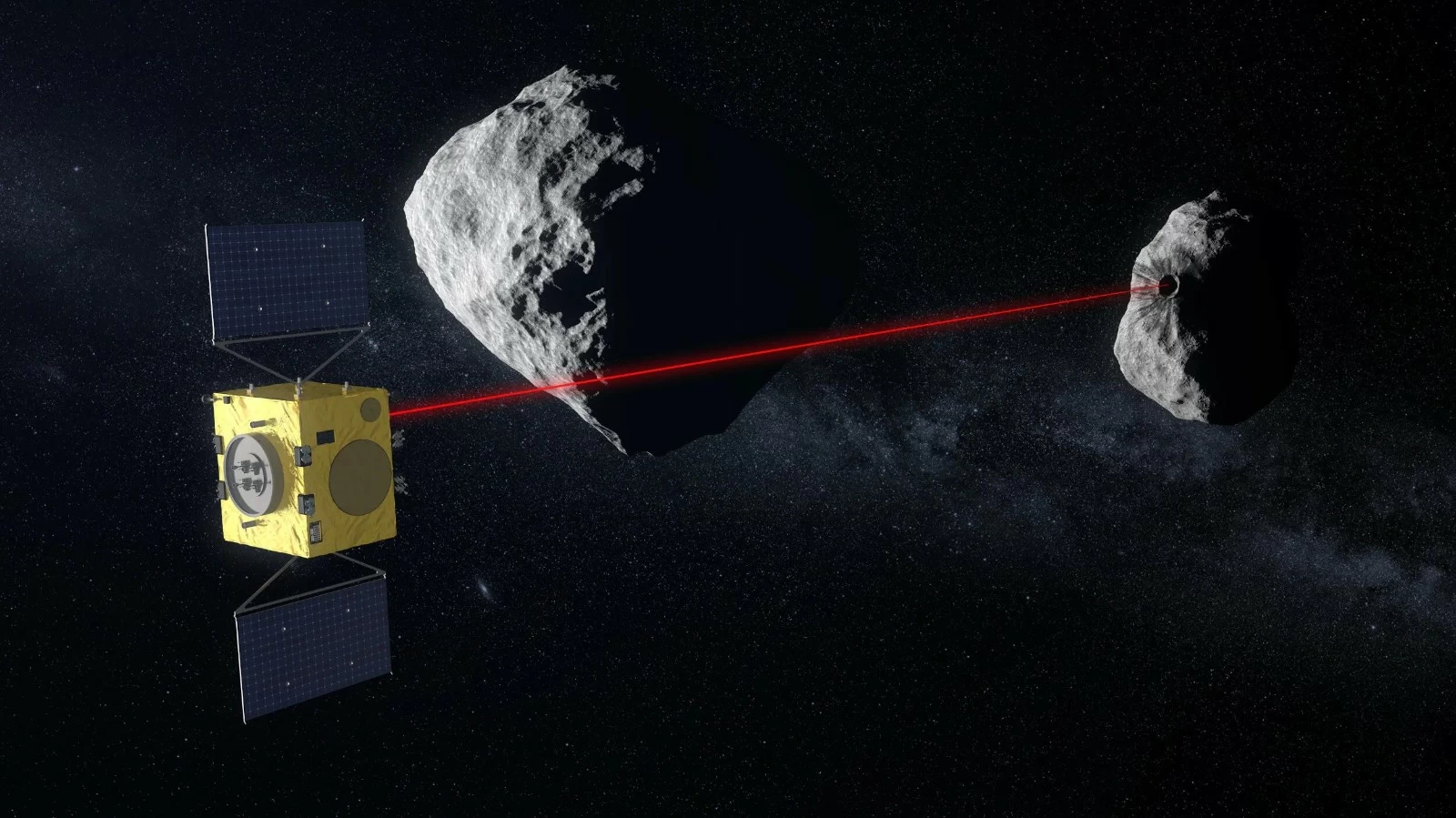
نجحت مركبة «هيرا» التابعة لوكالة الفضاء الأوروبية في رصد الكويكبين «ديديموس» و«ديمورفوس» بصورة منفصلة لأول مرة، بعدما كانا يظهران أمام كاميرات المركبة كنقطة ضوئية واحدة، في خطوة مهمة ضمن مهمة أوروبية تهدف إلى تطوير تقنيات الدفاع عن الأرض ضد الكويكبات الخطرة.
وأوضحت وكالة الفضاء الأوروبية أن «هيرا» التقطت الصورة باستخدام كاميرا تأطير الكويكبات أحادية اللون، من مسافة نحو 1280 كيلومتراً عن النظام الثنائي، الذي يبعد حالياً نحو 197 مليون كيلومتر عن الأرض.
وأظهرت الصورة الكويكب الأصغر «ديمورفوس» منفصلاً بوضوح عن الكويكب الأكبر «ديديموس» لأول مرة من خلال كاميرات المركبة، رغم أن «ديمورفوس» لا يشغل سوى نحو بكسل واحد في الصورة الأولية.
مركبة «هيرا» الفضائية الأوروبية خلال اقترابها من نظام الكويكبين «ديديموس» و«ديمورفوس»
ويبلغ قطر «ديمورفوس» نحو 151 متراً، فيما يصل قطر «ديديموس» إلى نحو 780 متراً، ويدور الكويكبان حول بعضهما على مسافة متوسطة تبلغ نحو 1.15 كيلومتر.
وجاءت الصورة بعد نجاح «هيرا» في تنفيذ مناورات كبح خفّضت سرعتها النسبية تجاه الكويكبين إلى نحو 20 متراً في الثانية، ما أتاح للمركبة الاقتراب تدريجياً والتقاط صور أكثر وضوحاً.
وتستعد المركبة خلال الأسابيع القادمة للاقتراب بصورة أكبر من «ديمورفوس»، على أن تكشف وكالة الفضاء الأوروبية أول صور تفصيلية له في 25 نوفمبر القادم.
وكان «ديمورفوس» هدفاً لمهمة «دارت» التابعة لوكالة الفضاء الأمريكية «ناسا» عام 2022، عندما اصطدمت به مركبة فضائية بسرعة 6.1 كيلومتر في الثانية، في أول تجربة بشرية تهدف إلى تغيير مدار جرم سماوي، وأسفر الاصطدام عن تقليص زمن دورانه حول «ديديموس» بنحو 33 دقيقة.
وستدرس «هيرا» آثار ذلك الاصطدام عن قرب، بهدف معرفة مدى فاعلية تقنية الاصطدام الحركي في تغيير مسار الكويكبات التي قد تشكل خطراً على الأرض مستقبلاً.
The European Space Agency's "Hera" spacecraft successfully observed the asteroids "Didymos" and "Dimorphos" separately for the first time, after they had appeared as a single point of light in the spacecraft's cameras. This marks an important step in a European mission aimed at developing technologies for defending Earth against hazardous asteroids.
The European Space Agency explained that "Hera" captured the image using a monochrome asteroid framing camera from a distance of about 1,280 kilometers from the binary system, which is currently about 197 million kilometers from Earth.
The image clearly showed the smaller asteroid "Dimorphos" separated from the larger asteroid "Didymos" for the first time through the spacecraft's cameras, even though "Dimorphos" occupies only about one pixel in the initial image.
"Dimorphos" has a diameter of about 151 meters, while "Didymos" has a diameter of about 780 meters, and the two asteroids orbit each other at an average distance of about 1.15 kilometers.
The image came after "Hera" successfully performed braking maneuvers that reduced its relative speed towards the asteroids to about 20 meters per second, allowing the spacecraft to gradually approach and capture clearer images.
In the coming weeks, the spacecraft is preparing to get closer to "Dimorphos," with the European Space Agency set to reveal the first detailed images of it on November 25.
"Dimorphos" was the target of NASA's "DART" mission in 2022, when a spacecraft collided with it at a speed of 6.1 kilometers per second, marking the first human experiment aimed at changing the orbit of a celestial body. The collision resulted in a reduction of its orbital period around "Didymos" by about 33 minutes.
"Hera" will study the effects of that collision up close, with the aim of understanding the effectiveness of kinetic impactor technology in altering the trajectories of asteroids that may pose a threat to Earth in the future.