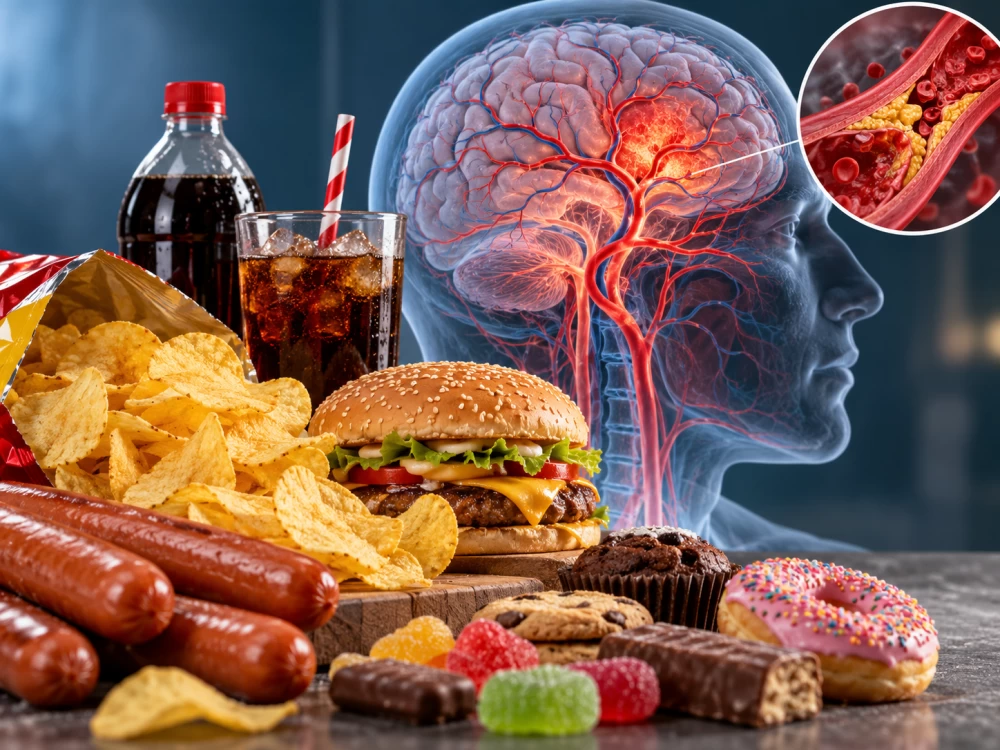
كشفت دراسة كندية حديثة، نشرتها مجلة «JAMA Network Open»، عن ارتباط الاستهلاك المتكرر للأطعمة فائقة المعالجة بزيادة احتمالات الإصابة بتلف الأوعية الدموية في الدماغ، حتى في غياب أعراض صحية واضحة.
وشملت الدراسة بيانات 8783 شخصاً في كندا، تراوحت أعمارهم بين 35 و69 عاماً، إذ حلّل الباحثون أنظمتهم الغذائية، وأخضعوهم لفحوصات التصوير بالرنين المغناطيسي للدماغ، إلى جانب اختبارات لقياس الذاكرة والانتباه.
وركّز الباحثون على تأثير الأطعمة فائقة المعالجة، التي تشمل أنواعاً من النقانق والحلويات ورقائق البطاطس والوجبات الخفيفة الجاهزة والمشروبات السكرية، في صحة الدماغ والأوعية الدموية.
وأظهرت النتائج أن الأشخاص الأكثر استهلاكاً لهذه الأطعمة كانوا أكثر عرضةً بنسبة 40% للإصابة بتلف وعائي خفياً في الدماغ، مقارنة بمن يتناولون كميات أقل منها، وهي تغيرات يمكن اكتشافها باستخدام التصوير بالرنين المغناطيسي، حتى دون ظهور مشكلات صحية ملحوظة.
كما بيّنت الدراسة أن الأشخاص الذين يستهلكون كميات أكبر من الأطعمة فائقة المعالجة سجّلوا ارتفاعاً في نسبة الدهون بالجسم بمقدار 1.7 نقطة مئويةً في المتوسط، إلى جانب زيادة تراكم الدهون حول الأعضاء الداخلية.
ورغم هذه النتائج، لم يرصد الباحثون ارتباطاً بين استهلاك تلك الأطعمة وضعف الذاكرة أو الانتباه، إلا أنهم أشاروا إلى احتمال ظهور التغيرات الوعائية في الدماغ قبل حدوث أي تراجع ملحوظاً في القدرات الإدراكية.
وفي السياق ذاته، أظهرت دراسة سابقة أجراها باحثون من جامعة لودز الطبية في بولندا أن الأطعمة فائقة المعالجة قد تؤثر سلباً في صحة الكلى، وتسرّع تطور أمراض الكلى المزمنة، فيما أشارت دراسات أخرى إلى أضرار محتملةً لهذه الأطعمة على الكبد والقلب والشرايين والجهاز العصبي.
A recent Canadian study published in the journal "JAMA Network Open" revealed a link between the frequent consumption of ultra-processed foods and an increased likelihood of vascular damage in the brain, even in the absence of clear health symptoms.
The study included data from 8,783 individuals in Canada, aged between 35 and 69 years. Researchers analyzed their dietary patterns and subjected them to MRI brain scans, along with tests to measure memory and attention.
Researchers focused on the impact of ultra-processed foods, which include types of sausages, sweets, potato chips, ready-to-eat snacks, and sugary drinks, on brain and vascular health.
The results showed that individuals who consumed these foods more frequently were 40% more likely to experience subtle vascular damage in the brain compared to those who consumed lower amounts, changes that can be detected using MRI, even without noticeable health issues.
The study also indicated that individuals who consumed larger amounts of ultra-processed foods recorded an average increase of 1.7 percentage points in body fat, along with increased fat accumulation around internal organs.
Despite these findings, researchers did not observe a link between the consumption of these foods and memory or attention deficits; however, they noted the possibility that vascular changes in the brain could occur before any noticeable decline in cognitive abilities.
In a related context, a previous study conducted by researchers from the Medical University of Łódź in Poland showed that ultra-processed foods may negatively impact kidney health and accelerate the progression of chronic kidney diseases, while other studies have indicated potential harms of these foods on the liver, heart, arteries, and nervous system.