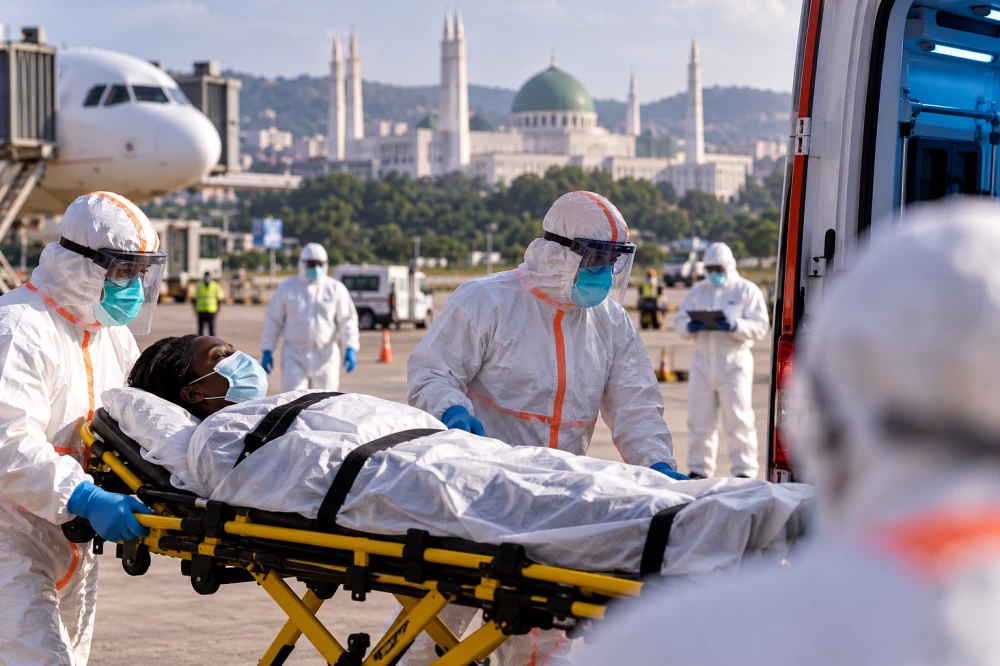
أعلنت السلطات الصحية في نيجيريا تسجيل إصابة مؤكدة بفايروس «إيبولا» في العاصمة أبوجا، لدى امرأة وصلت إلى البلاد قادمة من أوغندا، فيما بدأت فرق الاستجابة الصحية تعقب 44 شخصاً خالطوا المصابة، وسط مخاوف من انتقال العدوى واتساع نطاق انتشار الفايروس.
وأكد وزير الصحة والرعاية الاجتماعية النيجيري محمد علي باتي، أمس (الثلاثاء)، ثبوت الإصابة مخبرياً، موضحاً أن المريضة تخضع للعزل الطبي وتتلقى الرعاية اللازمة، بالتزامن مع تكثيف إجراءات الترصد الوبائي للحد من احتمال ظهور إصابات إضافية.
ظهور الأعراض قبل تأكيد الإصابة
وبحسب منظمة الصحة العالمية، بدأت أعراض المرض تظهر على المرأة في السابع من أكتوبر الجاري، بعد أربعة أيام من وصولها إلى نيجيريا، قبل أن تتوجه إلى منشأة طبية خاصة في أبوجا في 11 أكتوبر، حيث تلقت العلاج لعدة أيام.
وأظهرت الفحوص المخبرية التي أُجريت في 20 أكتوبر إصابتها بفايروس «إيبولا» من سلالة «بونديبوغيو»، فيما تواصل السلطات التحقيق لتحديد مصدر العدوى وإعادة تتبع تحركات المريضة ورحلاتها السابقة.
وأوضحت السلطات الأوغندية أن المرأة كانت قد عبرت أراضي أوغندا بعد رحلة إلى شرق جمهورية الكونغو الديمقراطية، مؤكدة عدم تسجيل تفشٍ نشط للمرض داخل البلاد.
تعقب المخالطين ورفع التأهب الصحي
وأعلنت وزارة الصحة النيجيرية تحديد 44 مخالطاً للمريضة حتى الآن، بينهم عاملون في القطاع الصحي ومرضى ومرافقون وأشخاص يُحتمل أنهم خالطوها خلال السفر.
وفعّل المركز النيجيري لمكافحة الأمراض والوقاية منها نظام إدارة الحوادث الصحية، بالتعاون مع منظمة الصحة العالمية والجهات الصحية المحلية، لتعزيز إجراءات العزل والفحص والمراقبة الوبائية.
ووجّهت الحكومة المستشفيات والمراكز الصحية الحكومية والخاصة إلى رفع مستوى التأهب، والإبلاغ الفوري عن الحالات المشتبه بإصابتها، مع تشديد تدابير مكافحة العدوى وحماية العاملين الصحيين.
خامس دولة تسجل الفايروس منذ تفشي الكونغو
وأفادت منظمة الصحة العالمية بأن نيجيريا أصبحت خامس دولة ترصد إصابة بفايروس «إيبولا بونديبوغيو» منذ إعلان تفشي المرض في جمهورية الكونغو الديمقراطية في 15 مايو الماضي.
وسجلت كينيا تسع إصابات مرتبطة بحالة وافدة خلال الأسابيع الأخيرة، ما دفع السلطات الصحية في عدد من الدول الأفريقية إلى تعزيز مراقبة الحدود والاستعداد للاستجابة السريعة.
وحثت المنظمة دول المنطقة على تكثيف الترصد الوبائي، وتجهيز المختبرات والفرق الطبية، وتوفير معدات الوقاية، خصوصاً مع استمرار تطورات التفشي في الكونغو الديمقراطية.
تحذيرات من انتقال العدوى
وينتقل فايروس إيبولا عبر الملامسة المباشرة لدم المصاب أو سوائل جسمه، أو الأدوات والأسطح الملوثة بهذه السوائل، ولا يصبح الشخص المصاب ناقلاً للعدوى قبل ظهور الأعراض عليه.
وتشمل أعراض المرض الحمى والضعف الشديد والصداع والقيء والإسهال، وقد تظهر خلال فترة تتراوح بين يومين و21 يوماً من التعرض للفايروس.
وأكدت السلطات النيجيرية امتلاكها الخبرة والإمكانات اللازمة للتعامل مع الحالة، مستندة إلى تجربتها في احتواء تفشي إيبولا عام 2014، داعية السكان إلى التعاون مع فرق الاستجابة الصحية وتجنب تداول المعلومات غير الموثوقة.
وفي المقابل، أكدت منظمة الصحة العالمية أنها لا توصي بفرض قيود على السفر أو التجارة مع الدول المتأثرة، مشددة على أهمية الاكتشاف المبكر للحالات وتعقب المخالطين لمنع انتقال العدوى.
Nigerian health authorities have announced a confirmed case of the Ebola virus in the capital, Abuja, involving a woman who arrived in the country from Uganda. Health response teams have begun tracking 44 individuals who had contact with the infected person, amid fears of transmission and the virus's spread.
Nigerian Minister of Health and Social Welfare, Muhammad Ali Pate, confirmed yesterday (Tuesday) that the infection was laboratory-confirmed, stating that the patient is under medical isolation and receiving necessary care, alongside intensified epidemiological surveillance measures to limit the possibility of additional cases.
Symptoms Appearing Before Confirmation of Infection
According to the World Health Organization, the woman began showing symptoms of the disease on October 7, just four days after her arrival in Nigeria, before heading to a private medical facility in Abuja on October 11, where she received treatment for several days.
Laboratory tests conducted on October 20 confirmed her infection with the Ebola virus of the Bundibugyo strain, while authorities continue to investigate to determine the source of the infection and retrace the patient's movements and previous travels.
Ugandan authorities clarified that the woman had crossed through Uganda after a trip to eastern Democratic Republic of the Congo, confirming that there is no active outbreak of the disease within the country.
Tracking Contacts and Raising Health Alert
The Nigerian Ministry of Health announced that 44 contacts of the patient have been identified so far, including healthcare workers, patients, companions, and individuals who may have come into contact with her during travel.
The Nigerian Center for Disease Control and Prevention has activated its health incident management system, in collaboration with the World Health Organization and local health authorities, to enhance isolation, screening, and epidemiological monitoring measures.
The government has directed public and private hospitals and health centers to raise their alert levels and to report any suspected cases immediately, while tightening infection control measures and protecting healthcare workers.
Fifth Country to Report the Virus Since the Outbreak in Congo
The World Health Organization reported that Nigeria has become the fifth country to record a case of the Bundibugyo Ebola virus since the outbreak was declared in the Democratic Republic of the Congo on May 15.
Kenya has recorded nine cases linked to an incoming case in recent weeks, prompting health authorities in several African countries to enhance border surveillance and prepare for rapid response.
The organization urged countries in the region to intensify epidemiological surveillance, equip laboratories and medical teams, and provide protective equipment, especially as developments in the outbreak in the Democratic Republic of the Congo continue.
Warnings About Transmission of Infection
The Ebola virus is transmitted through direct contact with the blood or bodily fluids of an infected person, or through tools and surfaces contaminated with these fluids, and an infected person does not become contagious until symptoms appear.
Symptoms of the disease include fever, severe weakness, headache, vomiting, and diarrhea, which may appear within a period ranging from two to 21 days after exposure to the virus.
Nigerian authorities have confirmed their capability and resources to handle the case, relying on their experience in containing the Ebola outbreak in 2014, urging the public to cooperate with health response teams and avoid spreading unreliable information.
In contrast, the World Health Organization has stated that it does not recommend imposing travel or trade restrictions with affected countries, emphasizing the importance of early detection of cases and tracking contacts to prevent the spread of infection.