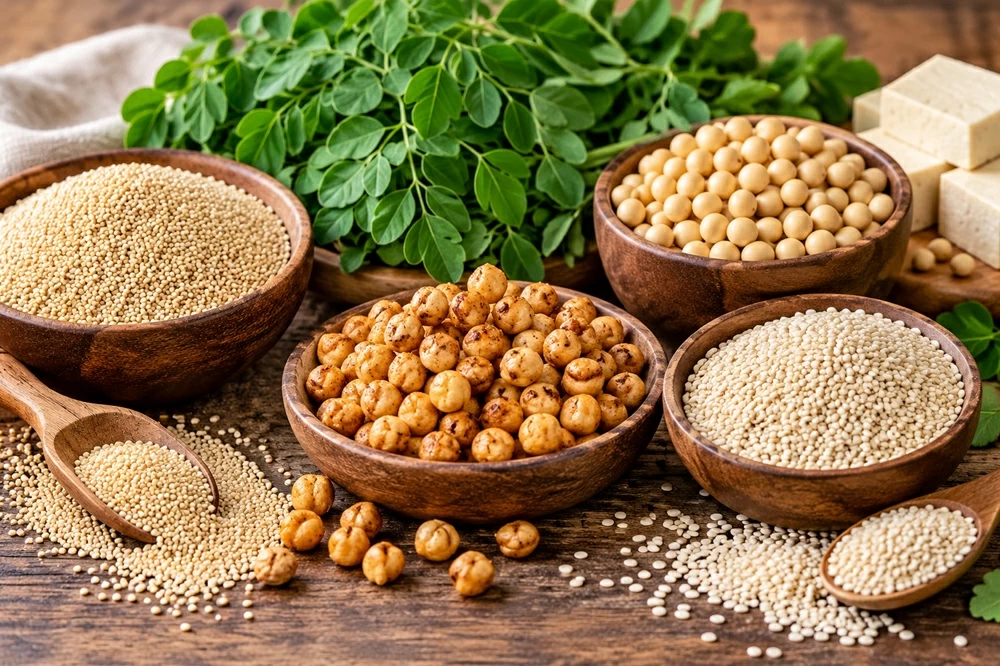
لا يتطلب اتباع نظام غذائي نباتي متوازن الاعتماد على الأطعمة الرائجة التي توصف بأنها «أغذية خارقة»، إذ توجد خيارات تقليدية وبأسعار مناسبة يمكن أن تمد الجسم بالبروتين والألياف والمعادن الضرورية، وتساعد على تنويع الوجبات اليومية.
وتبرز أهمية هذه الأطعمة في سهولة إدخالها إلى النظام الغذائي بطرق مختلفة، سواء من خلال الوجبات الرئيسية أو الوجبات الخفيفة، بما يدعم الحصول على مجموعة متنوعة من العناصر الغذائية دون تكاليف مرتفعة.
وبحسب «Hindustan Times»، قالت خبيرة إنقاص الوزن براتياكشا بهاردواج، إن هناك خمسة أطعمة نباتية تستحق أن تكون جزءاً من النظام الغذائي اليومي، لما توفره من فوائد غذائية وتكلفة مناسبة.
القطيفة.. حبوب غنية بالبروتين والحديد
تُعد حبوب القطيفة، المعروفة في الهند باسم «راججيرا»، من الخيارات الغذائية الغنية بالحديد والمغنيسيوم والألياف والبروتين.
ويمكن تناولها في صورة عصيدة، أو استخدامها لصنع الدقيق وإضافته إلى الخبز والأطعمة المحضرة من العجين، مثل الفطائر الهندية المعروفة باسم «تشيلا».
ويساعد إدخال هذه الحبوب إلى الوجبات على تنويع مصادر الغذاء، كما يمكن استخدامها بديلًا لبعض المنتجات المصنوعة من الحبوب المكررة.
بذور السمسم.. مصدر للكالسيوم والدهون الصحية
على الرغم من صغر حجمها، تحتوي بذور السمسم على مجموعة من العناصر الغذائية المهمة، من بينها الدهون الصحية والبروتين والكالسيوم ومعادن أخرى.
وأوضحت بهاردواج أنه يمكن إضافتها إلى الصلصات والسلطات والخضراوات، أو استخدامها في إعداد كرات الحلوى المنزلية المعروفة باسم «لادو».
ويمكن تناول السمسم بكميات صغيرة ضمن الوجبات المعتادة، للاستفادة من قيمته الغذائية دون الحاجة إلى استهلاك كميات كبيرة منه.
فول الصويا.. خيار نباتي للحصول على البروتين
يُعد فول الصويا من المصادر النباتية الجيدة للبروتين، كما يوفر الألياف والحديد وعناصر غذائية أخرى يحتاج إليها الجسم.
ويمكن إدخال منتجات الصويا قليلة المعالجة، إلى جانب التوفو، ضمن الوجبات النباتية، بما يتيح تنويع مصادر البروتين بدلًا من الاعتماد على نوع واحد من الأطعمة.
ويمنح هذا التنوع النظام الغذائي مرونة أكبر، خصوصًا لدى الأشخاص الذين لا يتناولون اللحوم أو يعتمدون على الأغذية النباتية بصورة أساسية.
أوراق المورينجا.. خضراوات ورقية غنية بالمغذيات
رغم انتشار أوراق المورينجا في مناطق عديدة من الهند، فإنها لا تحظى دائمًا بالاهتمام الذي تستحقه ضمن الوجبات اليومية.
وتتميز هذه الأوراق باحتوائها على الألياف والعناصر الغذائية الدقيقة، ويمكن إضافتها إلى أطباق العدس واليخنات والخضراوات، أو استخدامها في إعداد خبز «البراتا» الهندي.
ويساعد التنويع بين الخضراوات الورقية على زيادة استهلاك الخضراوات عمومًا، وتعزيز فرص الحصول على مجموعة أوسع من الفيتامينات والمعادن.
الحمص المحمص.. وجبة خفيفة غنية بالألياف والبروتين
يمثل الحمص المحمص خيارًا اقتصاديًا وسهل التحضير للحصول على البروتين النباتي والألياف، بحسب بهاردواج.
ويمكن تناوله بمفرده بين الوجبات، أو إضافته إلى السلطات والخلطات الغذائية، ليصبح بديلًا مناسبًا لكثير من الوجبات الخفيفة المعبأة.
ويتميز الحمص المحمص غير المضاف إليه كميات كبيرة من الملح أو الدهون بأنه خيار عملي يمكن إدراجه ضمن العادات الغذائية اليومية، مع الانتباه إلى حجم الحصة المتناولة.
كيف تجعل نظامك النباتي أكثر توازنًا؟
لا يعني إدخال هذه الأطعمة الاستغناء عن الأصناف الموجودة بالفعل في النظام الغذائي، بل يهدف إلى زيادة التنوع والاستفادة من الخيارات التقليدية المتاحة محليًا.
ووفقًا للنصائح التي قدمتها خبيرة التغذية، فإن الجمع بين الحبوب والبقوليات والخضراوات والفواكه والمكسرات والبذور يمكن أن يجعل النظام النباتي أكثر توازنًا وأقل تكلفة وأكثر استدامة.
والأهم هو عدم الاعتماد على طعام واحد للحصول على جميع الحاجات الغذائية، بل تنويع مصادر العناصر الغذائية واختيار الأطعمة الأقل معالجة قدر الإمكان، مع مراعاة الكميات المناسبة وحاجات كل شخص.
A balanced vegetarian diet does not require relying on trendy foods described as "superfoods," as there are traditional and affordable options that can provide the body with essential protein, fiber, and minerals, helping to diversify daily meals.
The importance of these foods lies in their ease of incorporation into the diet in various ways, whether through main meals or snacks, which supports obtaining a variety of nutrients without high costs.
According to the "Hindustan Times," weight loss expert Pratyaksha Bhardwaj stated that there are five plant-based foods that deserve to be part of the daily diet due to their nutritional benefits and reasonable cost.
Amaranth.. A grain rich in protein and iron
Amaranth grains, known in India as "Rajgira," are a nutritious option rich in iron, magnesium, fiber, and protein.
They can be consumed as porridge or used to make flour and added to bread and foods prepared from dough, such as the Indian pancakes known as "Cheela."
Incorporating these grains into meals helps diversify food sources, and they can be used as a substitute for some products made from refined grains.
Sesame seeds.. A source of calcium and healthy fats
Despite their small size, sesame seeds contain a range of important nutrients, including healthy fats, protein, calcium, and other minerals.
Bhardwaj explained that they can be added to sauces, salads, and vegetables, or used in making homemade sweets known as "Ladoo."
Sesame can be consumed in small amounts within regular meals to benefit from its nutritional value without the need to consume large quantities.
Soybeans.. A plant-based option for protein
Soybeans are a good plant-based source of protein, providing fiber, iron, and other nutrients that the body needs.
Less processed soy products, along with tofu, can be incorporated into vegetarian meals, allowing for a variety of protein sources instead of relying on just one type of food.
This diversity gives the diet greater flexibility, especially for those who do not consume meat or primarily rely on plant-based foods.
Moringa leaves.. Nutrient-rich leafy greens
Although moringa leaves are widely available in many areas of India, they do not always receive the attention they deserve in daily meals.
These leaves are characterized by their fiber and micronutrient content and can be added to lentil dishes, stews, and vegetables, or used in making Indian "Paratha" bread.
Diversifying among leafy greens helps increase overall vegetable consumption and enhances the chances of obtaining a broader range of vitamins and minerals.
Roasted chickpeas.. A fiber- and protein-rich snack
Roasted chickpeas represent an economical and easy-to-prepare option for obtaining plant-based protein and fiber, according to Bhardwaj.
They can be eaten alone between meals or added to salads and food mixes, making them a suitable alternative to many packaged snacks.
Roasted chickpeas that are not heavily salted or contain large amounts of fat are a practical option that can be included in daily dietary habits, with attention to portion sizes.
How to make your vegetarian diet more balanced?
Incorporating these foods does not mean giving up the varieties already present in the diet; rather, it aims to increase diversity and benefit from traditional options available locally.
According to the advice provided by the nutrition expert, combining grains, legumes, vegetables, fruits, nuts, and seeds can make the vegetarian diet more balanced, less costly, and more sustainable.
The most important thing is not to rely on a single food to meet all nutritional needs, but to diversify sources of nutrients and choose the least processed foods possible, while considering appropriate quantities and individual needs.