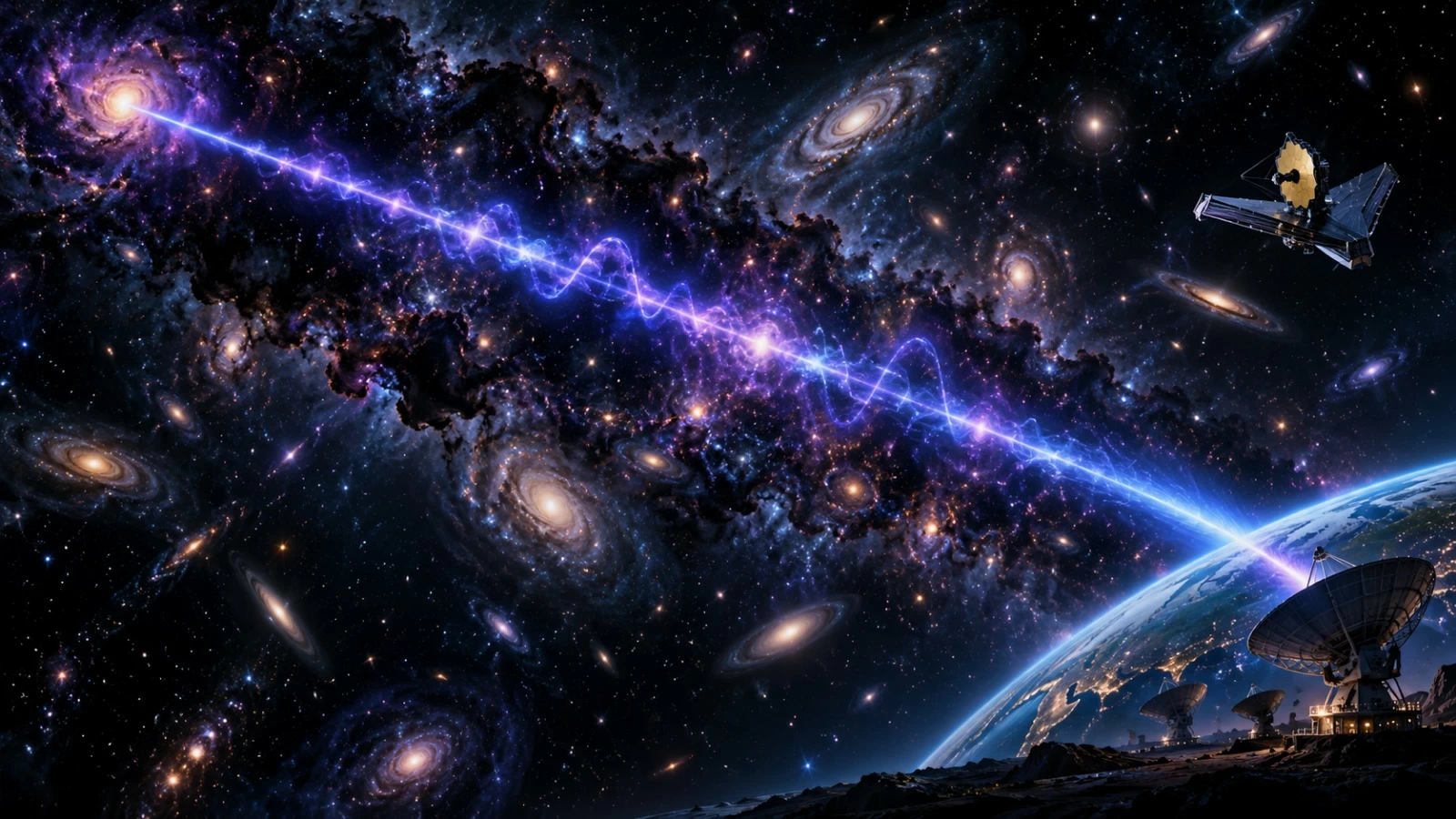
رصد علماء فلك أبعد اندفاع راديوي سريع معروف حتى الآن، بعدما وصلت إلى الأرض إشارة كونية انطلقت قبل نحو 10.7 مليار سنة، في مرحلة مبكرة من تاريخ الكون وفق تقديرات علماء الفلك.
ونُشرت نتائج الدراسة في مجلة «Science»، فيما أوضحت وكالة الفضاء الأمريكية «ناسا» أن الإشارة، التي تحمل اسم «FRB 20240304B»، تمنح العلماء فرصة نادرة لدراسة الكون في مراحله المبكرة.
رُصدت في جنوب أفريقيا
ورُصدت الإشارة للمرة الأولى في 4 مارس 2024 بواسطة تلسكوب «MeerKAT» الراديوي في جنوب أفريقيا، قبل أن تكشف التحليلات أنها قادمة من مسافة غير مسبوقة بالنسبة لهذا النوع من الظواهر.
وتُعرف هذه الظواهر باسم «الاندفاعات الراديوية السريعة»، وهي ومضات شديدة القوة من موجات الراديو لا تستمر سوى أجزاء من الثانية، إلا أنه يمكن رصدها عبر مسافات تمتد إلى مليارات السنوات الضوئية.
«جيمس ويب» يحدد مصدرها
وبعد تحديد موقع الإشارة في السماء، واجه العلماء صعوبة في رصد المجرة التي خرجت منها باستخدام التلسكوبات الأرضية، ما دفعهم إلى الاستعانة بتلسكوب «جيمس ويب» الفضائي.
ونجح التلسكوب في رصد المجرة المضيفة، ليتبين أنها مجرة قزمة صغيرة ونشطة في تكوين النجوم، فيما تشير القياسات الفلكية إلى أن الضوء الصادر منها استغرق نحو 10.7 مليار سنة للوصول إلى الأرض.
ما مصدر هذه الإشارات؟
ولا يزال المصدر الدقيق لجميع الاندفاعات الراديوية السريعة غير محسوم، رغم رصد آلاف الحالات منذ اكتشاف أول اندفاع من هذا النوع عام 2007.
ويرجح العلماء أن بعض هذه الإشارات قد تنتج عن «المغناطيسارات»، وهي نجوم نيوترونية شديدة الكثافة تمتلك مجالات مغناطيسية هائلة، إلا أن الباحثين ما زالوا يدرسون ما إذا كانت جميع الاندفاعات تنشأ بالطريقة نفسها.
مجرة صغيرة تفاجئ الباحثين
ولفتت المجرة التي انطلقت منها الإشارة اهتمام العلماء، بسبب صغر حجمها ونشاطها في تكوين النجوم خلال مرحلة مبكرة من تاريخ الكون.
ويرى الباحثون أن رصد اندفاع راديوي سريع في مثل هذه المجرة قد يساعد في فهم الأجرام القادرة على إنتاج هذه الإشارات، ومدى سرعة ظهورها بعد تشكل النجوم.
نافذة على الكون
ولا تقتصر أهمية هذه الإشارات على معرفة مصدرها، إذ يستفيد العلماء منها أيضاً في دراسة المادة المنتشرة بين المجرات.
وخلال الرحلة الطويلة للإشارة عبر الفضاء، تتأثر موجاتها بالمادة التي تمر خلالها، ما يمنح الباحثين وسيلة لدراسة توزيع المادة في الكون وفهم بنيته عبر مسافات زمنية هائلة.
ويأمل العلماء أن يؤدي رصد المزيد من هذه الإشارات البعيدة إلى كشف معلومات جديدة عن المجرات والنجوم والظواهر عالية الطاقة في أعماق الكون.
Astronomers have detected the farthest known fast radio burst to date, after a cosmic signal that originated about 10.7 billion years ago reached Earth, during an early stage in the history of the universe according to astronomers' estimates.
The results of the study were published in the journal "Science," while the American space agency "NASA" explained that the signal, named "FRB 20240304B," provides scientists with a rare opportunity to study the universe in its early stages.
Detected in South Africa
The signal was first detected on March 4, 2024, by the "MeerKAT" radio telescope in South Africa, before analyses revealed that it was coming from an unprecedented distance for this type of phenomenon.
These phenomena are known as "fast radio bursts," which are extremely powerful flashes of radio waves that last only a fraction of a second, yet can be detected across distances extending to billions of light-years.
"James Webb" identifies its source
After pinpointing the location of the signal in the sky, scientists faced difficulties in detecting the galaxy from which it originated using ground-based telescopes, prompting them to turn to the "James Webb" space telescope.
The telescope successfully observed the host galaxy, revealing it to be a small, active dwarf galaxy in the process of star formation, while astronomical measurements indicate that the light emitted from it took about 10.7 billion years to reach Earth.
What is the source of these signals?
The exact source of all fast radio bursts remains unresolved, despite thousands of cases being detected since the first burst of this kind was discovered in 2007.
Scientists speculate that some of these signals may be produced by "magnetars," which are neutron stars with immense density and powerful magnetic fields, but researchers are still studying whether all bursts originate in the same way.
A small galaxy surprises researchers
The galaxy from which the signal originated has attracted scientists' attention due to its small size and activity in star formation during an early stage of the universe's history.
Researchers believe that detecting a fast radio burst in such a galaxy could help in understanding the celestial bodies capable of producing these signals and how quickly they appear after star formation.
A window to the universe
The importance of these signals is not limited to knowing their source; scientists also benefit from them in studying the matter dispersed between galaxies.
During the long journey of the signal through space, its waves are affected by the matter they pass through, providing researchers with a means to study the distribution of matter in the universe and understand its structure over immense time scales.
Scientists hope that detecting more of these distant signals will reveal new information about galaxies, stars, and high-energy phenomena in the depths of the universe.