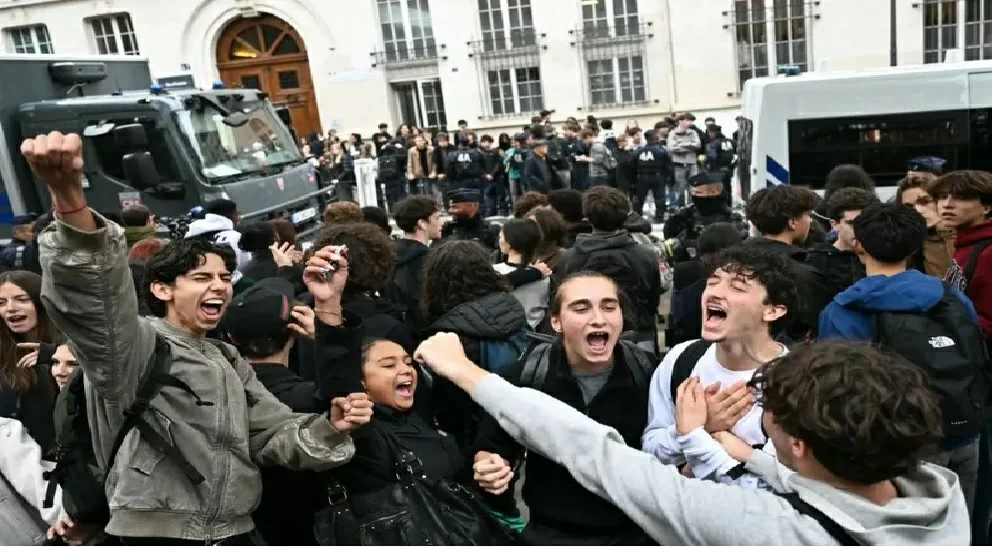
يبدو أن شرارة الاحتجاجات بدأت تتدحرج مثل كرة اللهب في الدول الأوروبية، إذ بعد فرنسا وإسبانيا، وصلت ألسنة النيران إلى بلجيكا (الجمعة)، وتحولت عدة شوارع في العاصمة بروكسل إلى ساحة مواجهات بين الشرطة ومتظاهرين ملثمين، بالتزامن مع مسيرة حاشدة احتجاجاً على غلاء المعيشة وتقليص الإنفاق الحكومي.
من احتجاجات بلجيكا
خروج 30 ألف في بروكسل
وفي بروكسل، شارك نحو 30 ألف شخص في المسيرة المناهضة للتقشف، بحسب تقديرات الشرطة. إلا أن المشهد قرب محطة السكك الحديدية المركزية اتخذ منحى آخر، بعدما رشق عشرات المتظاهرين، غالبيتهم شبان يرتدون ملابس سوداء وأقنعة، عناصر الأمن بالحجارة والألعاب النارية، وأشعل هؤلاء حرائق عدة، بينها حريق في كومة من الدراجات العامة والسكوترات الكهربائية. من جانبها، لجأت شرطة مكافحة الشغب إلى استخدام الغاز المسيل للدموع وخراطيم المياه والهراوات لإبعادهم عن المنطقة، وامتدت آثار المواجهات إلى حركة المرور ووسائل النقل العام، التي تعطلت في أنحاء المدينة. وأكدت الشرطة أن الأشخاص «الذين تسببوا في اضطرابات بالنظام العام ليسوا مرتبطين» بالمسيرة المناهضة للتقشف، لتفصل بذلك بين الاحتجاج على السياسات الحكومية وأعمال العنف التي وقعت على هامشه. وسبقت مواجهات بروكسل أيام من التوتر في مدينة ليج، وفرضت السلطات حظراً على التجمعات العامة، إثر اشتباكات بين طلاب والشرطة وأعمال تخريب طالت متاجر. وأسفرت الاضطرابات عن اعتقال أكثر من 200 شخص وإصابة عشرات من رجال الأمن.
اكتظاظ الفصول وارتفاع تكاليف الدراسة
وكان ارتفاع تكاليف الدراسة واكتظاظ الفصول وصعوبة الحصول على المواد التعليمية، وهي مشكلات تثقل كاهل الطلاب في منظومة التعليم الناطق بالفرنسية، الأسباب الأبرز في تأجيج الغضب الطلابي. وعزز رفع الرسوم الجامعية لمعظم الطلاب من 835 إلى 1194 يورو من حدة الاعتراضات، بعدما أضاف عبئاً مالياً جديداً إلى تكاليف الدراسة. وفي ظل هذا الاستياء، أعطت الاحتجاجات في فرنسا دفعة للتحركات الطلابية في بلجيكا؛ إذ قال طلاب إن تشابه مشكلاتهم مع مطالب زملائهم الفرنسيين شجعهم على العودة إلى الشارع.
وفي فرنسا، بدأت الاحتجاجات من داخل المدارس، حيث يطالب الطلاب والمعلمون بتحسين المباني وتوفير الكوادر التعليمية وتخفيف اكتظاظ الفصول. ثم اتسعت الحركة بانضمام أولياء أمور وطلاب جامعات، وسط انتقادات لتفاوت ظروف التعليم وأعمال العنف التي رافقت بعض التحركات. وأمام هذا الضغط، أعلنت الحكومة خطة للاستعانة بنحو ثلاثة آلاف معلم مؤهل لسد الشواغر. لكن النقابات الطلابية اعتبرت الخطوة مكسباً أولياً، وتعهدت بمواصلة الاحتجاج.
الأزمة تمتد للمشهد السياسي
وظلت 141 مدرسة مغلقة، (الجمعة)، في وقت وجدت الحكومة نفسها أمام معادلة صعبة تتمثل في تلبية المطالب بزيادة الإنفاق على التعليم، مع السعي إلى كبح الدين العام. أما في إسبانيا، فتصدر السكن أسباب الغضب، مع ارتفاع الإيجارات وصعوبة العثور على مسكن بكلفة محتملة. وقد اكتسبت الاحتجاجات زخماً جديداً بعد وفاة ماريا ديل كارمن أباسكال، المعروفة باسم «ماريكارمن»، عن 87 عاماً، بعد أسبوعين من إخلائها من منزلها في مدريد.
وتكشف بيانات موقع «إيدياليستا» العقاري، التي نقلتها أسوشيتد برس، جانباً من حجم الأزمة؛ إذ اقترب متوسط الإيجارات في إسبانيا من الضعف خلال عشر سنوات. ولم تقف تداعيات الأزمة عند الشارع، بل امتدت إلى المشهد السياسي، مع الدعوة إلى انتخابات مبكرة في نوفمبر، بعدما رفض البرلمان مقترحات حكومية لمعالجتها. ومع استمرار الضغوط المعيشية، قد تجد هذه الاحتجاجات صدى في مدن أوروبية أخرى، وخاصة عندما يتزامن ارتفاع كلفة السكن والتعليم مع تقليص الإنفاق على الخدمات العامة.
It seems that the spark of protests has begun to roll like a fireball in European countries, as after France and Spain, the flames reached Belgium (on Friday), turning several streets in the capital Brussels into a battleground between police and masked protesters, coinciding with a massive march against the rising cost of living and government spending cuts.
من احتجاجات بلجيكا
30,000 Take to the Streets in Brussels
In Brussels, around 30,000 people participated in the anti-austerity march, according to police estimates. However, the scene near the central train station took a different turn, as dozens of protesters, mostly young people wearing black clothing and masks, threw stones and fireworks at security forces, igniting several fires, including one in a pile of public bicycles and electric scooters. For their part, riot police resorted to using tear gas, water cannons, and batons to disperse them from the area, and the effects of the clashes extended to traffic and public transport, which were disrupted throughout the city. The police confirmed that the individuals "who caused disturbances to public order are not linked" to the anti-austerity march, thus distinguishing between the protest against government policies and the violence that occurred on its fringes. The clashes in Brussels followed days of tension in the city of Liège, where authorities imposed a ban on public gatherings after clashes between students and police and acts of vandalism targeting shops. The unrest resulted in the arrest of more than 200 people and injuries to dozens of security personnel.
Overcrowded Classrooms and Rising Education Costs
The rising costs of education, overcrowded classrooms, and difficulty in obtaining educational materials—issues that weigh heavily on students in the French-speaking education system—were the main reasons fueling student anger. The increase in university fees for most students from 835 to 1194 euros intensified the objections, as it added a new financial burden to educational costs. Amid this discontent, the protests in France gave a boost to student movements in Belgium; students stated that the similarity of their problems to the demands of their French counterparts encouraged them to return to the streets.
In France, the protests began within schools, where students and teachers demanded improvements to buildings, provision of educational staff, and relief from overcrowded classrooms. The movement then expanded with the joining of parents and university students, amid criticisms of disparities in educational conditions and acts of violence that accompanied some protests. In response to this pressure, the government announced a plan to recruit about three thousand qualified teachers to fill vacancies. However, student unions considered the step a preliminary gain and pledged to continue protesting.
The Crisis Extends to the Political Scene
As of Friday, 141 schools remained closed, while the government found itself facing a difficult equation of meeting demands for increased spending on education while trying to curb public debt. In Spain, housing topped the reasons for anger, with rising rents and difficulty in finding affordable accommodation. The protests gained new momentum following the death of María del Carmen Abascal, known as "Maricarmen," at the age of 87, two weeks after she was evicted from her home in Madrid.
Data from the real estate site "Idealista," reported by the Associated Press, reveals part of the scale of the crisis; the average rent in Spain has nearly doubled over the past ten years. The repercussions of the crisis did not stop at the streets but extended to the political scene, with calls for early elections in November after parliament rejected government proposals to address it. As living pressures continue, these protests may resonate in other European cities, especially when the rising costs of housing and education coincide with cuts in public service spending.