


أعلنت الجهة المانحة لجوائز نوبل اليوم (الأربعاء)، فوز العالم الفرنسي هنري كاجان والياباني كينسو سواي بجائزة نوبل في الكيمياء لعام 2026، تقديرًا لأبحاثهما التي أسهمت في حل لغز طال أمده بشأن الجزيئات التي توجد في شكلين متعاكسين، وما أتاحته هذه الأبحاث من أدوات مهمة لتصميم التفاعلات الكيميائية المستخدمة في تصنيع الأدوية.
ويبلغ هنري كاجان 95 عامًا وكينسو سواي 76 عامًا، واستندت أبحاثهما إلى اكتشافات وضع أسسها الكيميائي الفرنسي لويس باستور في القرن التاسع عشر.
وتتعلق أعمال الفائزين بظاهرة تعرف باسم «التجانس الفراغي»، إذ يوجد كثير من الجزيئات الضرورية للحياة في شكلين متعاكسين، بينما تعتمد الكائنات الحية غالبًا على أحدهما دون الآخر.
وأوضحت لجنة نوبل أن اكتشافات الفائزين بيّنت كيفية توجيه التفاعلات الكيميائية لإنتاج أحد الشكلين الجزيئيين بصورة انتقائية، وهو أمر بالغ الأهمية في تطوير الأدوية، إذ قد يكون لأحد الشكلين تأثير مختلف عن الآخر.
وقال عضو لجنة نوبل للكيمياء بيتر سومفاي "إن الشكلين "الأيسر" و"الأيمن" من الدواء قد تكون لهما تأثيرات مختلفة، ما يستدعي تطوير طرق لتحضير كل منهما بصورة انتقائية"، مشيرًا إلى أن أبحاث الفائزين وفرت أدوات قوية لتحقيق ذلك.
ويتقاسم الفائزان جائزة مالية قدرها 12 مليون كرونة سويدية (نحو 1.2 مليون دولار)، على أن يتسلما ميداليتيهما في حفل يقام في ستوكهولم في 10 ديسمبر المقبل، الذي يوافق ذكرى وفاة ألفريد نوبل.
وتُمنح جوائز نوبل منذ عام 1901 في مجالات العلوم والأدب والسلام، فيما أضيفت جائزة الاقتصاد لاحقًا بتمويل من البنك المركزي السويدي.
هنري كاجان وكينسو سواي يفوزان بجائزة نوبل للكيمياء 2026
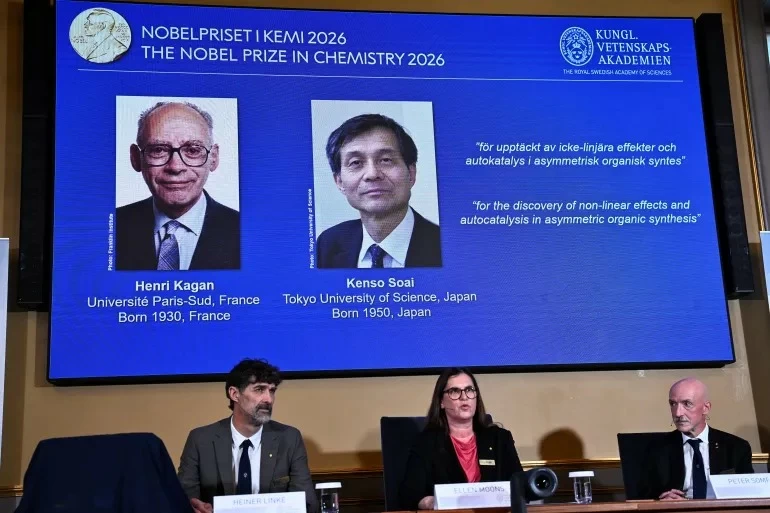


The Nobel Prize awarding body announced today (Wednesday) the winners of the 2026 Nobel Prize in Chemistry: French scientist Henri Kagan and Japanese scientist Kenso Sway, in recognition of their research that contributed to solving a long-standing mystery regarding molecules that exist in two opposing forms, and the important tools this research has provided for designing chemical reactions used in drug manufacturing.
Henri Kagan is 95 years old and Kenso Sway is 76 years old, and their research is based on discoveries laid down by French chemist Louis Pasteur in the 19th century.
The work of the winners relates to a phenomenon known as "spatial homogeneity," as many molecules essential for life exist in two opposing forms, while living organisms often rely on one over the other.
The Nobel Committee explained that the winners' discoveries demonstrated how to direct chemical reactions to selectively produce one of the molecular forms, which is crucial in drug development, as one form may have a different effect than the other.
Nobel Committee member for Chemistry Peter Sompfy stated, "The 'left-handed' and 'right-handed' forms of a drug can have different effects, necessitating the development of methods to prepare each selectively," noting that the winners' research has provided powerful tools to achieve this.
The two winners will share a cash prize of 12 million Swedish kronor (approximately 1.2 million dollars), and they will receive their medals at a ceremony held in Stockholm on December 10, which coincides with the anniversary of Alfred Nobel's death.
The Nobel Prizes have been awarded since 1901 in the fields of science, literature, and peace, with the economics prize added later, funded by the Swedish central bank.


