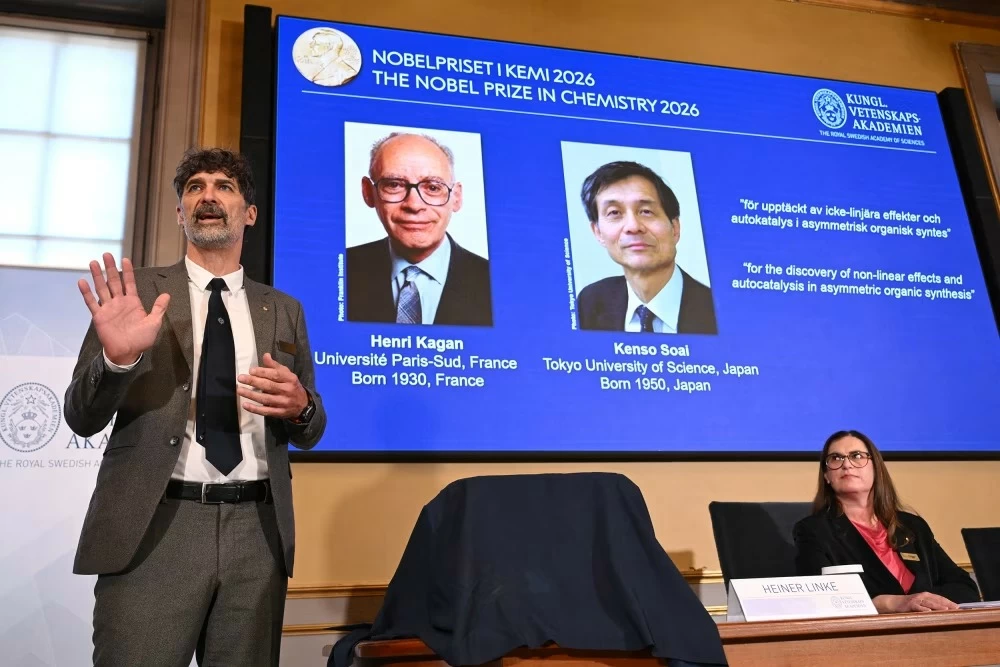
منحت الأكاديمية الملكية السويدية للعلوم، الأربعاء، جائزة نوبل في الكيمياء لعام 2026 للعالمين هِنري ب. كاغان وكينسو سواي، تقديراً لاكتشافاتهما في مجال التأثيرات غير الخطية والتحفيز الذاتي في التخليق العضوي غير المتماثل، وهي أبحاث أسهمت في حل لغز كيميائي ظل قائماً لأكثر من قرن.
وأعلنت الأكاديمية الفائزين بالجائزة في العاصمة السويدية ستوكهولم، مشيدة بإسهامات العالمين في فهم كيفية ظهور شكل جزيئي واحد على حساب الشكل المرآتي المقابل له، وهي ظاهرة تُعرف باسم عدم التماثل الجزيئي أو الكيرالية.
اكتشاف غيّر قواعد التفاعلات الكيميائية
توصل الفرنسي هِنري كاغان إلى طريقة جديدة للتحكم في التفاعلات الكيميائية، أتاحت للعلماء إنتاج فائض أكبر بكثير من أحد الشكلين المرآتيين للجزيء مقارنة بما كان يُعتقد أنه ممكن في السابق.
وأحدث هذا الاكتشاف تحولاً كبيراً في مجال الكيمياء، خصوصاً بالنسبة إلى الباحثين الذين يعملون على تطوير تفاعلات تُستخدم في تصنيع الأدوية والنكهات والعطور والمواد الجديدة.
أما الياباني كينسو سواي، فقد صمم أول تفاعل كيميائي أمكن خلاله تكوين شكل مرآتي واحد فقط من بين الشكلين المحتملين للجزيء.
ووصفت لجنة نوبل للكيمياء ما يُعرف باسم «تفاعل سواي» بأنه واحد من أكثر التجارب الكيميائية إثارة وإبهاراً التي أُجريت على الإطلاق، مشيرة إلى أن تحقيق هذا النوع من الانتقائية لم يكن معروفاً في الكيمياء قبل ذلك، باستثناء ما يحدث بصورة طبيعية في الكائنات الحية.
حل لغز عمره أكثر من 100 عام
وقال هاينر لينكه، رئيس لجنة نوبل للكيمياء، إن كاغان وسواي قدما حلاً لـ«لغز كيميائي يعود إلى أكثر من قرن»، يتعلق بكيفية إمكانية ظهور التجانس الكيرالي بصورة تلقائية.
وأضاف لينكه أن التفاعلات الكيميائية التي طورها العالمان «مذهلة»، لما أظهرته من قدرة على تفسير كيفية سيطرة شكل جزيئي واحد على الآخر في ظروف معينة.
ويشير مفهوم التجانس الكيرالي إلى الحالة التي تتكون فيها الجزيئات الحيوية أو الكيميائية بصورة يغلب عليها أحد الشكلين المرآتيين المتاحين، وهو أمر يرتبط ارتباطاً وثيقاً بالكيمياء الحيوية وبكيفية تفاعل المركبات داخل الكائنات الحية.
ويبلغ كاغان من العمر 95 عاماً، وهو مولود في فرنسا ويرتبط بجامعة باريس-ساكلاي، بينما وُلد سواي في اليابان ويرتبط بجامعة طوكيو للعلوم.
استمرار جوائز نوبل في 2026
وتأتي جائزة الكيمياء ضمن سلسلة جوائز نوبل التي أُعلنت هذا الأسبوع. وكان الإعلان قد بدأ بجائزة نوبل في الطب، التي مُنحت (الإثنين) لثلاثة علماء عن أبحاث أسهمت في تطوير أداة تستخدم الضوء للمساعدة في فهم آليات عمل الدماغ.
أما جائزة نوبل في الفيزياء، التي أُعلنت (الثلاثاء)، فكرّمت عالماً عن جهوده في كشف أسرار مجموعة نادرة من الجسيمات المعروفة باسم النيوترينوات.
ومن المقرر إعلان جائزة نوبل في الأدب (الخميس)، تليها جائزة نوبل للسلام (الجمعة)، بينما يُعلن (الإثنين) القادم اسم الفائز بجائزة العلوم الاقتصادية في ذكرى ألفرد نوبل.
وكانت جائزة نوبل في الكيمياء العام الماضي قد مُنحت لثلاثة علماء تقديراً لتطويرهم هياكل جزيئية جديدة قادرة على احتجاز كميات هائلة من الغازات، وهو إنجاز قد يمهد مستقبلاً لتقنيات تساعد على سحب غازات الدفيئة من الغلاف الجوي أو جمع الرطوبة من البيئات الصحراوية.
The Royal Swedish Academy of Sciences awarded the Nobel Prize in Chemistry for 2026 on Wednesday to scientists Henri B. Kagan and Kenso Sui, in recognition of their discoveries in the field of nonlinear effects and self-catalysis in asymmetric organic synthesis, research that contributed to solving a chemical mystery that has persisted for over a century.
The Academy announced the winners of the prize in the Swedish capital, Stockholm, praising the contributions of the two scientists in understanding how one molecular shape emerges at the expense of its mirror-image counterpart, a phenomenon known as molecular asymmetry or chirality.
A Discovery That Changed the Rules of Chemical Reactions
The French scientist Henri Kagan developed a new method to control chemical reactions, allowing scientists to produce a much larger surplus of one of the mirror-image forms of the molecule compared to what was previously thought possible.
This discovery brought about a significant transformation in the field of chemistry, especially for researchers working on developing reactions used in the manufacture of drugs, flavors, perfumes, and new materials.
Meanwhile, the Japanese scientist Kenso Sui designed the first chemical reaction that allowed for the formation of only one mirror-image shape from the two possible shapes of the molecule.
The Nobel Committee for Chemistry described what is known as the "Sui Reaction" as one of the most exciting and impressive chemical experiments ever conducted, noting that achieving this type of selectivity was not known in chemistry before, except for what occurs naturally in living organisms.
Solving a Mystery Over 100 Years Old
Heiner Linke, the chair of the Nobel Committee for Chemistry, stated that Kagan and Sui provided a solution to a "chemical mystery that dates back over a century," concerning how chiral homogeneity can spontaneously emerge.
Linke added that the chemical reactions developed by the two scientists are "astonishing," as they demonstrated the ability to explain how one molecular shape dominates over another under certain conditions.
The concept of chiral homogeneity refers to the state in which biological or chemical molecules are formed predominantly in one of the available mirror-image shapes, which is closely related to biochemistry and how compounds interact within living organisms.
Kagan is 95 years old, born in France and affiliated with Paris-Saclay University, while Sui was born in Japan and is affiliated with the University of Tokyo.
Continuation of Nobel Prizes in 2026
The Chemistry Prize is part of a series of Nobel Prizes announced this week. The announcements began with the Nobel Prize in Medicine, awarded (on Monday) to three scientists for research that contributed to the development of a tool using light to help understand the mechanisms of the brain.
The Nobel Prize in Physics, announced (on Tuesday), honored a scientist for his efforts in uncovering the secrets of a rare group of particles known as neutrinos.
The Nobel Prize in Literature is scheduled to be announced (on Thursday), followed by the Nobel Peace Prize (on Friday), while the name of the winner of the Nobel Prize in Economic Sciences will be announced (next Monday) in commemoration of Alfred Nobel.
Last year's Nobel Prize in Chemistry was awarded to three scientists in recognition of their development of new molecular structures capable of capturing vast amounts of gases, an achievement that may pave the way for future technologies to help pull greenhouse gases from the atmosphere or collect moisture from desert environments.