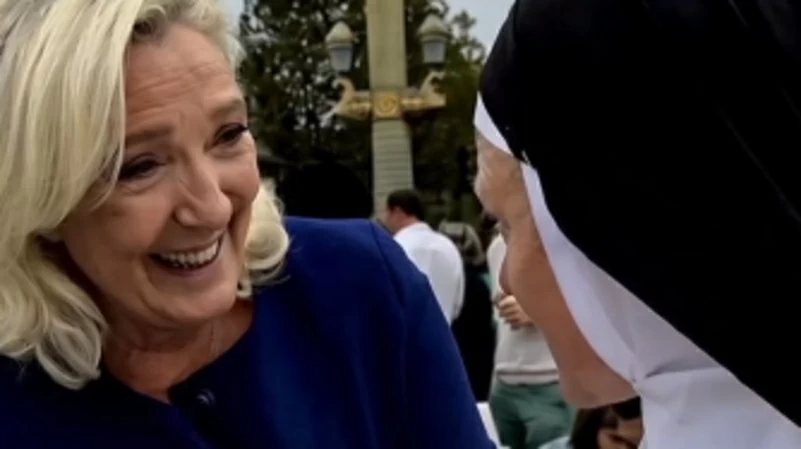
حين تتقاطع لقطة عفوية مع حسابات السياسة الحادة، تتحول صورة فوتوغرافية بسيطة إلى صاعقة تفجر أزمة وطنية كبرى. هذا بالضبط ما حدث في فرنسا، حيث وجدت زعيمة أقصى اليمين مارين لوبان نفسها في عين العاصفة بعد انتشار صورة تجمعها براهبة مسيحية ترتدي غطاء الرأس التقليدي، وسط ابتسامات عريضة وعبارات الاحتفاء بـ«نهضة فرنسا».
لم تكن الصورة العادية التي نشرها النائب الأوروبي ماتييو فاليه لتلفت الانتباه لولا توقيتها بالغ الحساسية. فقد جاءت اللقطة التي التقطت خلال الزيارة التاريخية للبابا ليون الرابع عشر، بعد أسابيع معدودة فقط من إعلان لوبان عن مساعيها الحثيثة لحظر الحجاب الإسلامي في الفضاء العام وفرض عقوبات مالية على مرتديه عبر استفتاء شعبي حال وصولها إلى قصر الإليزيه.
هذا التناقض الصارخ (حيث يُحتفى بغطاء الرأس الديني للراهبات بينما يُحارب الحجاب الإسلامي في الشوارع) أشعل موجة جدل عارمة على منصات التواصل الاجتماعي، وسط اتهامات واسعة لليمين المتطرف بسياسة «الكيل بمكيالين»، متسائلين عما إذا كان المعيار هو المظهر الديني بحد ذاته أم هوية من ترتديه.
ولم يتوقف الأمر عند حدود التنديد الرقمي، بل امتد ليتجسد في حركات احتجاجية لافتة، إذ ظهرت نساء مسيحيات وغير مسلمات مرتديات الحجاب رمزياً تضامناً مع المسلمات ورفضاً للمشروع السياسي اليميني. وفي السياق نفسه، ارتفعت أصوات من داخل المؤسسة الأمنية، مثل النقابي رودي مانّا، محذرة من مغبة توريط الشرطة في تحرير مخالفات قانونية ضد المحجبات، مؤكداً أن الأجهزة الأمنية تثقلها مهام أسمى وأكثر أهمية من ملاحقة ملابس الناس.
وفي محاولة لاحتواء العاصفة، سارع حزب «التجمع الوطني» للتمييز بين الرموز المسيحية وما أسماه «محاربة الإسلاموية»، متحدثاً عن حماية الثقافة لا الأديان. بالتزامن مع ذلك، دخل البابا على خط النقاش مؤكداً أن «العلمانية العادلة» لا تقتضي إقصاء الدين من الفضاء العام.
وبينما تتواصل المعركة المحتدمة حول تفسير حدود العلمانية في فرنسا، تظل صورة لوبان والراهبة مرآة عاكسة لتعقيدات الصراع المستمر حول الهوية والحرية الشخصية في الشارع الفرنسي.
When a spontaneous snapshot intersects with sharp political calculations, a simple photograph transforms into a thunderbolt that ignites a major national crisis. This is exactly what happened in France, where far-right leader Marine Le Pen found herself in the eye of the storm after a photo emerged showing her with a Christian nun wearing a traditional headscarf, amidst broad smiles and phrases celebrating the "Renaissance of France."
The ordinary image shared by European MP Matthieu Valet would not have drawn attention were it not for its highly sensitive timing. The snapshot, taken during the historic visit of Pope Leo XIII, came just a few weeks after Le Pen announced her vigorous efforts to ban the Islamic hijab in public spaces and impose financial penalties on those who wear it through a popular referendum if she reaches the Élysée Palace.
This glaring contradiction (where the religious headscarf of nuns is celebrated while the Islamic hijab is fought against in the streets) sparked a massive wave of controversy on social media, with widespread accusations against the far-right of a "double standard," questioning whether the criterion is the religious appearance itself or the identity of the person wearing it.
The issue did not stop at digital condemnation; it extended to manifest in notable protest movements, as Christian and non-Muslim women appeared wearing the hijab symbolically in solidarity with Muslim women and in rejection of the right-wing political project. In the same context, voices from within the security establishment, such as unionist Rudi Mana, warned against involving the police in issuing legal violations against hijab wearers, affirming that security forces have higher and more important tasks than pursuing people's clothing.
In an attempt to contain the storm, the "National Rally" party rushed to distinguish between Christian symbols and what it called "the fight against Islamism," speaking about protecting culture rather than religions. At the same time, the Pope entered the discussion, affirming that "fair secularism" does not require the exclusion of religion from the public space.
As the fierce battle over the interpretation of the limits of secularism in France continues, the image of Le Pen and the nun remains a reflective mirror of the complexities of the ongoing struggle over identity and personal freedom in the French street.