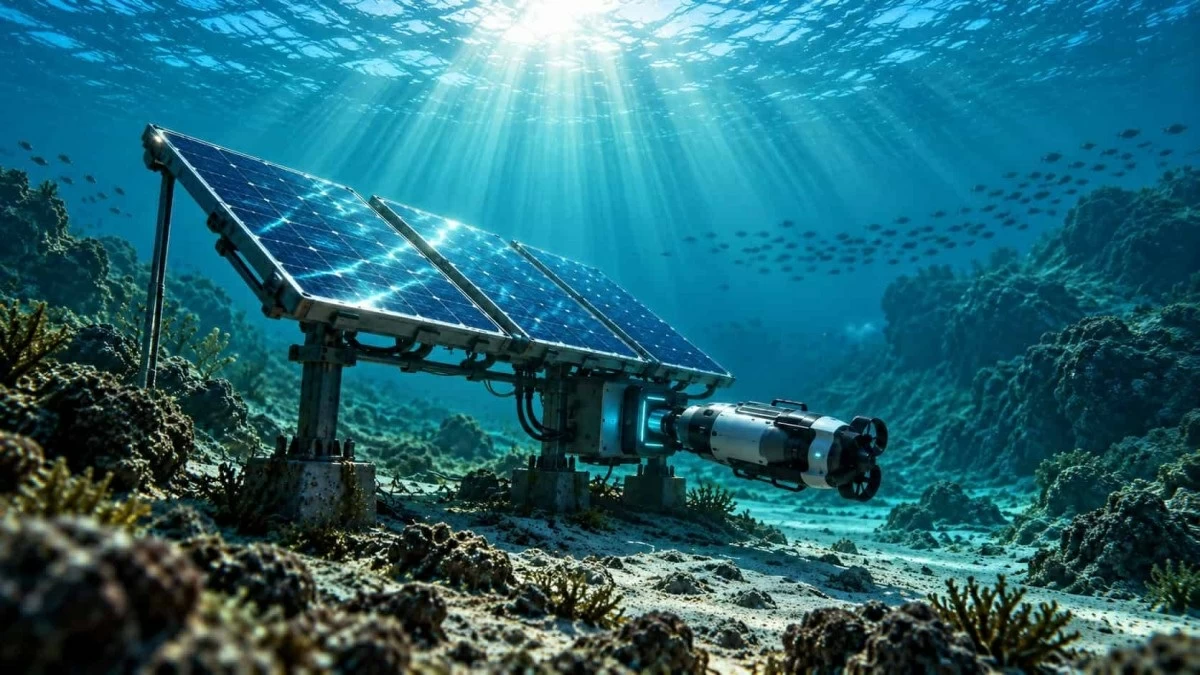
في إنجاز تكنولوجي يمهد لعصر «المحيط الذكي»، اخترقت الصين ظلام الأعماق لتنجح في توليد الكهرباء بخلايا شمسية تعمل تحت الماء بعد سبق علمي غير مسبوق كسر قواعد الفيزياء التقليدية، ونجح فريق بحثي من جامعة يونان الصينية في تشغيل خلايا شمسية مصممة خصيصاً للعمل في أعماق المحيطات، حيث تم إنزال روبوت مزود بهذه الألواح لعمق 10 أمتار قبالة جزيرة «وييتشو» في بحر الصين الجنوبي، لتوليد الطاقة وتخزينها تحت المياه المفتوحة.
الابتكار الجديد نجح بعد ساعتين فقط في توليد 324 ملي واط (أي ما يعادل ساعة من الطاقة في بطاريات ليثيوم أيون)، وهي الكمية التي أخرجها الباحثون واستخدموها فوراً لتشغيل لوحات إضاءة وتقنيات معقدة، في تجربة أذهلت الأوساط العلمية لكونها جرت في بيئة بحرية مفتوحة وقاسية بدلاً من المختبرات المجهزة.
لغز «الضوء الأزرق»
يعود السر وراء هذا النجاح المذهل إلى التغلب على المعضلة الأزلية للضوء، فمع اختراق أشعة الشمس لسطح البحر، تمتص المياه الموجات الحمراء سريعاً، بينما يستمر الضوءان الأزرق والأخضر بالوصول للأعماق المظلمة.
ولهذا السبب، فشلت الخلايا التقليدية الأرضية بالعمل تحت الماء، مما دفع العلماء لتطوير خلايا من مادة «البيروفسكايت» بفجوة نطاق واسعة (1.96 إلكترون فولت)، مدعومة ببوليمر PHMG لضبط البنية البلورية ومصممة خصيصاً «لاقتناص» الضوء الأزرق المتبقي بأعلى كفاءة ممكنة.
لكن المفاجأة الصادمة ظهرت في الاختبارات التي سجلت كفاءة استغلال للضوء المتاح تحت الماء بلغت 34.71% مقارنة بـ 17.08% فقط في ظروف الشمس القياسية على السطح، وهو ما يعكس قدرة الألواح الفائقة على الاستفادة من طيف الضوء الضيق المتاح بالأسفل.
ولا يتوقف طموح العلماء عند هذا العمق، حيث صرح الباحث الرئيسي وين هوا تشانغ بأن التجارب تجري حالياً للوصول لمستويات تشغيل على عمق 20 إلى 30 متراً، تمهيداً للاستغناء التام عن البطاريات محدودة العمر، وتوفير مصدر طاقة أبدي للمركبات ذاتية القيادة وروبوتات الاستكشاف وأجهزة المراقبة البحرية.
In a technological achievement paving the way for the era of the "smart ocean," China has penetrated the depths of darkness to successfully generate electricity using solar cells that operate underwater after an unprecedented scientific breakthrough that broke the rules of traditional physics. A research team from Yunnan University in China succeeded in operating solar cells specifically designed to work in the depths of the oceans, where a robot equipped with these panels was deployed to a depth of 10 meters off the coast of Weizhou Island in the South China Sea, to generate and store energy beneath the open waters.
The new innovation succeeded in generating 324 milliwatts (equivalent to one hour of energy in lithium-ion batteries) after just two hours, a quantity that the researchers extracted and immediately used to power lighting panels and complex technologies, in an experiment that amazed the scientific community for being conducted in a harsh open marine environment rather than in equipped laboratories.
The Mystery of "Blue Light"
The secret behind this astonishing success lies in overcoming the eternal dilemma of light. As sunlight penetrates the surface of the sea, water quickly absorbs red wavelengths, while blue and green light continue to reach the dark depths.
For this reason, traditional terrestrial cells failed to operate underwater, prompting scientists to develop cells made from "perovskite" with a wide bandgap (1.96 electron volts), supported by the polymer PHMG to adjust the crystalline structure and specifically designed to "capture" the remaining blue light with the highest possible efficiency.
However, the shocking surprise appeared in tests that recorded an underwater light utilization efficiency of 34.71% compared to only 17.08% under standard sunlight conditions on the surface, reflecting the panels' extraordinary ability to benefit from the narrow light spectrum available below.
The scientists' ambition does not stop at this depth, as lead researcher Wen Hua Chang stated that experiments are currently underway to achieve operational levels at depths of 20 to 30 meters, paving the way for the complete elimination of limited-lifespan batteries and providing an eternal power source for autonomous vehicles, exploration robots, and marine monitoring devices.