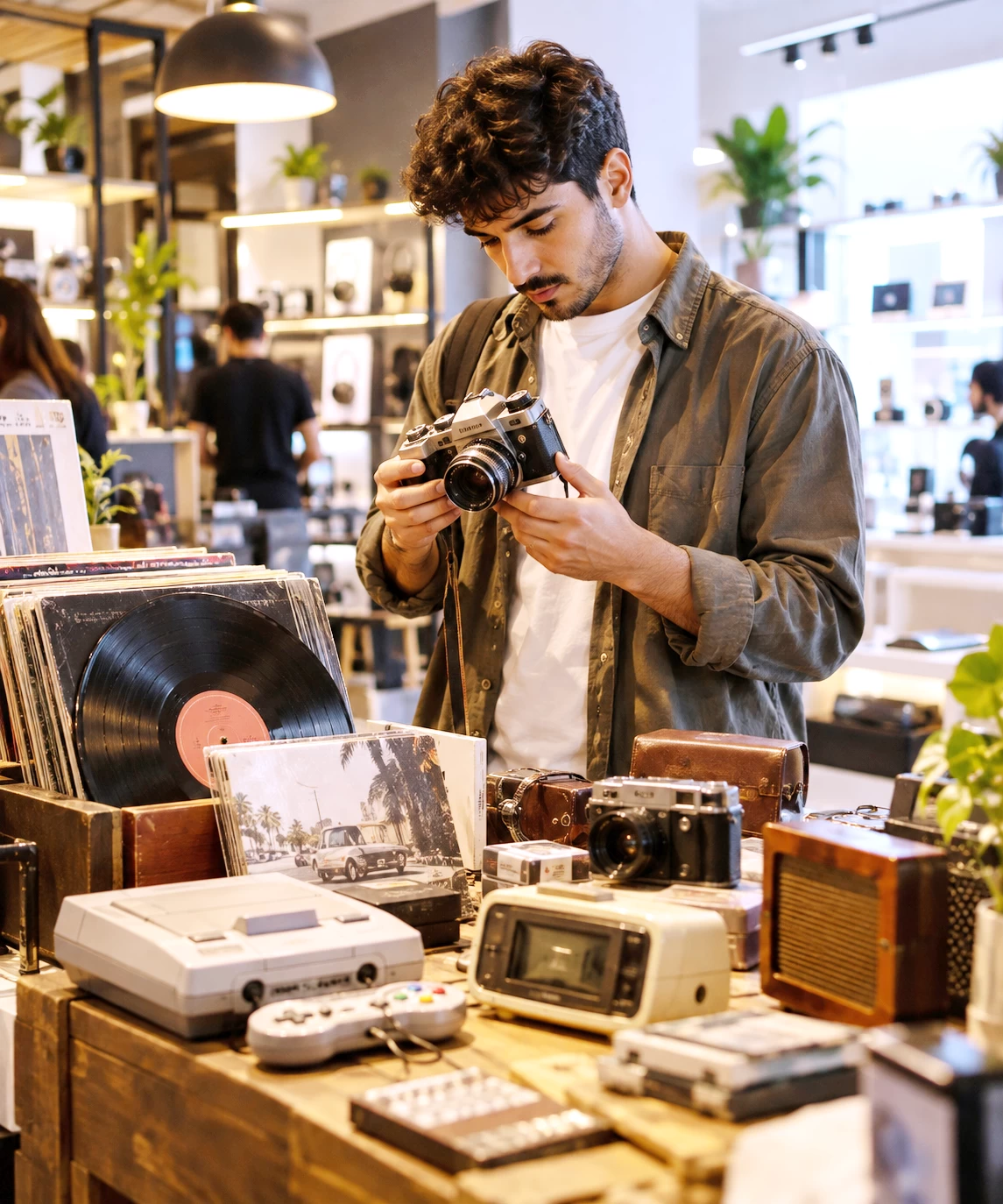
أشياء كثيرة ظن أصحابها أنها أنهت دورتها وغادرت المشهد، لكنها عادت بأكثر من صبغة: كاميرات الأفلام، وأسطوانات الموسيقى، وأجهزة الألعاب القديمة، وساعات رقمية بتصميمات بسيطة، وأزياء تستعيد تفاصيل عقود مضت. والمفارقة، أن منتجات استُبعدت يوماً لمصلحة الأحدث، تعود الآن إلى الواجهات محمّلة بقيمة جديدة، لا تستند دائماً إلى وظيفتها بقدر ما تستند إلى الذكريات التي تستحضرها.
أسواق وعلامات تجارية استقطبت هذا الميل سريعاً، فأعادت تصميم منتجات من أرشيفها، ومنحت أخرى حديثة مظهراً قديماً، لتخاطب ذاكرة المستهلك قبل حاجته. فالقطعة هنا لا تقدّم وظيفة فقط، بل تبيع شعوراً بزمن مضى، وصورة عن حياة تبدو أكثر بساطة كلما ابتعدنا عنها.
كما ساهمت منصات التواصل، من جهتها، في توسيع دائرة العودة. كاميرا قديمة تظهر في مقطع قصير، أو أغنية يعاد اكتشافها بعد عقود، أو قطعة ملابس ترتديها شخصية مشهورة، قد تكون كافية لإعادة منتج أو موضة كاملة إلى الواجهة.
واللافت، أن الظاهرة تجاوزت من عاشوا تلك المراحل. جيل أصغر يشتري أسطوانات موسيقية وكاميرات وأزياء تعود إلى سنوات سبقت ميلاده، بحثاً عن خصوصية مختلفة وسط عالم رقمي تتشابه فيه الأجهزة والصور والتجارب.
لكن المسافة بين الحنين الحقيقي وتسويق الحنين تستحق التوقف. فعندما تعيد الشركات تقديم تصميم قديم بسعر يفوق أحياناً منتجات أكثر تطوراً، تتحوّل الذاكرة نفسها إلى قيمة تجارية، ويصبح الماضي جزءاً من إستراتيجية البيع.
في المقابل، تحمل بعض هذه العودة قيمة تتجاوز الموضة، فاقتناء المستعمل وإعادة استخدام المنتجات القديمة يمنح الأشياء عمراً أطول، ويعيد الاعتبار لجودة بعض الصناعات والتصميمات التي صمدت سنوات.
وتكمن المفارقة، في أن السوق التي أمضت عقوداً تقنع المستهلك بأن الجديد أفضل، اكتشفت أن القديم يُباع أيضاً. وبين رغبة في استعادة ذكرى، وأخرى في امتلاك شيء مختلف، خرج الحنين من ألبومات الصور ودخل واجهات المتاجر.. وببطاقة سعر جديدة.
Many things, whose owners thought they had completed their cycle and left the scene, have returned with more than one hue: film cameras, music records, old gaming consoles, simple-designed digital watches, and fashion that revives details from past decades. The irony is that products once dismissed in favor of the latest now return to the forefront loaded with new value, which is not always based on their function as much as it is on the memories they evoke.
Markets and brands quickly attracted this trend, redesigning products from their archives and giving newer items an old appearance to appeal to consumers' memories before their needs. Here, the piece offers not just a function but sells a feeling of a bygone era and an image of a life that seems simpler the further we distance ourselves from it.
Social media platforms have also contributed to expanding the circle of revival. An old camera appearing in a short clip, a song rediscovered after decades, or a piece of clothing worn by a famous character can be enough to bring a product or a complete trend back to the forefront.
Interestingly, the phenomenon has transcended those who lived through those stages. A younger generation is buying music records, cameras, and fashion from years before their birth, seeking a different uniqueness in a digital world where devices, images, and experiences are similar.
However, the distance between genuine nostalgia and nostalgia marketing deserves attention. When companies reintroduce an old design at a price that sometimes exceeds that of more advanced products, memory itself transforms into a commercial value, and the past becomes part of the sales strategy.
Conversely, some of these returns carry a value that transcends fashion; acquiring second-hand items and reusing old products gives things a longer life and restores the dignity of certain industries and designs that have endured for years.
The paradox lies in the fact that a market that spent decades convincing consumers that new is better has discovered that the old can also be sold. Between a desire to reclaim a memory and another to own something different, nostalgia has emerged from photo albums and entered store displays... with a new price tag.