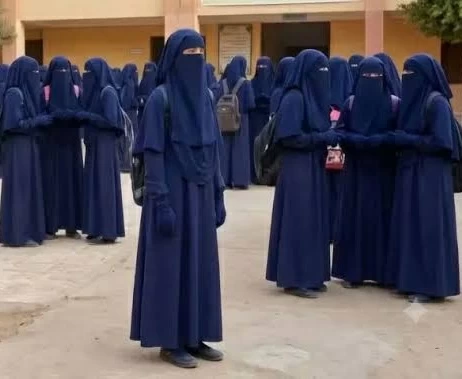
فجّرت مدرسة حكومية تابعة لمركز «دشنا» بمحافظة قنا في جنوب مصر حالة واسعة من الجدل عبر منصات التواصل الاجتماعي، عقب إطلاقها منشوراً رسمياً يُلزم طالبات المرحلة المتوسطة (الإعدادية) بارتداء «النقاب» كجزء أساسي من الزي المدرسي الموحد.
الواقعة الشائكة بدأت بتنبيه مشدد نشرته الصفحة الرسمية للمدرسة عبر «فيسبوك»، ادعت فيه السعي لتقديم صورة حضارية ومنع أي مظاهر للتنمر، مفصّلة ضوابط المظهر العام التي حددت للذكور «تي شيرت أزرق وبنطلون كحلي»، بينما ألزمت الطالبات برداء كحلي أو أسود «مصحوباً بالنقاب».
ومما زاد الطين بلة، إرفاق المنشور بصورة تُظهر فتيات منقبات داخل فناء المدرسة، وهي الصورة التي كشفت التحقيقات لاحقاً أنها مولدة بالذكاء الاصطناعي (AI) ولا تمت للواقع بصلة، بهدف الترويج لفرض هذا الزي.
وفي رد رسمي حاسم للسيطرة على الأزمة، أعلنت مديرية التربية والتعليم بمحافظة قنا إحالة مدير المدرسة ومسؤول النشر بالصفحة إلى الشؤون القانونية للتحقيق الفوري، مؤكدة أن ما جرى تداوله غير صحيح شكلاً وموضوعاً، وأن وزارة التربية والتعليم لم تُقر النقاب إطلاقاً ضمن مكونات الزي الإلزامي الموحد في أي مدرسة مصرية.
وبهذا يُسدل الستار على الواقعة بتحرك قانوني عاجل يضع حداً لمفاجآت «السوشيال ميديا» ومحاولات الاستغلال الرقمي للتأثير على القواعد التعليمية الرسمية.
A government school affiliated with the "Dishna" center in Qena Governorate, southern Egypt, sparked widespread controversy on social media platforms after it issued an official announcement requiring female middle school students (intermediate) to wear the "niqab" as an essential part of the school uniform.
The contentious incident began with a strict notice published on the school's official Facebook page, claiming to seek a civilized image and prevent any forms of bullying, detailing the general appearance guidelines which specified for boys "a blue T-shirt and navy pants," while requiring female students to wear a navy or black garment "accompanied by the niqab."
What exacerbated the situation was the inclusion of a photo showing veiled girls inside the schoolyard, which investigations later revealed to be generated by artificial intelligence (AI) and unrelated to reality, aimed at promoting the enforcement of this attire.
In a decisive official response to control the crisis, the Qena Directorate of Education announced the referral of the school principal and the page's publishing officer to legal affairs for immediate investigation, confirming that what was circulated was incorrect in both form and content, and that the Ministry of Education had never approved the niqab as part of the mandatory uniform components in any Egyptian school.
Thus, the incident concludes with urgent legal action that puts an end to the surprises of "social media" and attempts at digital exploitation to influence official educational regulations.