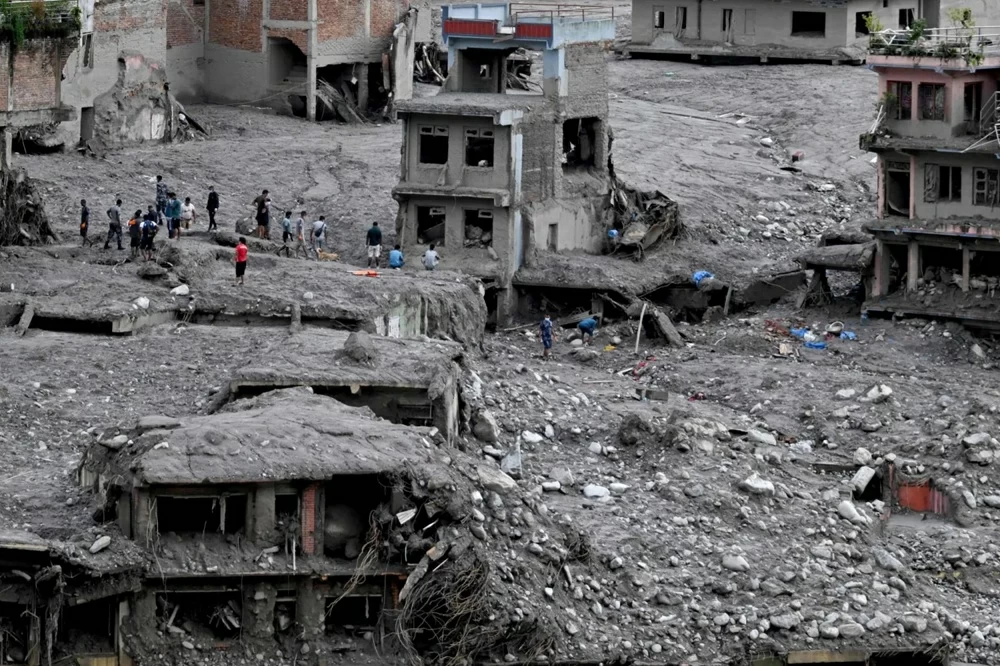
تجاوزت حصيلة ضحايا الفيضانات المدمّرة التي ضربت جبال الهيمالايا في نيبال والصين حاجز الألف قتيل، بعدما أعلنت هيئة إدارة الكوارث في نيبال أن العدد غير النهائي للضحايا بلغ 1003 قتلى؛ بينهم 987 داخل الأراضي النيبالية و16 في الصين. كما ارتفع عدد المفقودين إلى 4462 شخصًا، بينهم آلاف العمال والسياح والزوار الذين كانوا في المناطق الجبلية لحظة وقوع الكارثة.
وتواصل الانهيارات الطينية والفيضانات عزل قرى بأكملها في شمال نيبال، فيما تكافح فرق الإنقاذ للوصول إلى الناجين وسط تضاريس وعرة وانقطاع الطرق. وتشارك فرق دولية في عمليات البحث داخل أنفاق محطات كهرومائية في منطقة (نواكوت) -إحدى أكثر المناطق تضررًا- حيث يُعتقد أن عشرات العمال ما زالوا محاصرين.
وتشهد الطرق المؤدية إلى المناطق المنكوبة حركة مكثفة للمروحيات التي تنقل المياه والغذاء والإمدادات الأساسية إلى المجتمعات المعزولة، في ظل استمرار التحذيرات من انهيارات جديدة قد تعرقل جهود الإنقاذ.
وفي أول تعليق رسمي، قال رئيس الوزراء النيبالي باليندرا شاه إن الفيضانات «لم تكن حدثًا طبيعيًا عابرًا»، بل نتيجة مباشرة لتغيّر المناخ الذي يسرّع ذوبان الأنهار الجليدية في الهيمالايا، داعيًا إلى تحرّك دولي عاجل لمواجهة آثار الظاهرة. وأكد أن «المخاطر تتزايد بالتوازي مع ارتفاع درجات الحرارة»، مشددًا على ضرورة إبقاء المنطقة في «حالة يقظة مستمرة».
وتُعدّ نيبال من الدول الأقل مساهمة في الانبعاثات العالمية، لكنها من الأكثر تضررًا من تداعيات تغيّر المناخ، إذ يعتمد ملايين السكان على مصادر المياه الجبلية التي تتأثر مباشرة بذوبان الجليد. وتشير تقديرات دولية إلى أن الأنهار الجليدية في الهيمالايا وهندوكوش تُعد مصدرًا رئيسًا للمياه لأكثر من 240 مليون شخص في المناطق الجبلية، ونحو 1.65 مليار شخص في أحواض الأنهار في جنوب آسيا.
وكان الأمين العام للأمم المتحدة أنطونيو غوتيريش قد حذّر، خلال زيارته لنيبال عام 2023، من أن «أسطح العالم بدأت تنهار»، في إشارة إلى الذوبان المتسارع للأنهار الجليدية. كما وصف مسؤولون أمميون الكارثة الأخيرة بأنها «تذكير مدمر بمدى هشاشة البيئات الجبلية».
ومع استمرار عمليات البحث، تتوقع السلطات ارتفاع الحصيلة خلال الأيام المقبلة، في ظل صعوبة الوصول إلى المناطق الأكثر تضررًا ووجود آلاف الأشخاص في عداد المفقودين.
The death toll from the devastating floods that struck the Himalayas in Nepal and China has surpassed 1,000, after Nepal's Disaster Management Authority announced that the preliminary number of victims reached 1,003; including 987 within Nepalese territory and 16 in China. The number of missing persons has also risen to 4,462, including thousands of workers, tourists, and visitors who were in the mountainous areas at the time of the disaster.
Mudslides and floods continue to isolate entire villages in northern Nepal, while rescue teams struggle to reach survivors amid rugged terrain and road closures. International teams are participating in search operations inside tunnels of hydroelectric stations in the (Nuwakot) area - one of the hardest-hit regions - where dozens of workers are believed to still be trapped.
The roads leading to the affected areas are seeing heavy helicopter traffic transporting water, food, and essential supplies to isolated communities, amid ongoing warnings of new landslides that could hinder rescue efforts.
In his first official comment, Nepalese Prime Minister Pushpa Kamal Dahal stated that the floods "were not a fleeting natural event," but a direct result of climate change that accelerates the melting of glaciers in the Himalayas, calling for urgent international action to address the effects of the phenomenon. He emphasized that "the risks are increasing in parallel with rising temperatures," stressing the need to keep the region in a "state of continuous vigilance."
Nepal is one of the least contributors to global emissions, yet it is one of the most affected by the consequences of climate change, as millions of people rely on mountain water sources that are directly impacted by glacial melt. International estimates indicate that the glaciers in the Himalayas and Hindu Kush are a primary source of water for more than 240 million people in mountainous areas, and about 1.65 billion people in river basins in South Asia.
UN Secretary-General Antonio Guterres warned during his visit to Nepal in 2023 that "the world's roofs are beginning to collapse," referring to the accelerating melting of glaciers. UN officials also described the recent disaster as a "devastating reminder of the fragility of mountain environments."
As search operations continue, authorities expect the death toll to rise in the coming days, given the difficulty of reaching the most affected areas and the presence of thousands of people still missing.