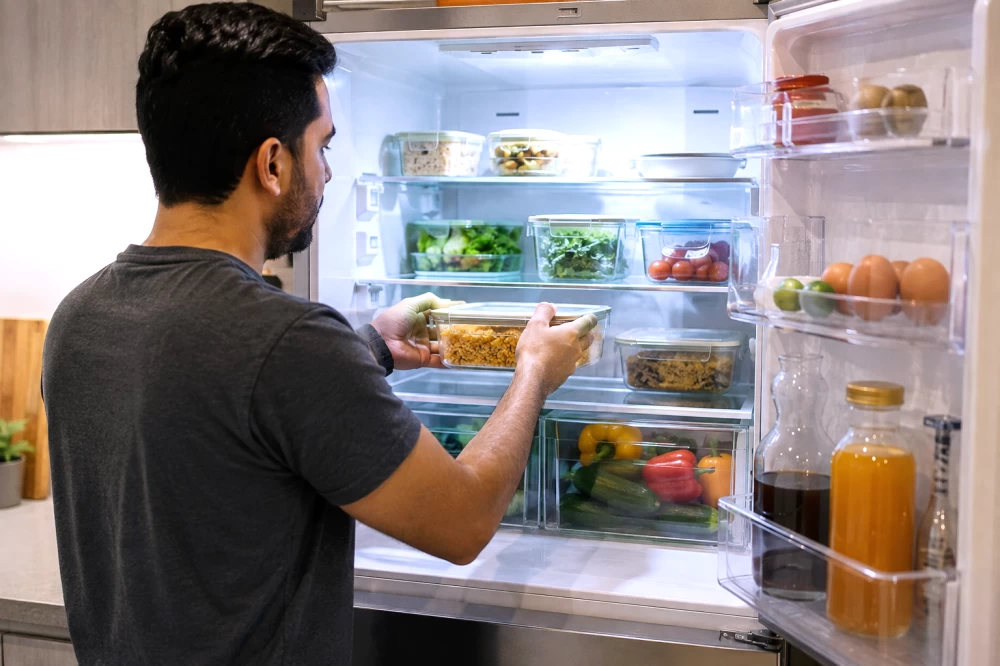
تتحول بقايا الوجبات إلى خيار عملي للاستهلاك لاحقاً، إلا أن طريقة التعامل معها بعد انتهاء الطعام تلعب دوراً أساسياً في الحفاظ على سلامتها، خصوصاً عند ترك الأطعمة القابلة للتلف في درجة حرارة الغرفة لفترات طويلة.
ويساعد نقل بقايا الطعام إلى الثلاجة في الوقت المناسب على الحد من نمو الميكروبات، فيما يمكن تقسيم الكميات الكبيرة على أوعية صغيرة أو ضحلة، لتسريع عملية التبريد بدلاً من الاحتفاظ بها في وعاء كبير.
كما يتطلب التخزين استخدام أوعية مناسبة ومغلقة، مع الفصل بين الأطعمة المطبوخة والنيئة داخل الثلاجة لتقليل احتمالات انتقال الملوثات بينها.
وعند إعادة تناول الوجبات المحفوظة، ينبغي الاهتمام بطريقة التسخين ومدة التخزين، والتخلص من الطعام عند الشك في سلامته، إذ لا يكفي الاعتماد على الرائحة أو المظهر وحدهما لاكتشاف جميع أشكال التلوث.
وتبدأ سلامة الغذاء من تفاصيل منزلية بسيطة، تشمل النظافة والتبريد والتخزين السليم، ما يجعل التعامل الصحيح مع بقايا الوجبات خطوة مهمة للحد من مخاطر التسمم الغذائي.
Leftover meals turn into a practical option for later consumption, but the way they are handled after the food is finished plays a crucial role in maintaining their safety, especially when perishable foods are left at room temperature for long periods.
Transferring leftovers to the refrigerator in a timely manner helps reduce microbial growth, while large quantities can be divided into smaller or shallow containers to speed up the cooling process instead of keeping them in a large container.
Storage also requires the use of appropriate and sealed containers, with a separation between cooked and raw foods inside the refrigerator to minimize the chances of cross-contamination.
When reheating stored meals, attention should be paid to the heating method and storage duration, and food should be discarded when in doubt about its safety, as relying solely on smell or appearance is not sufficient to detect all forms of contamination.
Food safety starts with simple household details, including cleanliness, refrigeration, and proper storage, making the correct handling of leftovers an important step in reducing the risks of food poisoning.