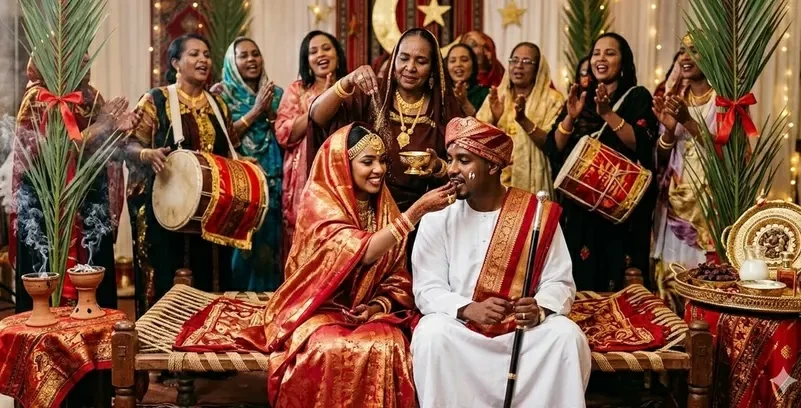
بين رائحة الصندل وبخور العود، وعلى إيقاعات «الدلوكة» الرزينة، يبرز طقس «الجرتق» السوداني ليس مجرد احتفال زواج عابر، بل كلوحة تاريخية نابضة بالحياة، اختصرت آلاف السنين من الحضارة لتتحول اليوم إلى «تريند» عالمي يخطف الأنظار على منصات التواصل الاجتماعي.
تاج الملوك على رؤوس العرسان
لم يكن «الجرتق» يوماً مجرد زينة، بل هو طقس «تتويج» ملكي تمتد جذوره إلى ممالك كرمة ومروي القديمة. ويشير الباحثون إلى أن هذا التقليد يحاكي طقوس تنصيب الملوك في السودان القديم، إذ يرتدي العريس والعروس «القرمصيص» الزاهي ويجلسان كملوك على عرش الاحتفال، في مشهد يمزج بين الهوية الأفريقية والروح العربية.
وخلف كل حركة في الجرتق تكمن قصة، فطقس «بخ اللبن» يرمز للحب والصفاء والمودة بين العروسين، بينما يمثل «قطع الرحط» إعلان الانتقال من حياة العزوبية إلى عالم الشراكة والمسؤولية. وتكتمل اللوحة بالتوجه نحو «النيل» طلباً للبركة والخصب، في استحضار لأسطورة النهر الخالد الذي صنع حضارة السودان.
من «اليونسكو» إلى الشاشات الرقمية
هذا التراث الذي أدرجته منظمة اليونسكو ضمن قوائم التراث الثقافي غير المادي، لم يكتفِ بالبقاء في البيوت السودانية، بل اقتحم عالم «تيك توك» و«إنستغرام». الألوان الزاهية والطقوس البصرية المدهشة حولت الجرتق إلى محتوى عالمي يجذب الملايين، ويعيد تقديم السودان كمنارة للثقافة والتنوع والجمال.
ويظل الجرتق هو «الحبل السري» الذي يربط حاضر السودانيين بماضيهم المجيد، فهو طقس يقاوم الزمن ويجمع بين الأسطورة والواقع، ليثبت أن الهوية السودانية عصية على النسيان وجميلة لدرجة أنها أصبحت لغة عالمية يفهمها الجميع.
Between the scent of sandalwood and the incense of oud, and to the rhythms of the dignified "daloqa," the Sudanese "jertuq" ceremony emerges not just as a fleeting wedding celebration, but as a vibrant historical tableau that encapsulates thousands of years of civilization, transforming today into a global "trend" that captures attention on social media platforms.
The Crown of Kings on the Heads of the Newlyweds
The "jertuq" has never been merely an ornament; it is a royal "coronation" ritual that extends its roots to the ancient kingdoms of Kerma and Meroë. Researchers indicate that this tradition mimics the rituals of royal enthronement in ancient Sudan, as the groom and bride don the vibrant "qarmasīs" and sit like kings on the throne of the celebration, in a scene that blends African identity with Arab spirit.
Behind every movement in the jertuq lies a story; the ritual of "bakh al-laban" symbolizes love, purity, and affection between the couple, while the "qat' al-raht" signifies the announcement of the transition from single life to a world of partnership and responsibility. The tableau is completed by turning towards the "Nile" in search of blessings and fertility, evoking the legend of the eternal river that shaped Sudan's civilization.
From "UNESCO" to Digital Screens
This heritage, which UNESCO has listed among the intangible cultural heritage, has not only remained within Sudanese homes but has also invaded the world of "TikTok" and "Instagram." The vibrant colors and stunning visual rituals have transformed the jertuq into global content that attracts millions, reintroducing Sudan as a beacon of culture, diversity, and beauty.
The jertuq remains the "umbilical cord" that connects the present of Sudanese people with their glorious past; it is a ritual that defies time and unites myth with reality, proving that Sudanese identity is resilient against forgetfulness and beautiful enough to become a universal language understood by all.