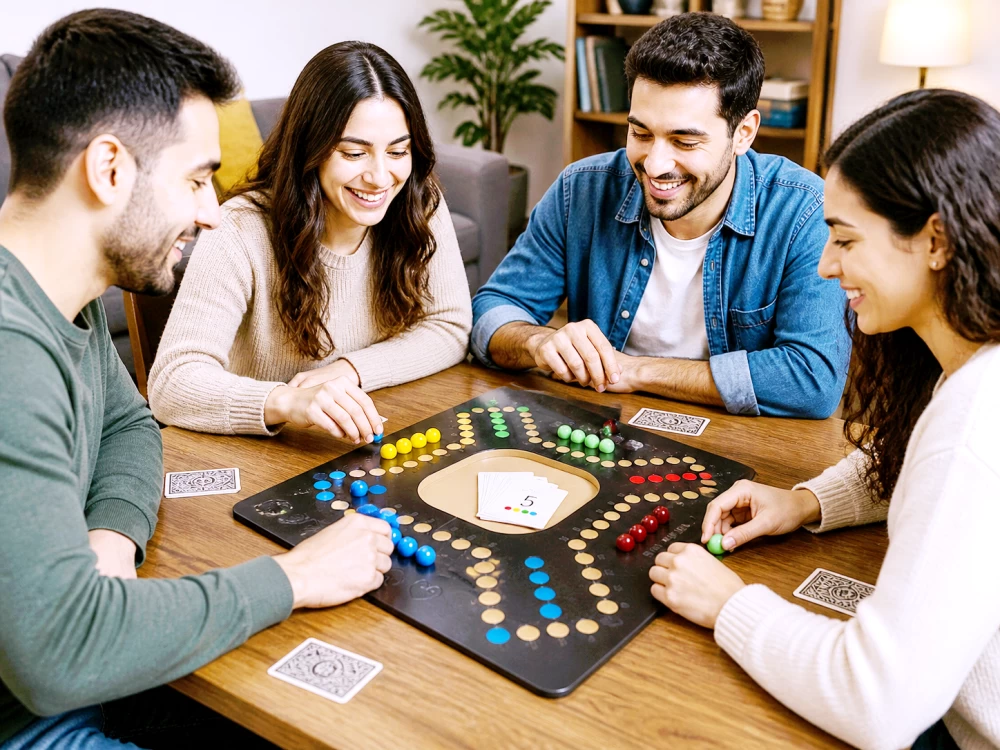
لوحة تتوسط طاولة تجمع الأصدقاء أو أفراد العائلة، تتصاعد الضحكات، وتشتد المنافسة، وتُحسم الانتصارات أحياناً بورقة واحدة.
لم تعد (جاكارو) مجرد لعبة عابرة، بل أصبحت ظاهرة اجتماعية تعكس مزيجاً فريداً من الترفيه والتفكير الاستراتيجي.
وخلال فترة قصيرة، تمكنت (جاكارو) من ترسيخ حضورها في مختلف البيئات الاجتماعية، من الجلسات العائلية الهادئة إلى اللقاءات الشبابية الصاخبة. ويعود الانتشار إلى بساطة قواعدها من جهة، وقدرتها على خلق أجواء تفاعلية من جهة أخرى، ما يجعلها خياراً مفضلاً لدى فئات عمرية متعددة.
هذا الحضور المتزايد لم يقتصر على الترفيه فحسب، بل أسهم في تشكيل ثقافة ألعاب جماعية حديثة، تعيد إحياء روح التنافس المباشر بعيداً عن الشاشات.
وتعتمد (جاكارو) على هدف مباشر يتمثل في إدخال جميع أحجار اللاعب إلى منطقة الأمان قبل المنافس. إلا أن بساطة هذا الهدف تخفي وراءها تعقيداً تكتيكياً، حيث تُحدد حركة الأحجار عبر أوراق اللعب، التي قد تحمل في طياتها فرصاً للتقدم أو أدوات لإعاقة الخصوم. وفي كثير من الأحيان، تكون لحظة واحدة كفيلة بتغيير مجرى المباراة بالكامل، ما يضفي على اللعبة طابعاً درامياً يجعل كل جولة مختلفة عن الأخرى.
ورغم أن توزيع الأوراق عنصر أساسي في اللعبة، إلا أن الحسم غالباً ما يميل لصالح اللاعب الأكثر وعياً بالتوقيت واتخاذ القرار. فاختيار اللحظة المناسبة للهجوم، أو الاحتفاظ بورقة حاسمة، أو حتى التضحية بحجر لتحقيق أفضلية لاحقة، كلها قرارات تعكس جانباً ذهنياً يتجاوز فكرة «اللعب من أجل التسلية».
وتختبر (جاكارو) مهارات التفكير بقدر ما تعتمد على الحظ، ما يمنحها عمقاً يجعلها قابلة للتطور مع كل جولة، وما يميز اللعبة عن غيرها من الألعاب هو قدرتها على خلق لحظات إنسانية عفوية. فبين التحدي والرهان، تنشأ مواقف طريفة، وتعليقات ساخرة، واحتفالات مبالغ فيها بالفوز، تقابلها خيبات أمل درامية عند الخسارة.
وفي زمن تتزايد فيه العزلة الرقمية، تقدم (الجاكارو) نموذجاً بسيطاً لإعادة بناء التفاعل المباشر بين الأفراد. فهي لا تجمع اللاعبين حول طاولة فحسب، بل تخلق مساحة للحوار، والتواصل، وتقاسم المشاعر. ويرى مختصون في السلوك الاجتماعي أن مثل هذه الألعاب تسهم في تعزيز الروابط الإنسانية، خصوصاً في المجتمعات التي تُولي قيمة عالية للتواصل الأسري والاجتماعي.
تثبت (جاكارو) أن الألعاب البسيطة قادرة على صناعة تجارب معقدة ومؤثرة. وبين ورقة تُسحب، وحجر يتحرك، وقرار يُتخذ في لحظة، تتشكل معركة تجمع بين الحظ والعقل، وتُكتب نهايتها غالباً بطريقة غير متوقعة.
A board game that sits in the middle of a table gathering friends or family members, laughter rises, competition intensifies, and victories are sometimes decided by a single card.
(Jaccaro) is no longer just a passing game; it has become a social phenomenon that reflects a unique blend of entertainment and strategic thinking.
In a short period, (Jaccaro) has managed to establish its presence in various social environments, from quiet family gatherings to lively youth meetings. Its spread can be attributed to the simplicity of its rules on one hand, and its ability to create interactive atmospheres on the other, making it a preferred choice among multiple age groups.
This increasing presence is not limited to entertainment alone; it has contributed to shaping a modern culture of board games that revives the spirit of direct competition away from screens.
(Jaccaro) relies on a direct goal represented by getting all of the player's pieces into the safe zone before the opponent. However, the simplicity of this goal hides a tactical complexity, as the movement of the pieces is determined by the playing cards, which may contain opportunities for advancement or tools to hinder opponents. Often, a single moment can completely change the course of the game, giving it a dramatic character that makes each round different from the others.
Although card distribution is a fundamental element of the game, the outcome often leans in favor of the player who is more aware of timing and decision-making. Choosing the right moment to attack, holding onto a decisive card, or even sacrificing a piece for a later advantage are all decisions that reflect a mental aspect that goes beyond the idea of "playing for fun."
(Jaccaro) tests thinking skills as much as it relies on luck, giving it a depth that allows it to evolve with each round. What distinguishes the game from others is its ability to create spontaneous human moments. Between challenge and wager, amusing situations arise, sarcastic comments are made, and exaggerated celebrations of victory are met with dramatic disappointments in defeat.
In an age where digital isolation is increasing, (Jaccaro) offers a simple model for rebuilding direct interaction among individuals. It not only gathers players around a table but also creates a space for dialogue, communication, and sharing emotions. Social behavior specialists believe that such games contribute to strengthening human bonds, especially in communities that place a high value on family and social communication.
(Jaccaro) proves that simple games can create complex and impactful experiences. Between a card drawn, a piece moved, and a decision made in a moment, a battle forms that combines luck and intellect, often concluding in an unexpected way.