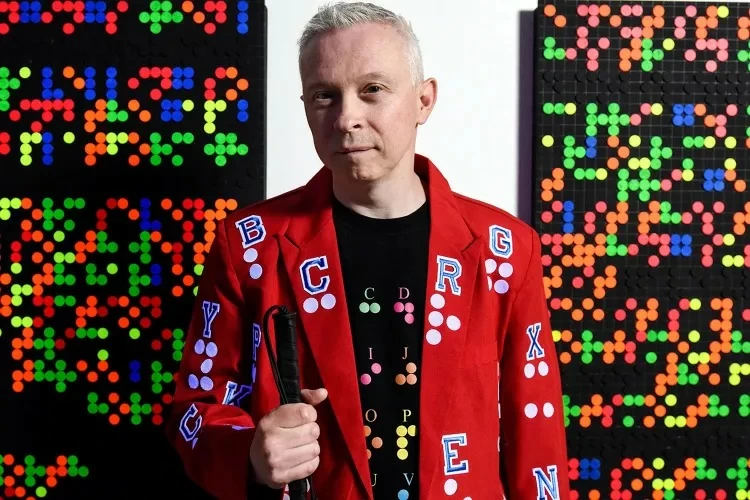
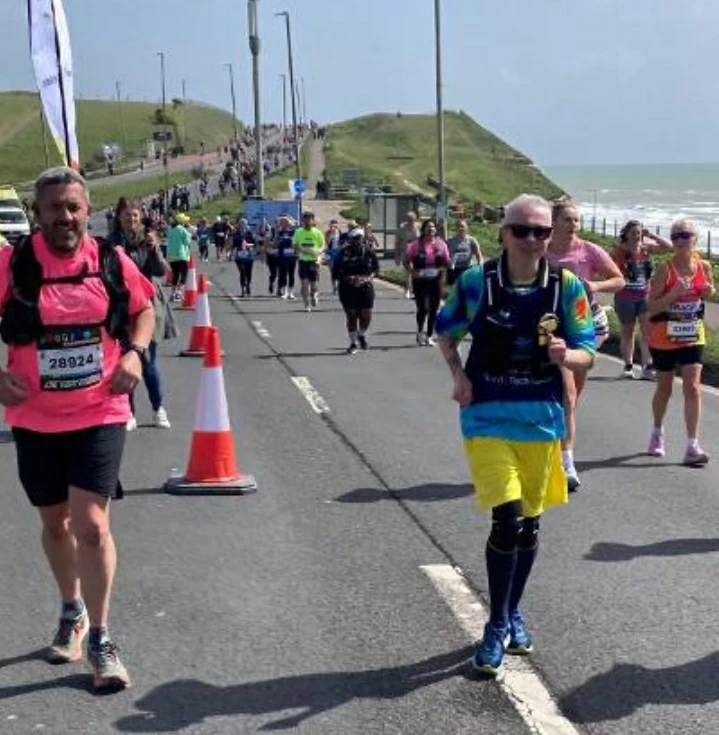
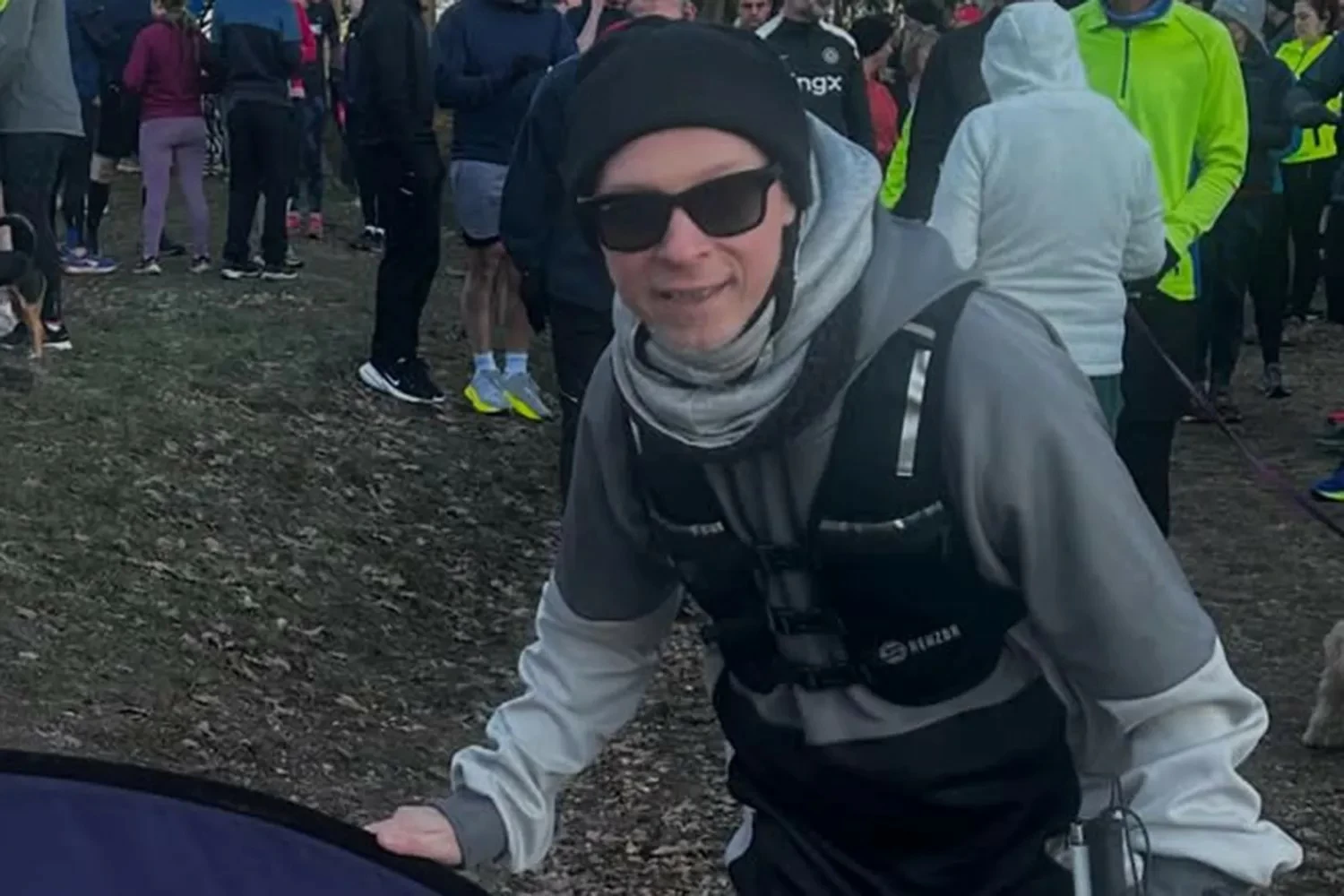
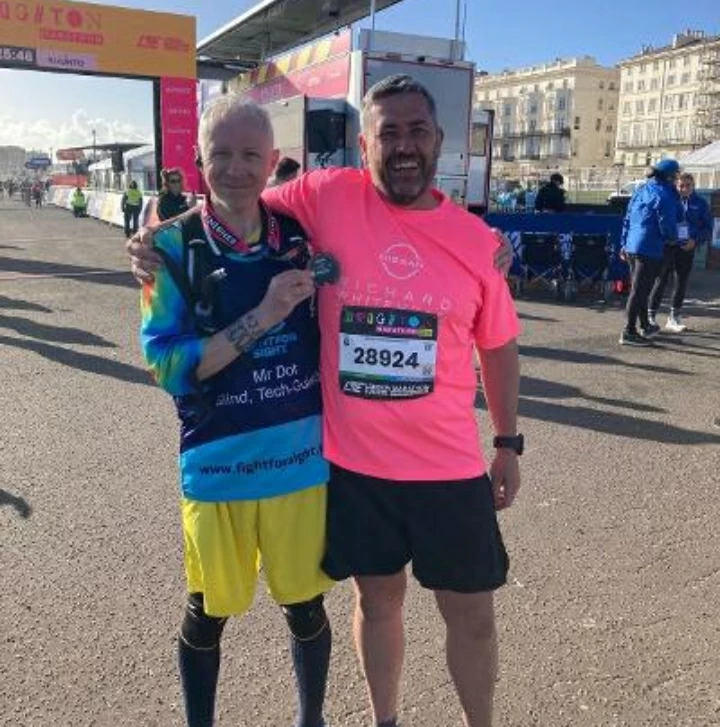
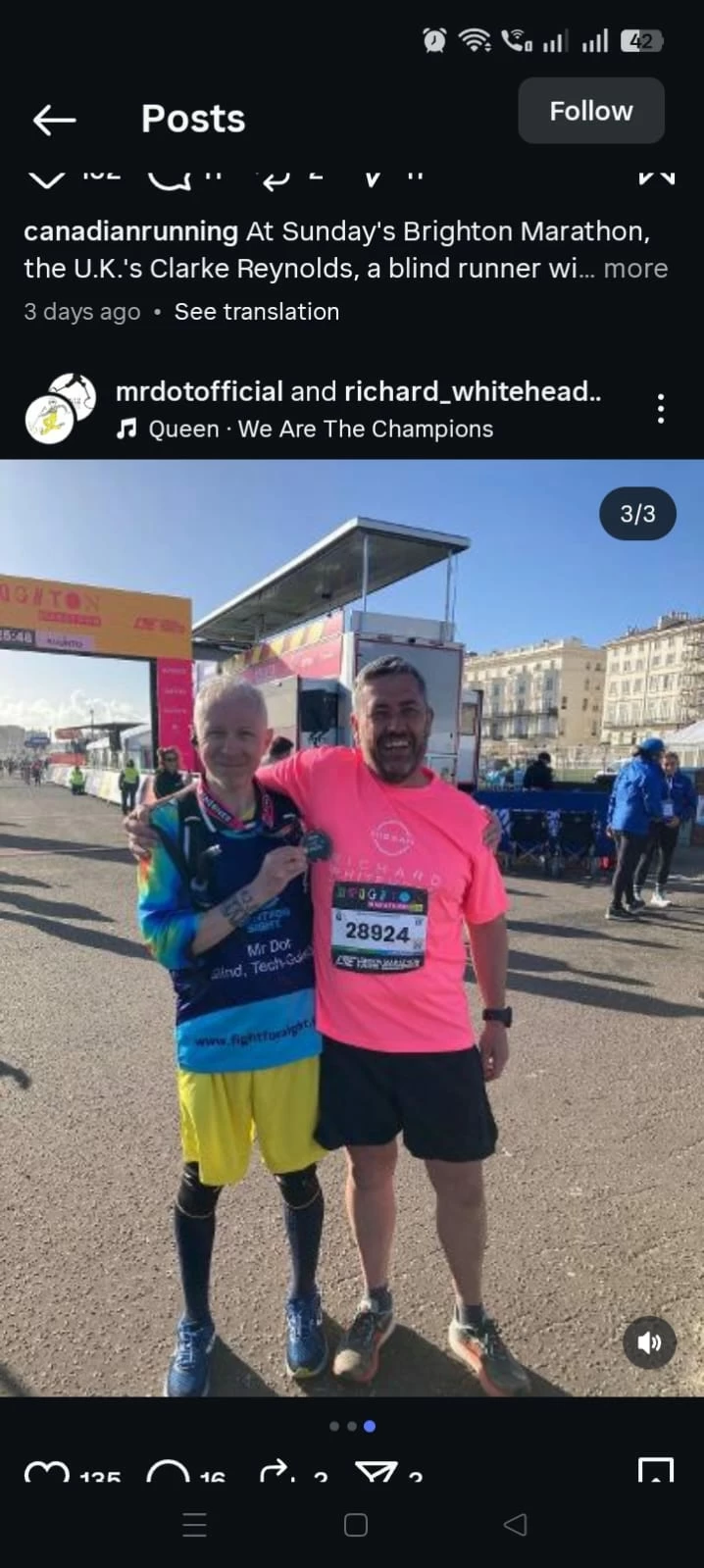
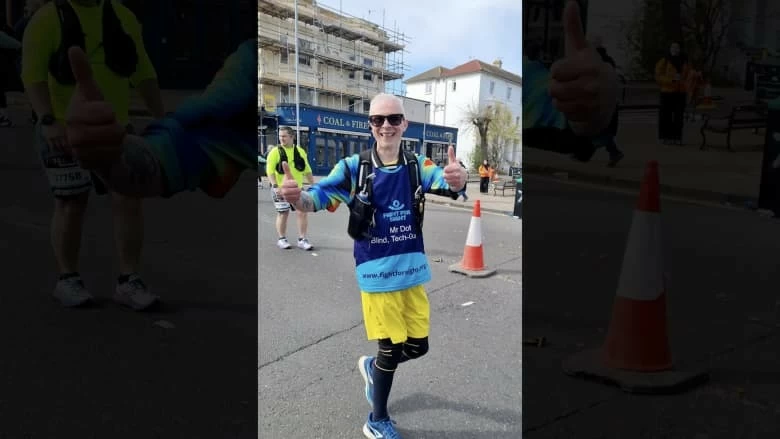
في إنجاز إنساني وتكنولوجي لافت، نجح العداء البريطاني الكفيف كلارك رينولدز في خوض تجربة فريدة من نوعها، بعدما شارك في ماراثون كامل مستعيناً بتقنيات الذكاء الاصطناعي، في خطوة وُصفت بأنها «سابقة عالمية» في مجال دمج التكنولوجيا بالرياضة، وفق مجلة People الأمريكية.
رينولدز، البالغ من العمر 45 عاماً، يعاني من مرض تنكّس الشبكية (Retinitis Pigmentosa)، ولم يتبقَّ له سوى نحو 5% من قدرته على الإبصار، إذ يصف رؤيته بأنها «تشبه النظر تحت الماء».
كيف نجح في الجري دون إبصار؟
واعتمد رينولدز خلال مشاركته في ماراثون برايتون على نظارات ذكية مدعومة بالذكاء الاصطناعي، مرتبطة بتطبيق Be My Eyes، الذي يتيح بثاً مباشراً لما يراه المستخدم إلى متطوعين حول العالم.
ومن خلال هذه التقنية، تمكن مئات المتطوعين من متابعة الطريق أمامه وإرشاده لحظياً عبر الصوت، ما ساعده على إكمال السباق بأمان.
كما استخدم نظارات ذكية من تطوير Meta، والتي تنقل الصورة مباشرة وتوفر دعماً بصرياً معززاً بالذكاء الاصطناعي.
ماراثون بطعم مختلف
شارك رينولدز في سباق يمتد لمسافة 42.2 كيلومتر (26.2 ميل)، وهو تحدٍ كبير حتى للعدائين المبصرين، لكنه خاضه هذه المرة بأسلوب مختلف يعتمد على التكنولوجيا بدلاً من المرافق البشري التقليدي.
ورغم وجود عدّاء مرافق لأسباب تتعلق بالسلامة، فإن الاعتماد الأساسي كان على التوجيه الذكي والتواصل اللحظي مع المتطوعين.
رسالة إنسانية
لم يكن الهدف من المشاركة مجرد إنجاز رياضي، بل سعى رينولدز إلى كسر الصور النمطية حول فقدان البصر، وإثبات أن التكنولوجيا يمكن أن تفتح آفاقاً جديدة لذوي الإعاقة.
وقال إن هذه التجربة تمثل «تحرراً حقيقياً»، إذ أصبح بإمكانه الجري والتفاعل مع العالم بطريقة أكثر استقلالية.
كما شارك في الحدث لدعم جمعية «Fight for Sight»، التي تعمل على تمويل أبحاث أمراض العيون.
ماذا يعني هذا الإنجاز؟
يرى خبراء أن هذه التجربة تمثل نقطة تحول في استخدام الذكاء الاصطناعي في الحياة اليومية، خصوصاً في تمكين ذوي الإعاقة البصرية، وتعزيز الاستقلالية الشخصية، ودمج التكنولوجيا في الأنشطة الرياضية، كما تعكس التوجه العالمي نحو استخدام «التقنيات المساعدة الذكية» كبديل أو مكمل للدعم البشري التقليدي.
بداية لعصر جديد
هذا الإنجاز لا يمثل نهاية التحدي، بل بداية مرحلة جديدة قد تشهد انتشار استخدام الذكاء الاصطناعي في الرياضة والحياة اليومية لذوي الإعاقة.
ومع التطور السريع في تقنيات الرؤية الحاسوبية والتواصل اللحظي، قد يصبح ما كان يُعتبر مستحيلاً قبل سنوات أمراً عادياً في المستقبل القريب.
In a remarkable human and technological achievement, British blind runner Clark Reynolds successfully undertook a unique experience by participating in a full marathon using artificial intelligence technologies, in a move described as a "world first" in the integration of technology with sports, according to American magazine People.
Reynolds, 45 years old, suffers from Retinitis Pigmentosa, leaving him with only about 5% of his vision, as he describes his sight as "similar to looking underwater."
How did he succeed in running without sight?
During his participation in the Brighton Marathon, Reynolds relied on smart glasses powered by artificial intelligence, connected to the Be My Eyes app, which allows live streaming of what the user sees to volunteers around the world.
Through this technology, hundreds of volunteers were able to monitor the path ahead of him and guide him in real-time through audio, helping him complete the race safely.
He also used smart glasses developed by Meta, which transmit images directly and provide AI-enhanced visual support.
A Marathon with a Different Flavor
Reynolds participated in a race that spans 42.2 kilometers (26.2 miles), a significant challenge even for sighted runners, but this time he approached it in a different way that relied on technology instead of traditional human assistance.
Although there was a runner accompanying him for safety reasons, the primary reliance was on smart guidance and real-time communication with volunteers.
A Human Message
The goal of his participation was not just a sports achievement; Reynolds aimed to break stereotypes about blindness and prove that technology can open new horizons for people with disabilities.
He stated that this experience represents a "true liberation," as he can now run and interact with the world in a more independent way.
He also participated in the event to support the "Fight for Sight" charity, which funds research on eye diseases.
What does this achievement mean?
Experts believe that this experience marks a turning point in the use of artificial intelligence in daily life, particularly in empowering visually impaired individuals, enhancing personal independence, and integrating technology into sports activities. It also reflects the global trend towards using "smart assistive technologies" as an alternative or complement to traditional human support.
The Beginning of a New Era
This achievement does not signify the end of the challenge, but rather the beginning of a new phase that may witness the widespread use of artificial intelligence in sports and daily life for people with disabilities.
With the rapid advancement in computer vision technologies and real-time communication, what was once considered impossible years ago may become commonplace in the near future.