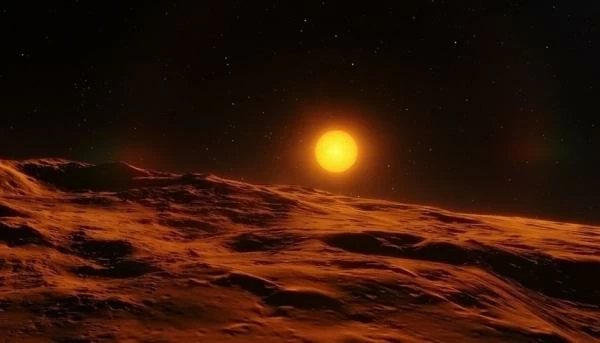
رصد علماء الفلك كوكبًا يدور حول نجم قريب نسبيًا منا في مجرة درب التبانة، ويبدو كعالم من الجحيم الفريد من نوعه فسطحه مغطى بطبقة من الصخور المنصهرة، وتلفّه غلالة كثيفة من الغازات السامة الغنية بالكبريت شديد الحرارة.
ويقدّر قطر هذا الكوكب بنحو 60% من قطر الأرض، لكن كثافته لا تتجاوز 40% من كثافة كوكبنا، وهو يدور حول نجم أصغر وأكثر خفوتًا من الشمس، ويبعد عن الأرض نحو 34 سنة ضوئية في كوكبة السمكة الطائرة وهي كوكبة صغيرة في سماء الجزء الجنوبي من الكرة الأرضية، والسنة الضوئية هي المسافة التي يقطعها الضوء في عام، وتبلغ 9.5 تريليون كيلومتر. وقال هاريسون نيكولز، الباحث في معهد علم الفلك بجامعة «كمبريدج» والذي قاد فريق الدراسة التي نشرت أمس (الاثنين) في مجلة (نيتشر أسترونومي): «إن الكوكب يفتقر إلى بنية واضحة داخل الطبقة الهائلة من الصخور المنصهرة التي تغلفه فلا توجد قشرة، وتشكّل الصخور المنصهرة طبقة واحدة عميقة ولزجة تمتد عبر باطن الكوكب بأكمله». وأضاف: «أن بلورات صغيرة من الصخور الصلبة قد تكون محبوسة داخل هذا المحيط المتحرك من الصخور المنصهرة التي تكوّن معظم البنية الداخلية لهذا الكوكب». ويبدو أن النواة المعدنية للكوكب صغيرة نسبيًا، حيث تشكّل طبقة الصخور المنصهرة بين 70 و90% من نصف قطر باطن الكوكب، بعمق يراوح بين 4465 و5740 كيلومترًا. ويدور الكوكب حول نجم من نوع شائع يسمى القزم الأحمر تبلغ كتلة النجم أقل بقليل من 30% من كتلة الشمس، وإضاءته نحو واحد بالمئة من إضاءة الشمس. ويعد من حيث المسافة المدارية (إل.98-59 دي)، ثالث كوكب من بين خمسة كواكب معروفة تدور حول هذا النجم. ومنذ التسعينات، تم اكتشاف أكثر من 6100 كوكب خارج المجموعة الشمسية تعرف بالكواكب الخارجية، إلا أنه لا يوجد كوكب يشبه هذا الكوكب تمامًا، فمزيجه الفريد من طبقة الصخور المنصهرة المحيطة به والغلاف الجوي الغني بالكبريت يجعله فريدًا من نوعه حتى الآن.
Astronomers have observed a planet orbiting a relatively nearby star in the Milky Way galaxy, and it appears to be a unique hellish world with a surface covered by a layer of molten rock, enveloped in a dense veil of extremely hot toxic gases rich in sulfur.
The diameter of this planet is estimated to be about 60% of Earth's diameter, but its density does not exceed 40% of our planet's density. It orbits a star that is smaller and dimmer than the Sun, located about 34 light-years away in the constellation of the Flying Fish, which is a small constellation in the southern sky. A light-year is the distance that light travels in a year, approximately 9.5 trillion kilometers. Harrison Nicholls, a researcher at the Institute of Astronomy at the University of Cambridge who led the study published yesterday (Monday) in the journal Nature Astronomy, stated: "The planet lacks a clear structure within the vast layer of molten rock that envelops it; there is no crust, and the molten rock forms a single deep and viscous layer that extends throughout the planet's interior." He added: "Small crystals of solid rock may be trapped within this moving ocean of molten rock that constitutes most of the internal structure of this planet." The planet's metallic core appears to be relatively small, as the layer of molten rock constitutes between 70% and 90% of the radius of the planet's interior, at a depth ranging from 4,465 to 5,740 kilometers. The planet orbits a common type of star known as a red dwarf, which has a mass of just under 30% of the Sun's mass, with a brightness about one percent of the Sun's brightness. In terms of orbital distance (L.98-59 d), it is the third planet among five known planets orbiting this star. Since the 1990s, more than 6,100 exoplanets have been discovered, known as exoplanets, but there is no planet exactly like this one; its unique combination of the surrounding molten rock layer and sulfur-rich atmosphere makes it one of a kind so far.