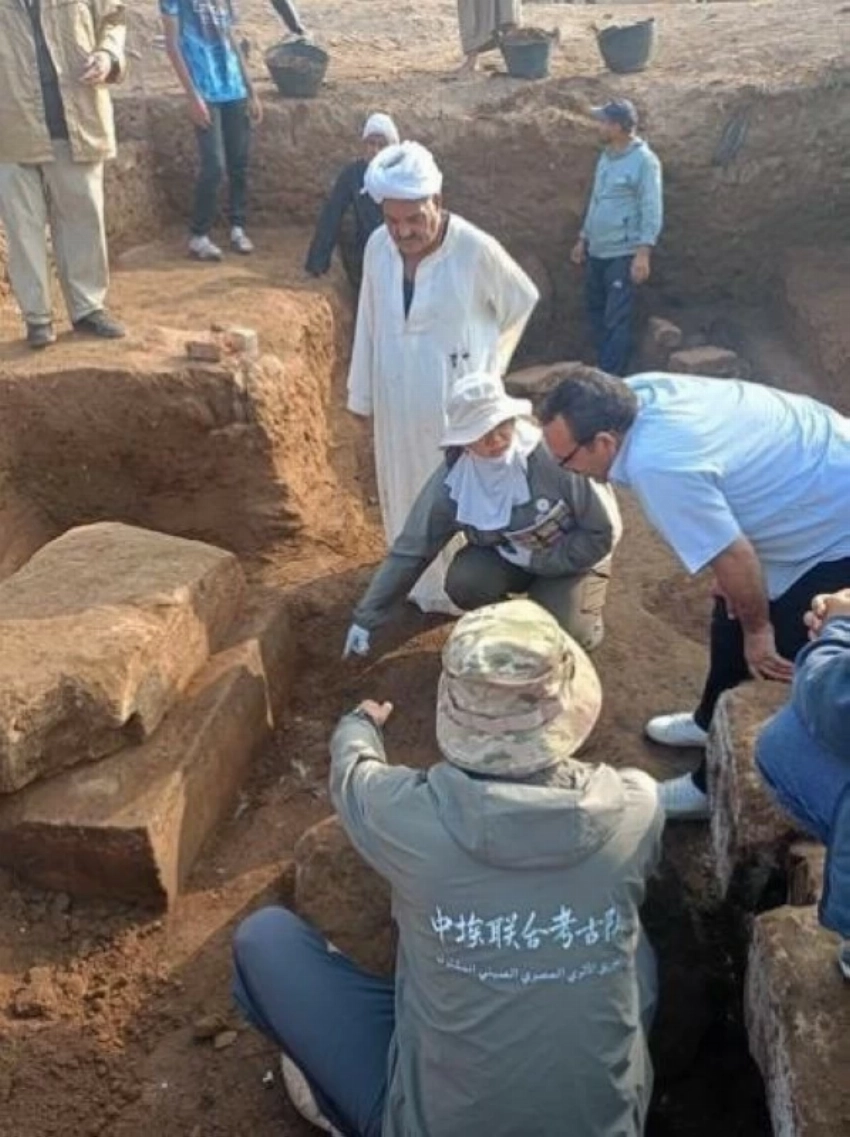
كشفت البعثة الأثرية المصرية-الصينية المشتركة، بين المجلس الأعلى للآثار وجامعة بكين ومعهد شاندونغ للتراث الثقافي والآثار، عن مبنى حجري كبير مبني من الحجر الجيري، يُرجح أنه جزء من بقايا معبد الملك أبريس (من عصر الأسرة السادسة والعشرين)، وذلك خلال أعمال الحفر في موقع تل عزيز شرق منطقة ميت رهينة بمحافظة الجيزة، حيث سبق للبعثة الكشف عن أجزاء أخرى من المعبد في مواسم سابقة.
أكد وزير السياحة والآثار شريف فتحي أن هذا الكشف يمثل إضافة قيمة لجهود البحث الأثري في منطقة ميت رهينة، ويساهم في إثراء المعرفة بتاريخ هذا الموقع المهم، مشيدًا بالتعاون العلمي المتميز والمثمر بين الجانبين المصري والصيني في مجال الآثار.
من جانبه، أوضح الأمين العام للمجلس الأعلى للآثار الدكتور هشام الليثي، أن الاكتشاف يعمق فهم التخطيط الحضري لمدينة ممفيس القديمة (ميت رهينة)، ويسلط الضوء على ممارساتها الدينية خلال الفترة من العصر المتأخر وحتى العصر اليوناني الروماني.
وأشار إلى أن الدراسات الأولية تؤكد أن الجزء الجنوبي من تل عزيز كان نواة المنطقة الأساسية للمدينة، وأن المعبد استمر في الاستخدام من عصر الأسرة السادسة والعشرين حتى العصر الروماني.
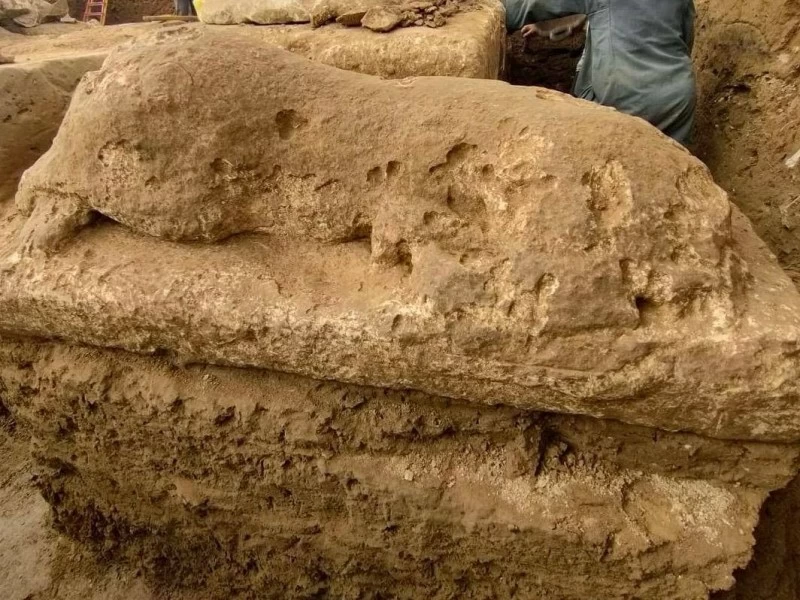
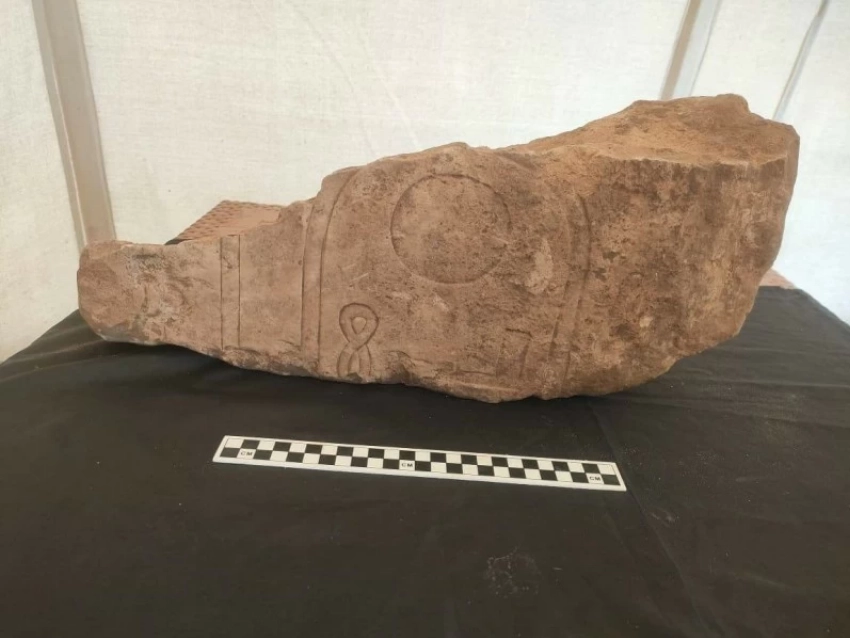
وأضاف رئيس قطاع الآثار المصرية ورئيس البعثة من الجانب المصري محمد عبد البديع، أن الحفريات أسفرت أيضًا عن اكتشاف 5 تماثيل لأبي الهول فاقدة الرؤوس، وعدد من الكتل الحجرية المنقوشة بالكتابة الهيروغليفية للإله بتاح، وبعضها يحمل خرطوش الملك أبريس، إلى جانب مجموعة متنوعة من اللقى الأثرية تشمل أواني فخارية وزجاجية وعملات نحاسية.
كما أكد رئيس البعثة من الجانب الصيني الدكتور تشانغ هاي، أن أعمال البعثة ستُستأنف في أبريل القادم، بهدف الكشف عن مزيد من العناصر المعمارية والأثرية لتوثيق تاريخ المنطقة بشكل أوسع، كما أبرز أهمية مدينة ممفيس كأقدم عاصمة لمصر وأبرزها، حيث كانت -لنحو ثلاثة آلاف عام- مركزًا رئيسيًا للأنشطة الإدارية والاقتصادية والدينية، نظرًا لموقعها الإستراتيجي عند ملتقى وادي النيل والدلتا والصحراء الشرقية والغربية.
The joint Egyptian-Chinese archaeological mission, between the Supreme Council of Antiquities, Peking University, and the Shandong Institute of Cultural Heritage and Archaeology, has revealed a large stone building made of limestone, believed to be part of the remains of the temple of King Apries (from the 26th Dynasty), during excavation work at the site of Tell Azeez east of the Mit Rahina area in Giza Governorate, where the mission had previously uncovered other parts of the temple in earlier seasons.
Tourism and Antiquities Minister Sherif Fathy confirmed that this discovery represents a valuable addition to the archaeological research efforts in the Mit Rahina area and contributes to enriching knowledge about the history of this important site, praising the distinguished and fruitful scientific cooperation between the Egyptian and Chinese sides in the field of archaeology.
For his part, the Secretary-General of the Supreme Council of Antiquities, Dr. Hisham El-Leithy, explained that the discovery deepens the understanding of the urban planning of ancient Memphis (Mit Rahina) and highlights its religious practices during the period from the Late Period to the Greco-Roman era.
He pointed out that preliminary studies confirm that the southern part of Tell Azeez was the core area of the city, and that the temple continued to be used from the 26th Dynasty until the Roman era.
Mohamed Abdel Badi, Head of the Egyptian Antiquities Sector and the head of the mission from the Egyptian side, added that the excavations also resulted in the discovery of 5 headless sphinx statues, several stone blocks inscribed with hieroglyphs of the god Ptah, some of which bear the cartouche of King Apries, in addition to a variety of archaeological finds including pottery, glass vessels, and copper coins.
Dr. Zhang Hai, the head of the mission from the Chinese side, also confirmed that the mission's work will resume next April, aiming to uncover more architectural and archaeological elements to document the history of the area more comprehensively, while highlighting the importance of Memphis as the oldest and most prominent capital of Egypt, which was - for nearly three thousand years - a major center for administrative, economic, and religious activities, due to its strategic location at the confluence of the Nile Valley, the delta, and the eastern and western deserts.