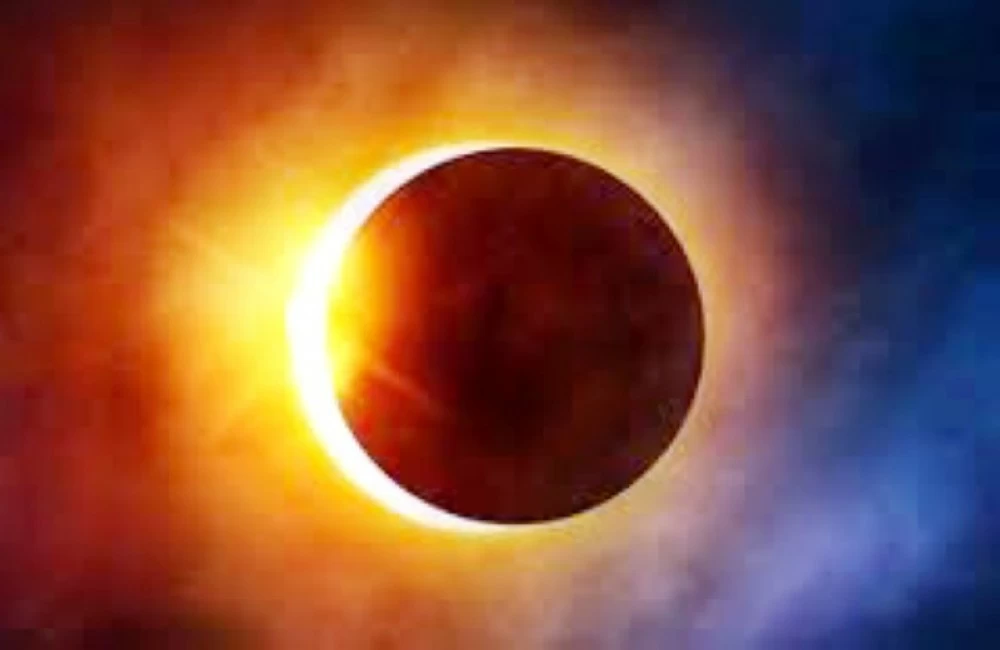
كشف أستاذ المناخ بجامعة القصيم سابقاً الدكتور عبدالله المسند، استعداد الكرة الأرضية لحدثين فلكيين خلال الأسابيع المقبلة، يتمثّلان في كسوف حلقي للشمس وخسوف كلي للقمر، وذلك وفقاً للحسابات الفلكية الحديثة.
عبدالله المسند.
وأوضح المسند، أن الكسوف الحلقي للشمس سيقع الثلاثاء 29 شعبان 1447هـ الموافق 17 فبراير 2026م، مبيناً أنه لن يكون مرئياً في السعودية أو أي دولة عربية، إذ يتركز مساره فوق القارة القطبية الجنوبية (أنتاركتيكا)، بينما سيُشاهد جزئياً في أجزاء محدودة من جنوب أفريقيا وأمريكا الجنوبية، وأن الظاهرة الثانية، وهي الخسوف الكلي للقمر، ستحدث الثلاثاء 14 رمضان 1447هـ الموافق 3 مارس 2026م، مشيراً إلى أن هذا الخسوف لن يُرى في الوطن العربي، فيما ستتمكن مناطق شرق آسيا وأستراليا والأمريكتين والمحيط الهادئ من مشاهدته.
ونوّه المسند إلى أن أول كسوف شمسي قادم يمكن رؤيته في سماء المملكة والمنطقة العربية سيكون في 2 أغسطس 2027م، واصفاً إياه بأنه حدث تاريخي يُعرف بـ«كسوف القرن»، نظراً لندرته واتساع نطاق مشاهدته.
Dr. Abdullah Al-Masnad, a former climate professor at Qassim University, revealed the Earth's readiness for two astronomical events in the coming weeks, which are a solar annular eclipse and a total lunar eclipse, according to modern astronomical calculations.
عبدالله المسند.
Al-Masnad explained that the solar annular eclipse will occur on Tuesday, 29 Sha'ban 1447 AH, corresponding to February 17, 2026, noting that it will not be visible in Saudi Arabia or any Arab country, as its path is concentrated over the Antarctic continent, while it will be partially visible in limited parts of South Africa and South America. The second phenomenon, the total lunar eclipse, will take place on Tuesday, 14 Ramadan 1447 AH, corresponding to March 3, 2026, pointing out that this eclipse will not be seen in the Arab world, while regions in East Asia, Australia, the Americas, and the Pacific Ocean will be able to observe it.
Al-Masnad noted that the first upcoming solar eclipse that can be seen in the sky of the Kingdom and the Arab region will be on August 2, 2027, describing it as a historic event known as the "Eclipse of the Century," due to its rarity and the wide range of its visibility.