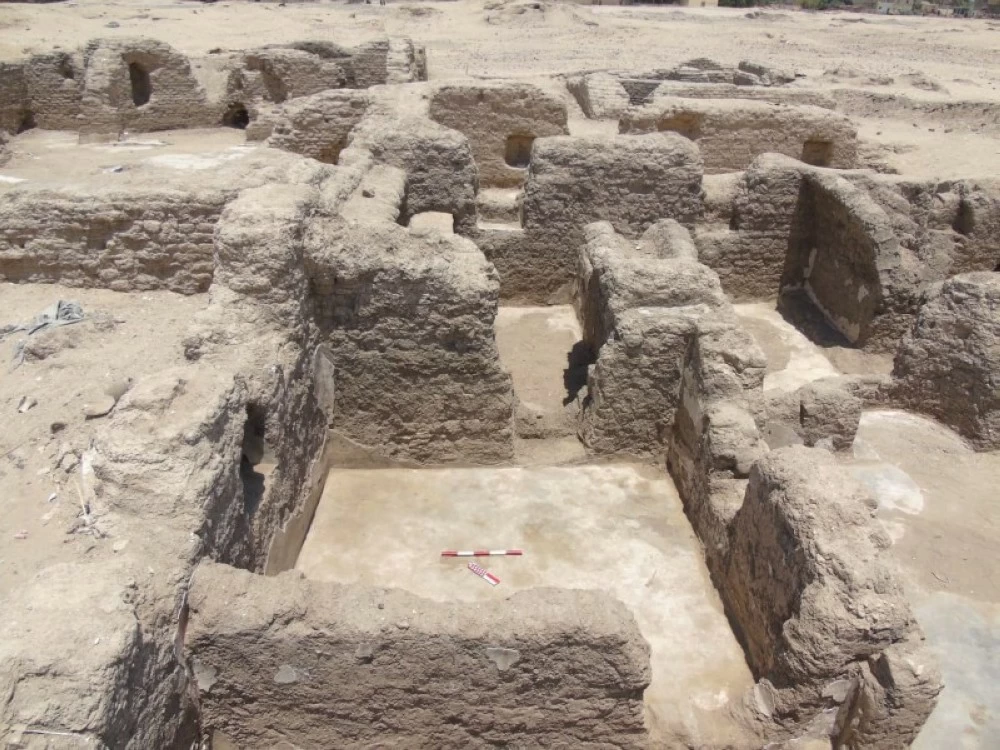
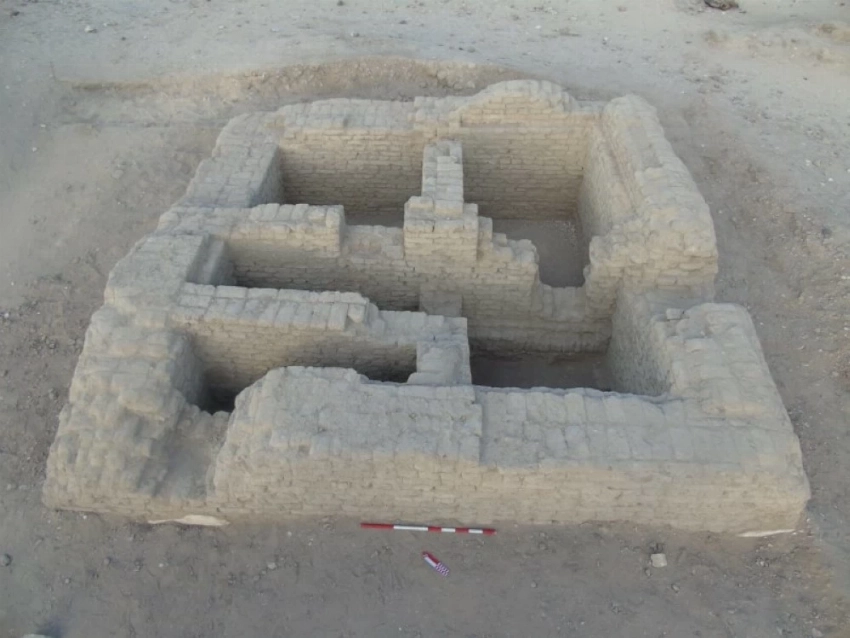
في كشف أثري جديد، نجحت البعثة الأثرية المصرية التابعة للمجلس الأعلى للآثار، التي تعمل في موقع «القرية بالدوير» بمركز طما في محافظة سوهاج، في كشف بقايا مجمع سكني كامل للرهبان يعود إلى العصر البيزنطي، وذلك خلال أعمال التنقيب الأثري المتواصلة بالموقع، إذ تم العثور على آثار مبانٍ بنيت من الطوب اللبن.
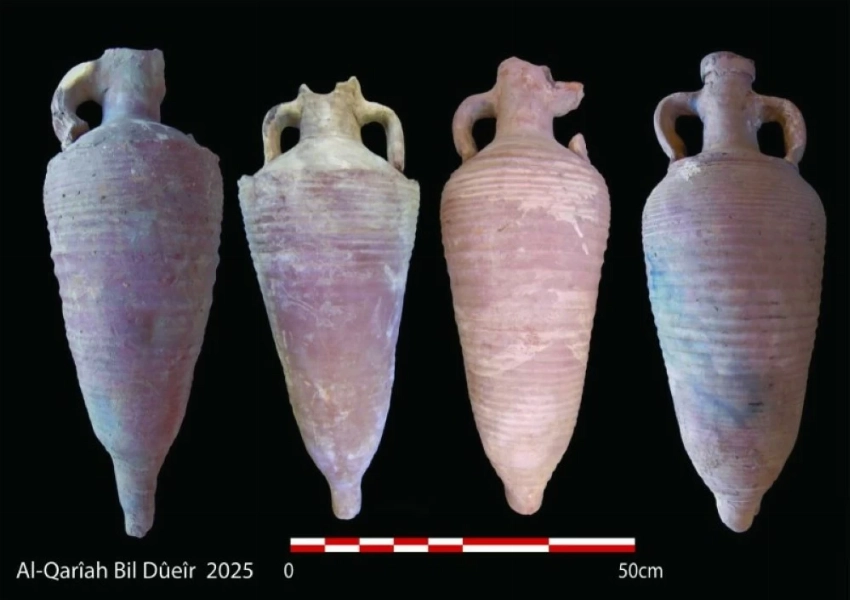
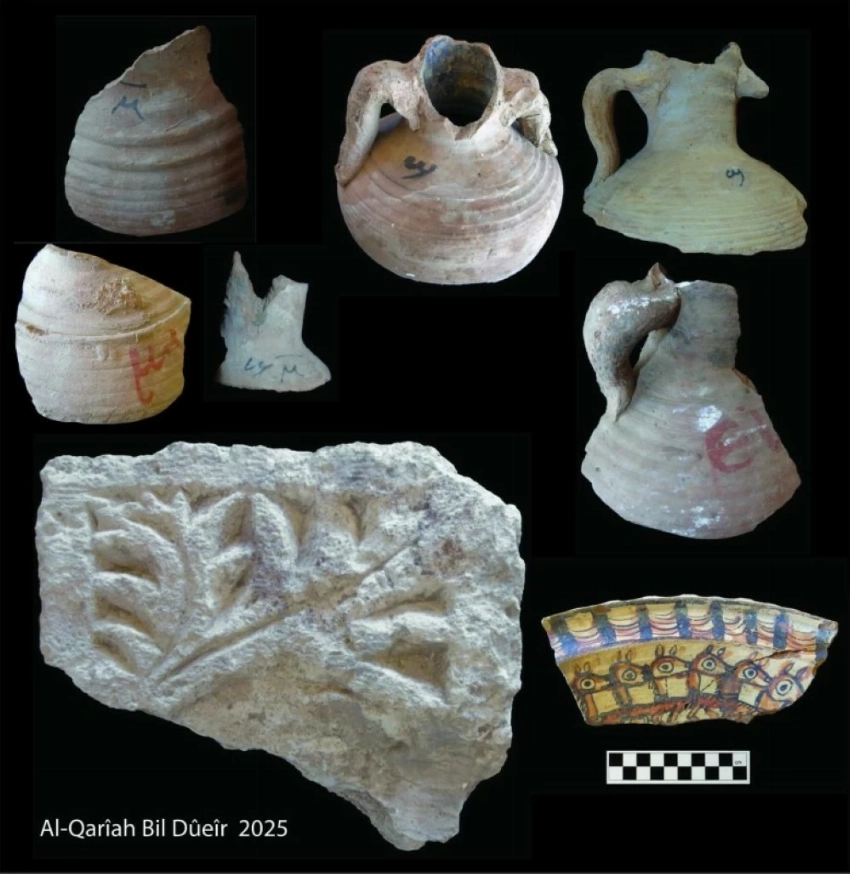
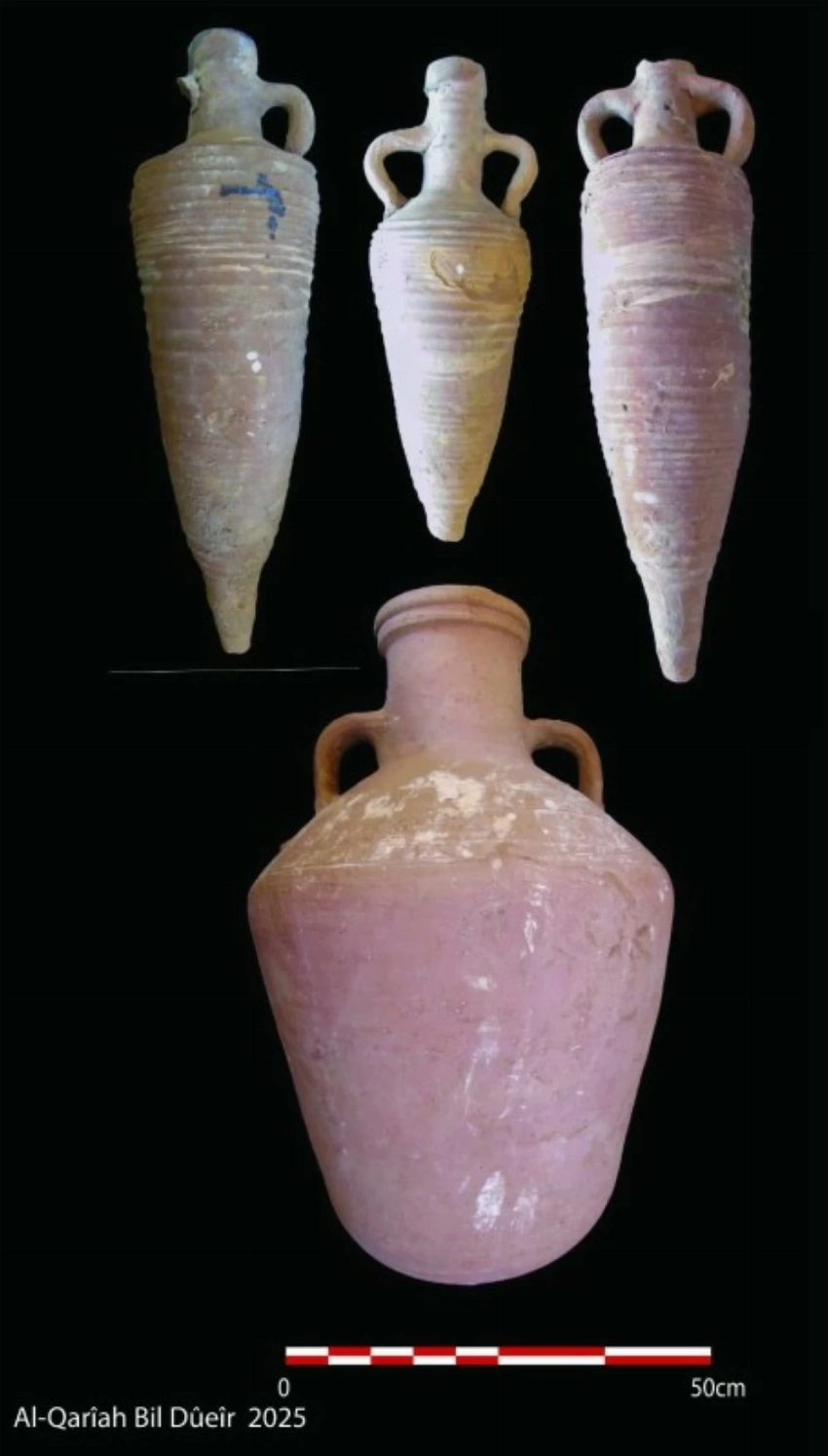
وبحسب بيان رسمي لوزارة السياحة والآثار المصرية، اليوم (الثلاثاء)، عثرت البعثة في الموقع على عدد من اللقى الأثرية، منها أمفورات تستخدم للتخزين، تحمل بعضها كتابات قد تكون حروفاً أو أرقاماً أو أسماء على أكتافها، إضافة إلى مجموعة من الأوستراكات تحمل نصوصاً باللغة القبطية، وأدوات معيشية متنوعة، وكسرات حجرية تمثل أجزاء من عناصر معمارية، إلى جانب أجزاء من لوحات من الحجر الجيري منقوش عليها كتابات بخط قبطي.
تنوع الإرث الحضاري المصري
وأكد وزير السياحة والآثار المصري شريف فتحي، أن هذا لاكتشاف يعبر عن غنى وتنوع الإرث الحضاري المصري عبر العصور المختلفة، وأنه يدعم جهود الوزارة في تطوير السياحة الثقافية، مع التركيز على المواقع الأثرية غير التقليدية، مما يساعد في جذب المزيد من السياح والباحثين المهتمين بتاريخ الحضارات والأديان.
طبيعة الحياة الرهبانية في الصعيد
ومن جانبه، شدّد الأمين العام للمجلس الأعلى للآثار الدكتور محمد إسماعيل خالد، على قيمة هذا الكشف، إذ يوفر معلومات حديثة تساعد في استيعاب طبيعة الحياة الرهبانية في صعيد مصر أثناء العصر البيزنطي، مشيراً إلى أن نتائج التنقيب تكشف نمطاً استيطانياً ومعيشياً منظماً داخل المباني المكتشفة، ويُعتقد أنها كانت مساكن لمجتمع رهباني كامل عاش في الموقع خلال تلك الحقبة.
تفاصيل الكشف الأثري
وفي الإطار نفسه، بيّن رئيس قطاع الآثار المصرية بالمجلس الأعلى للآثار محمد عبدالبديع، أن البعثة تمكنت من كشف بقايا مبانٍ مستطيلة التصميم، مبنية من الطوب اللبن، وتمتد من الغرب إلى الشرق، بأحجام متفاوتة تراوح بين 8 × 7 أمتار تقريباً و14 × 8 أمتار.
وتشمل هذه المباني قاعات مستطيلة، وبعضها يحتوي على شرقية أو حنية مخصصة للعبادة، إضافة إلى غرف صغيرة ذات أسقف مقببة، يُحتمل أنها كانت قلالي وأماكن لتعبد الرهبان.
وأوضح أن جدران المباني حافظت على آثار طبقات من الملاط، وظهرت فيها نيشات وفتحات جدارية، بينما تكونت الأرضيات من طبقة جصية.
كما تميزت بعض المباني بأفنية جنوبية تحتوي على المداخل، إلى جانب بقايا مبانٍ صغيرة دائرية، يُرجح أنها كانت موائد لتناول الطعام الخاص بالرهبان.
وأضاف مدير عام آثار سوهاج الدكتور محمد نجيب، أن أعمال التنقيب أدت أيضاً إلى كشف أطلال مبانٍ عبارة عن أحواض مبنية من الطوب الأحمر والحجر الجيري، مغطاة بطبقة من الملاط الأحمر، ويُعتقد أنها استخدمت لتخزين المياه أو لأنشطة صناعية مرتبطة بطبيعة الموقع.
كما تم العثور على بقايا مبنى من الطوب اللبن يمتد من الشرق إلى الغرب، بأبعاد نحو 14 × 10 أمتار، يُحتمل أنه كان كنيسة رئيسية تخدم المجمع الرهباني، ويتكون من ثلاثة أقسام: الصحن، والخورس، والهيكل.
وعُثر في الصحن على بقايا دعامات من الطوب اللبن، مما يدل على أنه كان مغطى بقبة مركزية، أما الهيكل فجاء في منتصف الجهة الشرقية على شكل نصف دائرة، وعلى جانبيه غرفتا الهيكل.
In a new archaeological discovery, the Egyptian archaeological mission affiliated with the Supreme Council of Antiquities, working at the site of "Al-Qarya in Al-Duwair" in the center of Tama in Sohag Governorate, succeeded in uncovering the remains of a complete residential complex for monks dating back to the Byzantine era, during ongoing archaeological excavation work at the site, where traces of buildings made of mud bricks were found.
According to an official statement from the Egyptian Ministry of Tourism and Antiquities today (Tuesday), the mission discovered a number of archaeological finds at the site, including amphorae used for storage, some of which bear inscriptions that may be letters, numbers, or names on their shoulders, in addition to a collection of ostraca bearing texts in Coptic, various living tools, and stone fragments representing parts of architectural elements, along with pieces of limestone slabs inscribed with writings in Coptic.
The Diversity of Egyptian Cultural Heritage
The Egyptian Minister of Tourism and Antiquities, Sherif Fathy, confirmed that this discovery reflects the richness and diversity of Egyptian cultural heritage across different eras, and it supports the ministry's efforts to develop cultural tourism, focusing on unconventional archaeological sites, which helps attract more tourists and researchers interested in the history of civilizations and religions.
The Nature of Monastic Life in Upper Egypt
For his part, the Secretary-General of the Supreme Council of Antiquities, Dr. Mohamed Ismail Khaled, emphasized the value of this discovery, as it provides modern information that helps understand the nature of monastic life in Upper Egypt during the Byzantine era, pointing out that the excavation results reveal an organized settlement and living pattern within the discovered buildings, believed to have been residences for a complete monastic community that lived at the site during that period.
Details of the Archaeological Discovery
In this context, the head of the Egyptian Antiquities Sector at the Supreme Council of Antiquities, Mohamed Abdel-Badi, indicated that the mission managed to uncover the remains of rectangular buildings made of mud bricks, extending from west to east, with varying sizes ranging from approximately 8 × 7 meters to 14 × 8 meters.
These buildings include rectangular halls, some of which contain eastern or apse areas designated for worship, in addition to small rooms with vaulted ceilings, which are likely to have been cells and places for the monks' worship.
He explained that the walls of the buildings preserved traces of layers of plaster, and niches and wall openings appeared in them, while the floors were made of a plaster layer.
Some buildings also featured southern courtyards containing entrances, alongside remains of small circular buildings, which are believed to have been tables for the monks' meals.
The Director General of Sohag Antiquities, Dr. Mohamed Nagy, added that the excavation work also led to the discovery of the ruins of buildings consisting of basins made of red brick and limestone, covered with a layer of red plaster, believed to have been used for water storage or for industrial activities related to the nature of the site.
Additionally, remains of a mud brick building extending from east to west, measuring about 14 × 10 meters, were found, which is likely to have been the main church serving the monastic complex, consisting of three sections: the nave, the choir, and the sanctuary.
In the nave, remains of mud brick supports were found, indicating that it was covered with a central dome, while the sanctuary appeared in the middle of the eastern side in the form of a semicircle, with two sanctuary rooms on either side.