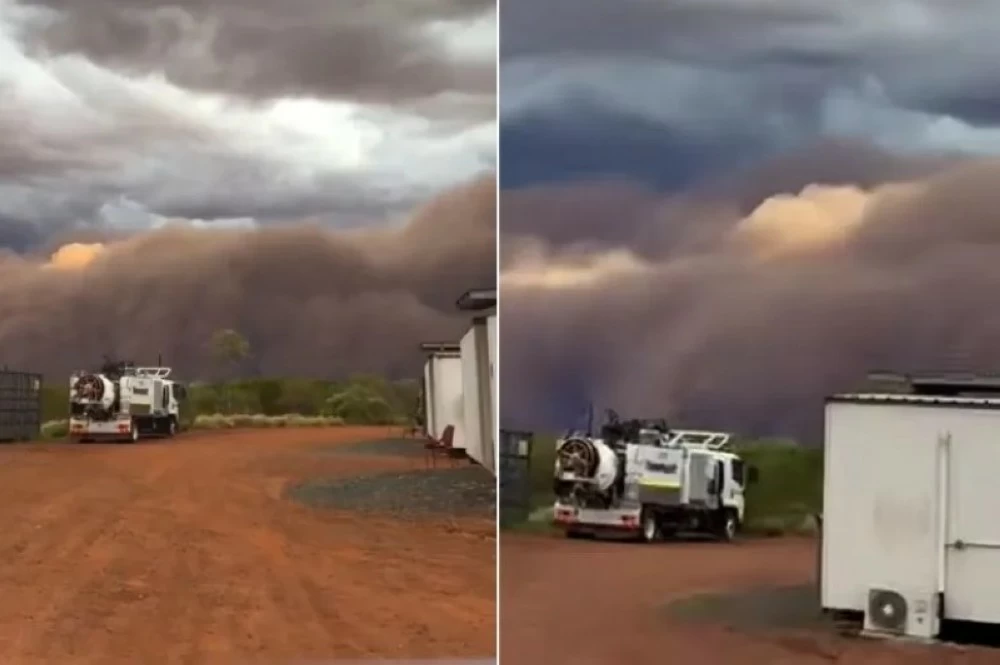
شهدت صحراء تانامي النائية في الإقليم الشمالي لأستراليا حادثة جوية استثنائية، بعدما اندفعت نحوها عاصفة ترابية هائلة غطّت السماء بلون نحاسي قاتم، في مشهد غير مألوف وثّقه عمال أحد مواقع التعدين الذين وجدوا أنفسهم أمام جدار ضخم من الغبار يقترب بثبات مقلق.
وذكر العامل في المناجم لاكلان مارشانت أنه كان بين عشرات العمال الذين شاهدوا السحابة العملاقة وهي تزحف عبر الصحراء. وأوضح أن العاصفة الأولى دفعتهم للجوء إلى ملاجئ آمنة، لكن المفاجأة كانت ظهور عاصفة ثانية أكبر حجماً في اليوم التالي، واصفاً المشهد بأنه يفوق ما اعتادوا عليه في المنطقة، وقال إن حجم العاصفة «أكبر بعشر مرات مما رأيناه في اليوم السابق».
وبحلول الرابعة عصراً تقريباً، كانت السحابة قد ابتلعت الأفق على امتداد الصحراء الممتدة على بعد نحو ألف كيلومتر جنوب داروين، فيما ظهرت الطبقات البرونزية ترتفع فوق الغيوم الفضية قبل أن تغطي المخيم بطبقة كثيفة من الغبار. وأشار مارشانت إلى أن تأثير العاصفة على الجسد كان واضحاً، إذ شعر بثقل غريب في الأسنان وحرقة في العينين نتيجة الجزيئات الدقيقة.
وتزامناً مع العاصفة، دفعت أصوات الرعد والبرق اللاحقة الطاقم إلى الاحتماء داخل المباني، قبل أن تتساقط لاحقاً أمطار موحلة تاركة طبقة من الطين على المركبات والمعدات. وأشار مارشانت مازحاً إلى أن مغاسل السيارات عملت بكامل طاقتها بعد الحادثة لأن الجميع اضطر لغسل سيارته.
ويوضح خبير التربة الدكتور جون غرانت، وهو محاضر في جامعة ساوثرن كروس، أن العواصف الغبارية تنتج عادة عن أنظمة جوية قوية ترفع التربة الجافة لمسافات واسعة، مؤكداً أن المناطق النائية في أستراليا تُعد بيئة نموذجية لمثل هذه الظواهر بفعل الجفاف المزمن وقلة الأمطار.
وبحسب وسائل إعلام غربية، شهدت المنطقة انخفاضاً حاداً في الحرارة خلال العاصفة، إذ هبطت من نحو 40 درجة مئوية إلى أقل من 30 درجة خلال وقت قصير، في إشارة إلى دخول جبهة هوائية باردة أثارت كميات كبيرة من الغبار فوق السهول. ومع أن العمال تمكنوا من البقاء في مأمن، فإن الغبار تسبب بارتفاع حالات الربو التي وصلت للمستشفيات، فيما حذر الخبراء من آثار بيئية طويلة الأمد بسبب تجريد للتربة من مغذياتها الأساسية.
وتشير السجلات إلى أن وصول الغبار إلى الساحل الشرقي لأستراليا يُعد نادراً، إذ لم يشهد سكان سيدني وبريسبان سماءً حمراء كثيفة منذ عام 2009، ما يجعل حادثة تانامي واحدة من أبرز العواصف الترابية التي شهدتها البلاد في السنوات الأخيرة.
The remote Tanami Desert in the Northern Territory of Australia witnessed an extraordinary weather event, as a massive dust storm surged towards it, covering the sky in a dark copper hue, in an unusual scene captured by workers at a mining site who found themselves facing a huge wall of dust approaching ominously.
Mine worker Lachlan Merchant reported that he was among dozens of workers who watched the giant cloud crawling across the desert. He explained that the first storm forced them to seek shelter, but the surprise came with the appearance of a second, larger storm the following day, describing the scene as exceeding what they were used to in the area, and stating that the size of the storm was "ten times larger than what we saw the previous day."
By around four in the afternoon, the cloud had swallowed the horizon across the desert stretching about a thousand kilometers south of Darwin, while bronze layers rose above the silver clouds before covering the camp with a thick layer of dust. Merchant noted that the storm's effect on the body was evident, as he felt a strange heaviness in his teeth and a burning sensation in his eyes due to the fine particles.
Alongside the storm, the subsequent sounds of thunder and lightning drove the crew to seek refuge inside buildings, before muddy rain later fell, leaving a layer of mud on vehicles and equipment. Merchant jokingly pointed out that car washes operated at full capacity after the incident because everyone had to wash their cars.
Soil expert Dr. John Grant, a lecturer at Southern Cross University, explains that dust storms typically result from strong weather systems that lift dry soil over vast distances, confirming that the remote areas of Australia are an ideal environment for such phenomena due to chronic drought and low rainfall.
According to Western media, the region experienced a sharp drop in temperature during the storm, falling from around 40 degrees Celsius to below 30 degrees in a short time, indicating the arrival of a cold front that stirred up large amounts of dust over the plains. While the workers managed to stay safe, the dust caused an increase in asthma cases that reached hospitals, while experts warned of long-term environmental effects due to the stripping of the soil of its essential nutrients.
Records indicate that the arrival of dust on the eastern coast of Australia is rare, as residents of Sydney and Brisbane have not seen a dense red sky since 2009, making the Tanami incident one of the most significant dust storms the country has experienced in recent years.