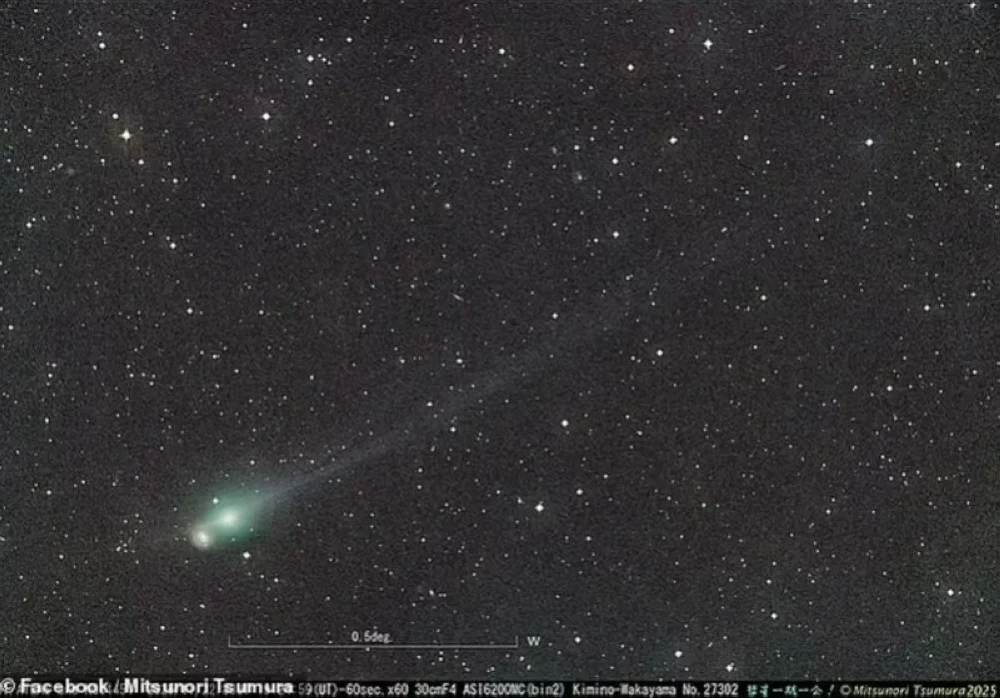
في ظاهرة فلكية أثارت حيرة العلماء وعشاق السماء، بدأ الجسم البين نجمي الغامض 3I/ATLAS يصدر نبضات منتظمة تشبه دقات القلب، تجعل سطوعه يرتفع وينخفض بنسبة تتراوح بين 20 و40%، كل 16.16 ساعة، فيما يقترب تدريجيًا من الأرض خلال الأسبوعين المقبلين.
وتُظهر الرصدات الحديثة انفجارات دورية من الغاز والغبار، تُعرف بال«نفاثات»، تنطلق من سطح المذنب بشكل إيقاعي، كأنها قلب فضائي ينبض، لترسم لوحة فلكية مذهلة يمكن رؤيتها بالتلسكوبات الأرضية. ووفق العلماء، فإن هذه الظاهرة مستمرة منذ دخول المذنب النظام الشمسي، وربما بدأت قبل ذلك بكثير.
وأعاد البروفيسور آفي لوب من جامعة هارفارد فتح الجدل حول طبيعة هذا الجسم، مشيرًا إلى أن الهالة الغازية الكبيرة المحيطة بالمذنب coma هي مصدر الضوء، وليس النواة وحدها، ما يجعل قفزات السطوع أكبر من المتوقع، ويثير علامات استفهام جديدة حول سلوك الجسم الغريب.
مع ذلك، أكدت ناسا ووكالة الفضاء الأوروبية أن 3I/ATLAS مجرد مذنب طبيعي. وبيّنت الوكالتان أن النبضات ناتجة عن دوران نواة المذنب، حيث تسخن بقع الجليد عند مواجهتها للشمس، فتتسرب على شكل نفاثات منتظمة، تصل سرعتها إلى 985 ميلًا في الساعة، وتنتشر لمسافة 15,900 ميل، في مشهد يشبه محركًا يعمل من تلقاء نفسه.
وتضافرت الملاحظات السابقة لتزيد الغموض، إذ لاحظ العلماء أن المذنب كشف ظواهر غير معتادة، منها ذيل يتجه عكس الاتجاه الطبيعي، وتغيير لونه إلى الأزرق قرب الشمس، وتحولات في مساره لا تفسرها الجاذبية. وترى ناسا أن هذه الغرائب قد تكون نتيجة أن جسم المذنب جاء من نظام شمسي آخر بتركيبة كيميائية مختلفة.
وأكدت الوكالات الفضائية أن المذنب لن يشكل أي تهديد للأرض، إذ سيمر على بعد 170 مليون ميل في 19 ديسمبر، لكنها أكدت أن هذه الفرصة ثمينة لتعزيز قدرات الرصد العالمية للأجسام الفضائية. وقد بدأت أنظمة الدفاع الكوكبي التابعة للأمم المتحدة رصد 3I/ATLAS منذ 27 نوفمبر، بالتنسيق مع الشبكة الدولية للتحذير من الكويكبات IAWN، في حملة رصد ستستمر شهرين.
وفي ظل كل هذه الملاحظات، يطالب البروفيسور لوب العلماء بعدم التقليل من الظاهرة، قائلًا: «قد يكون لهذه النبضات تأثير كبير على فهمنا للفضاء ومستقبل البشرية، لذلك يجب دراسة هذا الجسم بانفتاح كامل وعدم الاكتفاء بالتفسيرات التقليدية».
In an astronomical phenomenon that has puzzled scientists and sky enthusiasts, the mysterious interstellar object 3I/ATLAS has begun emitting regular pulses resembling heartbeats, causing its brightness to fluctuate by 20 to 40% every 16.16 hours, as it gradually approaches Earth over the next two weeks.
Recent observations show periodic bursts of gas and dust, known as "jets," emanating rhythmically from the comet's surface, as if it were a celestial heart beating, creating a stunning astronomical display visible through ground-based telescopes. According to scientists, this phenomenon has been ongoing since the comet entered the solar system, and may have started long before that.
Professor Avi Loeb from Harvard University has reignited the debate about the nature of this object, pointing out that the large gas halo surrounding the comet's coma is the source of the light, not just the nucleus, which makes the brightness jumps larger than expected and raises new questions about the behavior of this strange body.
Nevertheless, NASA and the European Space Agency confirmed that 3I/ATLAS is merely a natural comet. The agencies explained that the pulses result from the rotation of the comet's nucleus, where ice patches heat up when facing the sun, releasing jets at regular intervals, reaching speeds of up to 985 miles per hour, and spreading over a distance of 15,900 miles, in a scene resembling a self-operating engine.
Previous observations have added to the mystery, as scientists noted that the comet exhibited unusual phenomena, including a tail pointing in the opposite direction of the normal flow, a color change to blue near the sun, and trajectory shifts that gravity cannot explain. NASA believes these oddities may result from the comet originating from another solar system with a different chemical composition.
The space agencies confirmed that the comet will pose no threat to Earth, as it will pass at a distance of 170 million miles on December 19, but they emphasized that this opportunity is valuable for enhancing global observational capabilities for celestial objects. The United Nations' planetary defense systems have been monitoring 3I/ATLAS since November 27, in coordination with the International Asteroid Warning Network (IAWN), in a two-month observation campaign.
In light of all these observations, Professor Loeb urges scientists not to underestimate the phenomenon, stating: "These pulses may have a significant impact on our understanding of space and the future of humanity, so this object should be studied with complete openness and not just conventional explanations."